![MiniMax H3 Max vs. Seedance 2.5: Head-To-Head [2026]](https://refinery.fal.media/url/https%3A%2F%2Fv3b.fal.media%2Ffiles%2Fb%2F0aaaae87%2FX4bKeQ2iiT0TViOTIpF2p.jpg/tr:w-1920,q-80/X4bKeQ2iiT0TViOTIpF2p.webp)
I ran six shots through both MiniMax H3 Max and Seedance 2.5 on fal and spread them across all three endpoints to help you see the differences between them.
Two of the shots started from text alone, two from a single image, and the last two from reference packs.
TL;DR
MiniMax H3 Max is the model we post-trained at fal Research from MiniMax H3's open weights, and Seedance 2.5 is ByteDance's current generation.
On both models, the sound is produced inside the same generation as the picture, which puts speech and effects on the right frames without a second pass.
MiniMax H3 Max covers 5 to 15 seconds at 480P, 768P or 1080P, billed per second of output at $0.05, $0.08 and $0.16.
Seedance 2.5 spans 4 to 30 seconds, offers 480p, 720p and 1080p, and bills by the token at $0.0214 per 1,000 through 720p and about $0.0234 above it.
Ten seconds of 16:9 at each model's default tier runs $0.80 on MiniMax H3 Max and about $4.62 on Seedance 2.5.
Seedance 2.5 carries a 50-file reference cap against 12 on MiniMax H3 Max, and its reference endpoint doubles as an editing and extension endpoint.
1080p is new on MiniMax H3 Max, and it is a latent refinement built on a native 768P render.
And, as for the test conditions: all twelve clips ran on fal at 10 seconds, MiniMax H3 Max at 768P and Seedance 2.5 at 720p, the default tier on each.
The prompt text I sent is the same on both, with only the reference tokens rewritten, since the two schemas spell those differently.
I left prompt_expansion_mode on its default of balanced for MiniMax H3 Max, and set duration explicitly on Seedance 2.5 to keep the token count predictable.
I set aspect_ratio explicitly too on the text and reference endpoints, though not on image-to-video, where Seedance 2.5 always inherits the ratio from the frame you pass in.
How does MiniMax H3 Max compare to Seedance 2.5?
Cost per second and turnaround favor MiniMax H3 Max, which covers 5 to 15 seconds at up to 1080p, while Seedance 2.5 answers the opposite brief with single takes of up to 30 seconds and reference packs of up to 50 files.
Everything else is a matter of which controls each schema exposes, and there the two diverge more than the shared feature list suggests.
Here's how they stack up head-to-head:
| MiniMax H3 Max | Seedance 2.5 | |
|---|---|---|
| Built by | fal Research, post-trained from the open-weight MiniMax H3 | ByteDance |
| Best for | Low unit cost and fast turnaround at volume | Single takes past 15 seconds, large reference packs, editing and extension |
| Endpoints | Text to video, image to video, reference to video | Text to video, image to video, reference to video |
| Resolutions | 480P and 768P native, 1080P as a latent refinement of a 768P source | 480p, 720p, 1080p |
| Default resolution | 768P | 720p |
| Duration | 5 to 15 seconds | 4 to 30 seconds, or auto |
| Duration parameter type | Integer | String enum |
| Aspect ratios, text to video | 21:9, 16:9, 4:3, 1:1, 3:4, 9:16 | auto, 21:9, 16:9, 4:3, 1:1, 3:4, 9:16 |
| Aspect ratio, image to video | Follows the frame you supply | Always auto |
| Native audio | ✅ Composed with the picture | ✅ Composed with the picture |
| Audio toggle | ❌ Not exposed | ✅ generate_audio, on by default |
| Lip-sync | ✅ Dialogue generated with the picture | ✅ Dialogue in double quotes |
| End frame control | ✅ end_image_url, usable on its own | ✅ end_image_url |
| Start frame required | ❌ A text-only call routes to text-to-video | ✅ image_url is required |
| Prompt expansion | ✅ balanced and quality | ❌ Not exposed |
| Rewritten prompt returned | ✅ expanded_prompt | ❌ Not returned |
| Editing and extension modes | ❌ Not exposed | ✅ task set to editing or extension |
| Bitrate control | ❌ Not exposed | ✅ standard and high |
| Safety checker toggle | ✅ API only, locked on in the playground | ❌ Not exposed |
| Base64 return | ✅ sync_mode | ❌ Not exposed |
| Backend timing returned | ✅ timings.inference | ❌ Not returned |
| Seed in the response | ✅ On reference to video | ✅ On all three endpoints |
| End user identifier | ❌ Not exposed | ✅ end_user_id, required for B2B access |
| Reference files, combined cap | 12 | 50 |
| Reference images | Counted inside the 12, no per-modality cap published | Up to 30, 30 MB each |
| Reference videos | 2 to 15 seconds each, 15 seconds combined | Up to 10, 1.8 to 30.2 seconds each, 30.2 seconds combined |
| Reference audio | 2 to 15 seconds each, 15 seconds combined, never the only input | Up to 10, 1.8 to 30.2 seconds each, 30.2 seconds combined |
| Reference addressing | Image 1, Video 1, Audio 1 | @Image1, @Video1, @Audio1 |
| Billing unit | Per second of output | Per 1,000 tokens |
| Frame area affects price | ❌ The per-second rate is flat | ✅ It feeds the token count |
| Reference billing | Pooled tokens past a 4,096 allowance | Input video seconds billed, then the total multiplied by 0.6 |
| Commercial use | ✅ Under fal's terms | ✅ Under fal's terms |
Where can you access MiniMax H3 Max and Seedance 2.5?
MiniMax H3 Max and Seedance 2.5 both run on fal, and one key gets you into the playground, the API, fal Agent, Sandbox and MCP for either of them.
Everything downstream of the endpoint string is shared, from the @fal-ai/client call signature to queue behavior, webhook delivery and error shapes.
Here's a call to MiniMax H3 Max:
javascript
import { fal } from "@fal-ai/client";

const result = await fal.subscribe("minimax/h3-max/text-to-video", {
  input: {
    prompt: "A white kitten chases a butterfly across a sunlit garden. Gentle camera tracking, natural movement, soft afternoon light filtering through the leaves.",
    prompt_expansion_mode: "balanced"
  },
  logs: true,
  onQueueUpdate: (update) => {
    if (update.status === "IN_PROGRESS") {
      update.logs.map((log) => log.message).forEach(console.log);
    }
  },
});

console.log(result.data);
console.log(result.requestId);
MiniMax H3 Max vs. Seedance 2.5: text-to-video tests
Here are two text-to-video shots, each breaking in a different way when a model gets it wrong.
Test 1: A running shoe under load (21:9)
Footwear breaks at the midsole.
Foam should compress under body weight and come back to height more slowly than the rubber beneath it, and the lug pattern needs to survive a camera passing directly over it.
Ultrawide, because that is the crop most product pages run their hero banner in.
Prompt: Ten seconds, 21:9, three shots cut for a product page hero banner. Style: high-end footwear commercial, polished concrete, cool daylight from a large source camera left, one warm bounce from the right, shallow depth of field, nothing else in the room. Shot 1, 0 to 3 seconds. An unbranded road-running shoe alone on the concrete, three-quarter view, laces tied. White knit upper, five lace eyelets a side, a thick cream foam midsole with a pronounced rocker, three translucent amber rubber pods on the outsole. Camera tracks left to right at shoe height, the amber catching the daylight as it passes. Shot 2, 3 to 6.5 seconds. The same shoe on a runner's foot, landing. The foam compresses at the heel, then through the midfoot, and the sidewall bulges outward while the amber pods stay rigid against the floor. The foot rolls forward and the foam returns to full height more slowly than the rubber does. Shot 3, 6.5 to 10 seconds. Back to the shoe alone, tipped onto its side with the outsole to the lens. Camera pushes in until the three pods and the lug pattern between them fill the ultrawide frame. Throughout: five eyelets a side, one rocker line, three amber pods and no fourth. Nothing printed or embossed on the shoe at any point. Audio: quiet studio floor tone, foam compressing under weight, rubber peeling off concrete, one lace tick as the foot lifts. No music, no voice.
Generated using MiniMax H3 Max on fal, an AI model post-trained by fal from MiniMax H3.
Generated using Seedance 2.5 on fal, an AI model from ByteDance.
Test 2: An espresso shot pulled in four cuts (16:9)
Anybody who drinks espresso already knows what an extraction looks like, which leaves a video model nowhere to hide.
Separate streams off the basket, braiding into one rope, going pale at the tail, with crema building on top and staying as a layer.
Four cuts as well, each landing where the prompt puts it.
Prompt: Ten seconds, 16:9, four moves on an unbranded stainless espresso machine, shot as a commercial. Style: high-end product photography in motion, dark slate counter, one large soft source from camera left, negative fill on the right, everything else falling away to black. [0 to 2.5 seconds] Macro on a bottomless portafilter locking into the group head. A quarter turn, a firm stop, the handle settling level. [2.5 to 6 seconds] Cut to a low angle beneath the basket. Extraction starts as separate dark streams off the underside, braids into a single rope within two seconds, and runs pale gold at the edges by the end of the shot. [6 to 8.5 seconds] Cut to a three-quarter view of a clear glass cup on the drip tray, filling from the bottom. Crema builds as a layer on top, tiger-striped, and holds without folding back into the liquid. [8.5 to 10 seconds] Cut wide. Flow stops, one last drop falls, and a hand lifts the cup out of frame right. Audio: a grinder tail at the very start, the portafilter seating with a metal clunk, the pump at a steady low hum, liquid hitting glass and climbing in pitch as the cup fills, the cup coming off the tray. No music, no voice. Constraints: unbranded machine, nothing printed on the cup, one hand and only in the final move, no steam wand, nothing else on the counter.
Generated using MiniMax H3 Max on fal, an AI model post-trained by fal from MiniMax H3.
Generated using Seedance 2.5 on fal, an AI model from ByteDance.
💡 If you want to go further on prompt structure for either model, we have a MiniMax prompting guide and a Seedance 2.5 prompting guide.
falMODEL APIs
The fastest, cheapest and most reliable way to run genAI models. 1 API, 100s of models
MiniMax H3 Max vs. Seedance 2.5: image-to-video tests
Both endpoints treat the still you hand them as the opening frame, and both accept a second image if you want to dictate where the clip ends up.
Aspect ratio is inherited from that image on either model, and the input itself is never billed.
Test 3: A decanter pour and the volume it moves (16:9)
Conservation is the quickest way to catch a video model out.
Whatever leaves the decanter should arrive in the tumbler, and neither piece of crystal should lose its cut pattern while the light bends through it.
Watch the caustics on the slate as well. They travel with the decanter and settle back into their starting shape once it returns to its mark.
Start frame, generated with GPT Image 2.5 Flare: A photoreal 16:9 product still of an unbranded faceted crystal decanter, three quarters full of amber spirit, standing on a black slate slab in a dark room. A short cut-crystal tumbler sits to its right holding two large clear ice cubes and nothing else. One hard raking key from the upper left throws caustics through the decanter onto the slate, with unbroken black falloff behind. No labels, no logos, no text, no hands.
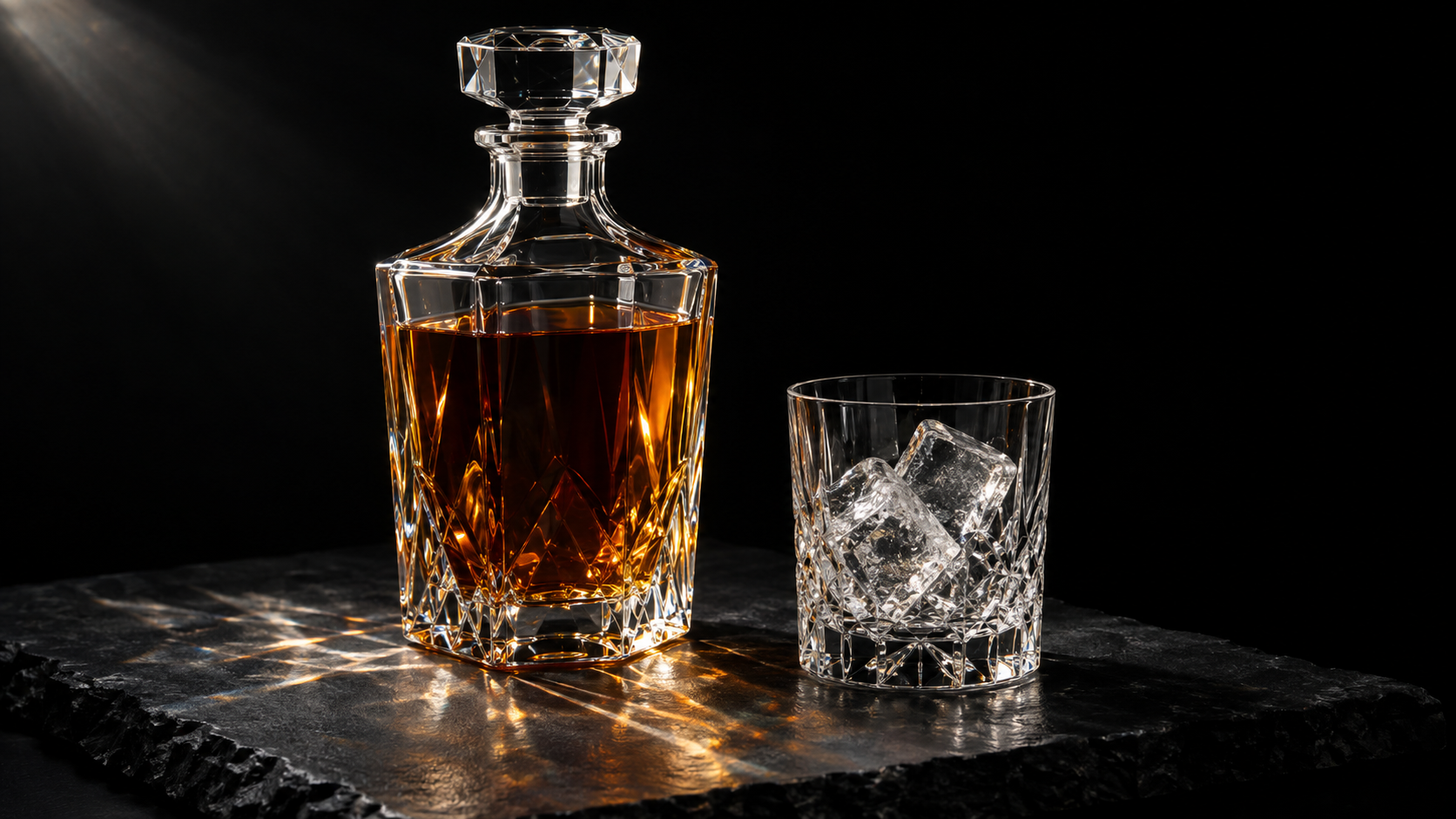
Generated using GPT Image 2.5 Flare on fal, an AI model from OpenAI.
Video prompt: A hand enters from frame right, lifts the decanter, pours into the tumbler across roughly four seconds, sets the decanter back down on its original mark and leaves frame. The level in the decanter drops by what the tumbler gains, and the tumbler finishes a little over half full with the ice floating clear of the bottom. The stream stays continuous, lands off the inside wall of the glass, and never breaks over the rim. The caustics on the slate travel and reshape while the decanter moves, then settle back into their starting pattern once it returns. Facet count, cut pattern and proportions on both pieces hold for the entire clip, and the camera stays locked for all ten seconds. Audio: dead room tone, the stopper set down on slate, liquid pouring and climbing in pitch as the glass fills, ice shifting twice, the decanter base meeting stone. No music, no voice.
Generated using MiniMax H3 Max on fal, an AI model post-trained by fal from MiniMax H3.
Generated using Seedance 2.5 on fal, an AI model from ByteDance.
Test 4: A perfume bottle from daylight to evening (9:16)
Faceted glass is the whole test here.
The bottle needs to keep its facet count and its shoulder line while the key light crosses the room, and the liquid inside should never slosh, because nothing in the shot is moving it.
The end frame is the start frame put through an edit, so the lens position is byte-identical across the pair and only the light has moved.
Start frame, generated with GPT Image 2.5 Flare: Photoreal 9:16 vertical product still of an unbranded faceted glass perfume bottle standing on a honed white marble ledge. Square shoulders, a heavy clear base, pale amber liquid filled to just below the shoulder, a brushed gold collar and a solid black cap seated on top. Flat cool daylight from a window out of frame left, a soft shadow running right, bare pale wall behind. No labels, no text, no logos, no props.
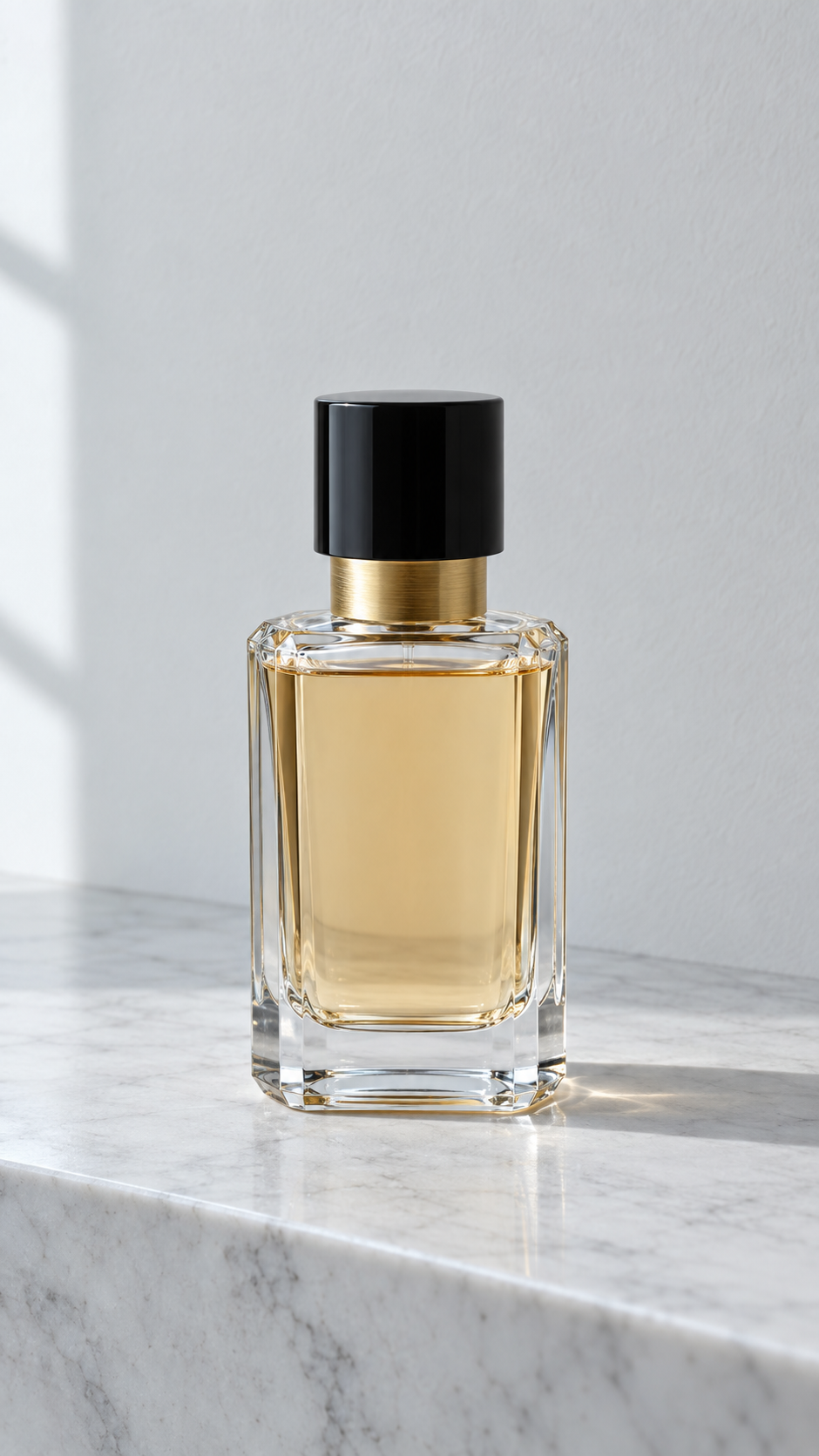
Generated using GPT Image 2.5 Flare on fal, an AI model from OpenAI.
End frame, made by putting the start frame through GPT Image 2.5 Flare Edit: Keep the bottle, its facets, the liquid level, the marble ledge, the wall and the camera position exactly as they are. Change the light to evening: a warm low key from frame right throwing a long shadow to the left, the wall behind dropping into shadow, and the amber liquid lit through from behind so the facets throw caustics onto the marble. Lift the black cap off the bottle and stand it upright on the ledge to the right of the base, leaving the brushed gold collar exposed. No labels, no text, no logos, no props.
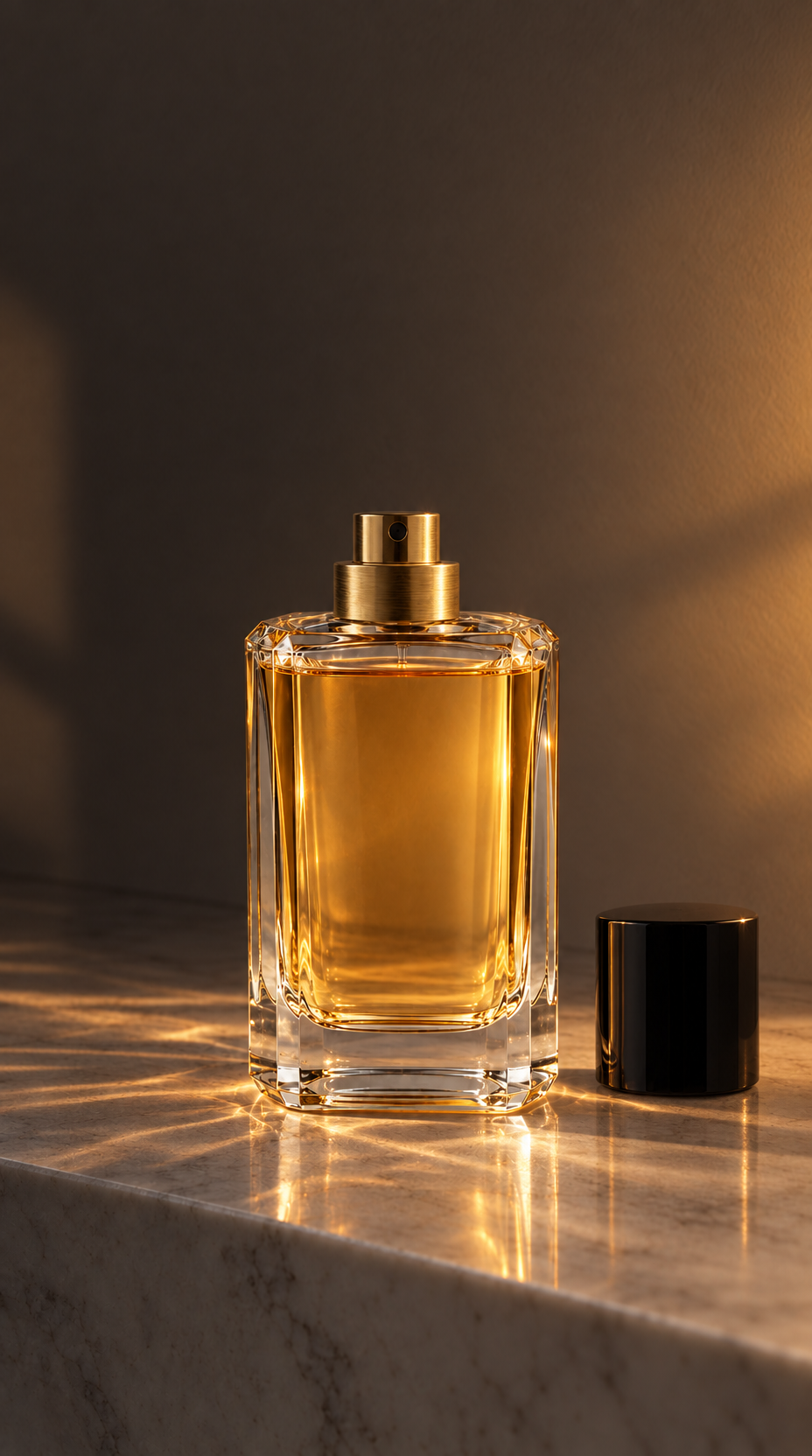
Edited using GPT Image 2.5 Flare Edit on fal, an AI model from OpenAI.
Video prompt: Hold the camera locked for all ten seconds while the light crosses the room. The key swings from cool daylight on the left to a warm low source on the right, with the shadow sweeping underneath the bottle from right to left and the wall behind falling away into shadow. As the warm key takes over, the amber liquid lights through from behind and throws caustics across the marble. The cap lifts off at around six seconds, travels right and settles upright on the ledge beside the base, leaving the brushed gold collar exposed. Bottle geometry, facet count, shoulder line and liquid level stay identical start to finish, and the liquid never moves inside the glass. Audio: a quiet interior, faint traffic through window glass, the cap releasing from the neck and meeting marble. No music, no voice.
Generated using MiniMax H3 Max on fal, an AI model post-trained by fal from MiniMax H3.
Generated using Seedance 2.5 on fal, an AI model from ByteDance.
MiniMax H3 Max vs. Seedance 2.5: reference-to-video tests
Both endpoints address references by position.
That spelling is the only place the two prompts below differ.
MiniMax H3 Max reads Image 1 and Video 1, and Seedance 2.5 reads @Image1 and @Video1.
Test 5: A rug with a deliberately asymmetric pattern (16:9)
Woven patterns pull toward symmetry under generation.
An off-center medallion and a border that runs on three sides out of four will tell you fast whether a model is carrying your product or quietly redrawing it.
The room is the other job here.
That rug has never been in it, and the window bars cross the weave while the camera moves.
Image 1, generated with GPT Image 2.5 Sunburst: Photoreal 16:9 overhead product still of a hand-knotted wool rug laid flat on bare concrete, shot square to the weave. Deep indigo ground, a single off-center cream medallion sitting nearer the left edge than the right, a running border of stepped hooks on three sides with the fourth side left unbordered, and one deliberate color break where a rust-red row crosses the field about a third of the way up. Visible knots, slightly uneven pile, one corner folded back to show the reverse. Flat even light, no props, no text, no logos.
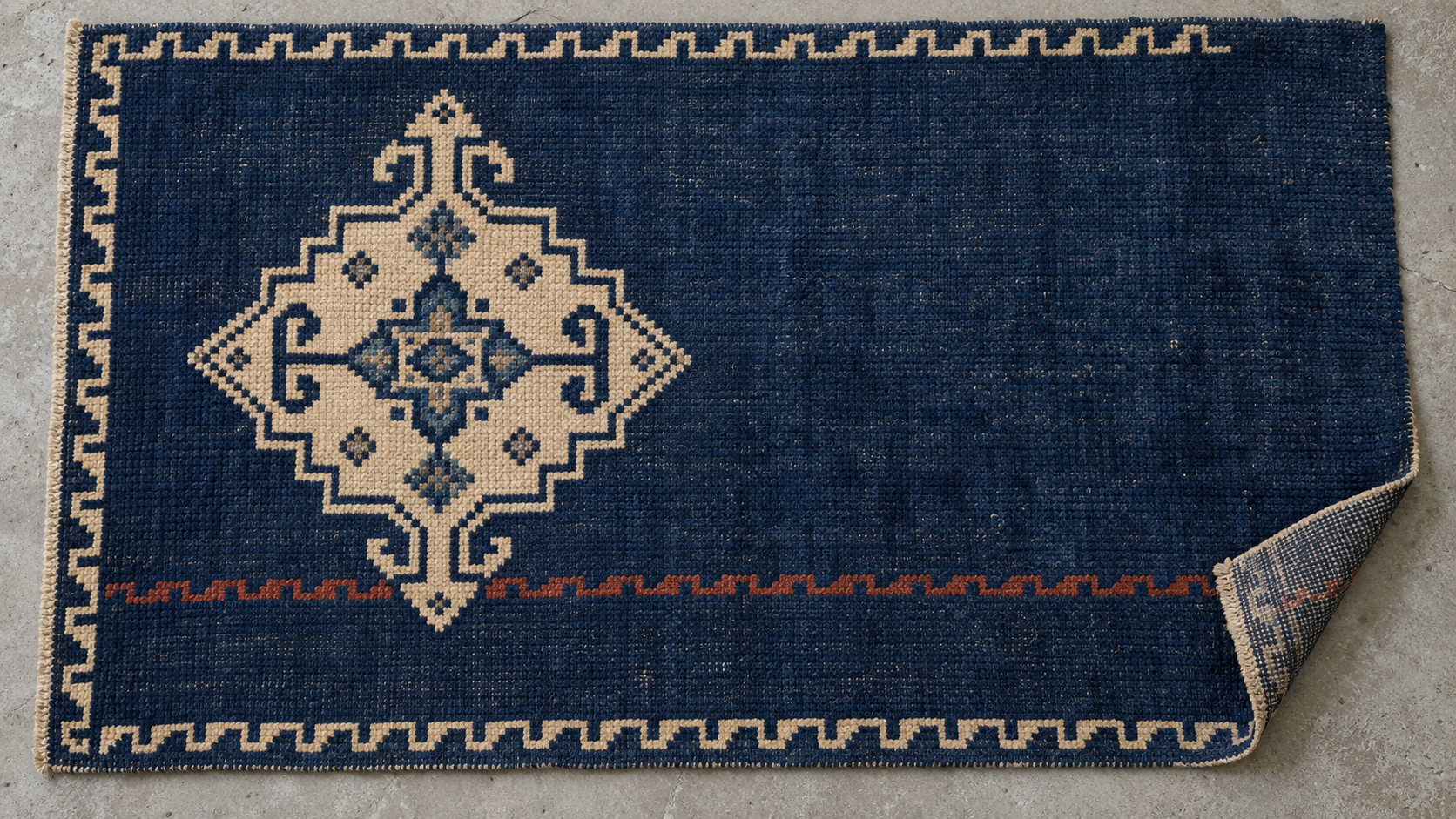
Generated using GPT Image 2.5 Sunburst on fal, an AI model from OpenAI.
Image 2, generated with GPT Image 2.5 Sunburst: Photoreal 16:9 interior still of an empty top-floor room with bare oak floorboards, tall steel-framed windows along the left wall, lime-plastered walls and an exposed timber roof structure. Late afternoon sun laying hard window bars across the floor, dust hanging in the light, nothing in the room at all. No people, no furniture, no text, no logos.
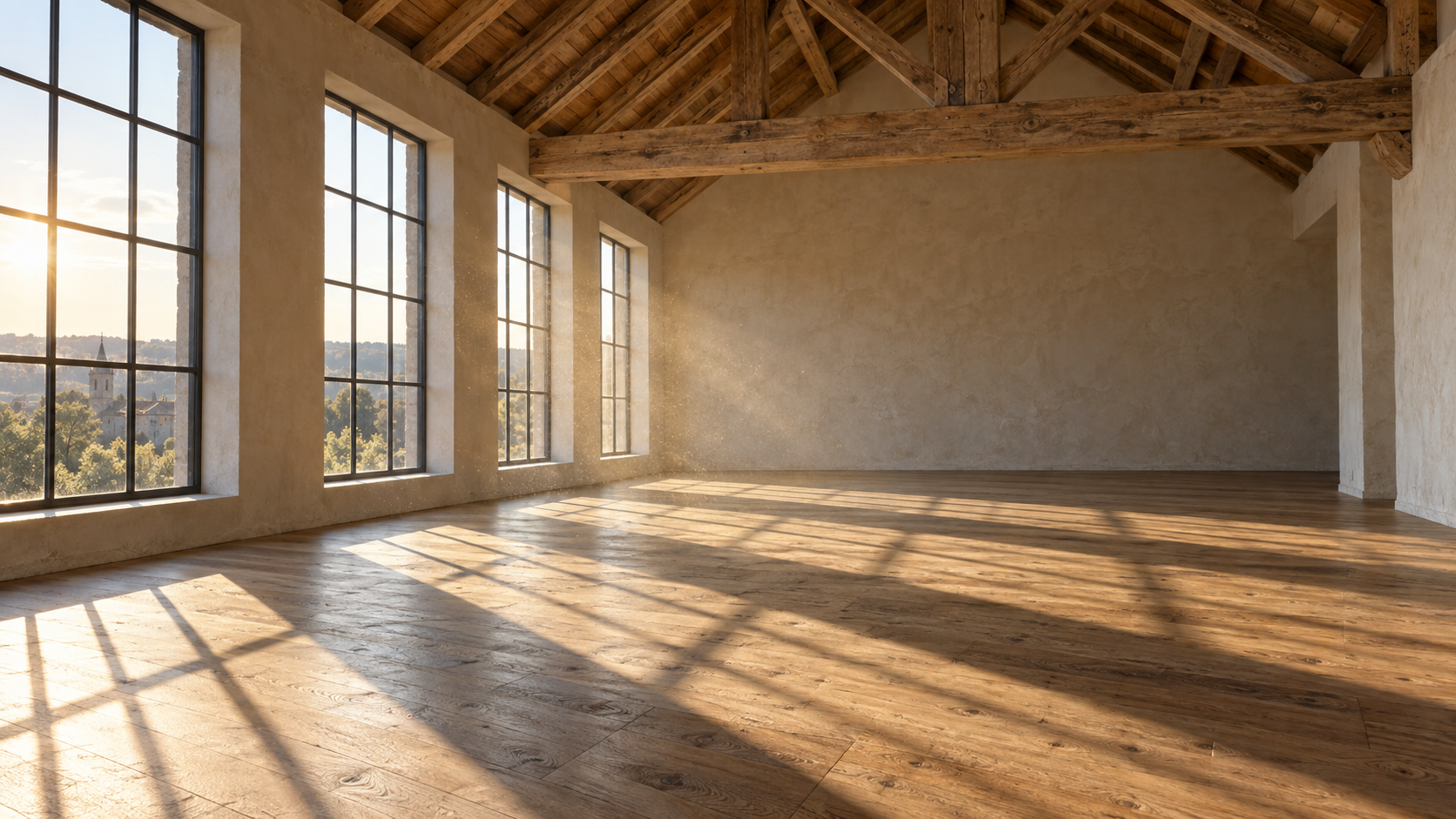
Generated using GPT Image 2.5 Sunburst on fal, an AI model from OpenAI.
Video prompt: Image 1 is the rug. Image 2 is the room. Lay the rug from Image 1 on the floorboards of the room from Image 2, running with the boards and centered under the middle window. Hold from Image 1: the indigo ground, the off-center cream medallion nearer the left edge, the stepped hook border on three sides with the fourth side unbordered, the rust-red row a third of the way up the field, and the uneven pile. Hold from Image 2: the floorboards, the window frames, the plaster, the roof structure and the direction of the light. [0 to 4 seconds] A low camera at pile height travels along the near edge of the rug from left to right, window bars crossing the weave as it goes. [4 to 7 seconds] The camera lifts and cranes over the rug into an overhead while the sun drops, the bars stretching and softening across the field. [7 to 10 seconds] The camera settles overhead and holds with the whole rug in frame, the medallion still off-center to the left and the unbordered side still unbordered. Audio: a large empty room with hard reverb, wind against glass, one floorboard settling, street noise carrying faintly through the windows. No music, no voice. Nothing enters the room and nothing else is added to it.
Generated using MiniMax H3 Max on fal, an AI model post-trained by fal from MiniMax H3.
Generated using Seedance 2.5 on fal, an AI model from ByteDance.
Test 6: A hinge motion carried onto a different product (16:9)
Motion transfer is the reference job most product teams actually want.
You have a move you like on one object, and a different object that needs to make the same move.
No people and no hands anywhere in the pack, so the only things crossing over are the product, the camera and the way the lid travels.
Image 1, generated with GPT Image 2.5 Flare: Photoreal 16:9 product still of an unbranded wireless earbud charging case standing closed on a flat gray surface. Matte sage green shell, a narrow brushed steel hinge across the back, a single white status LED on the front face, one shallow scuff low on the left corner, and a USB-C port centred on the underside edge. Even soft light, flat gray falloff behind. No labels, no text, no logos, nobody in frame.
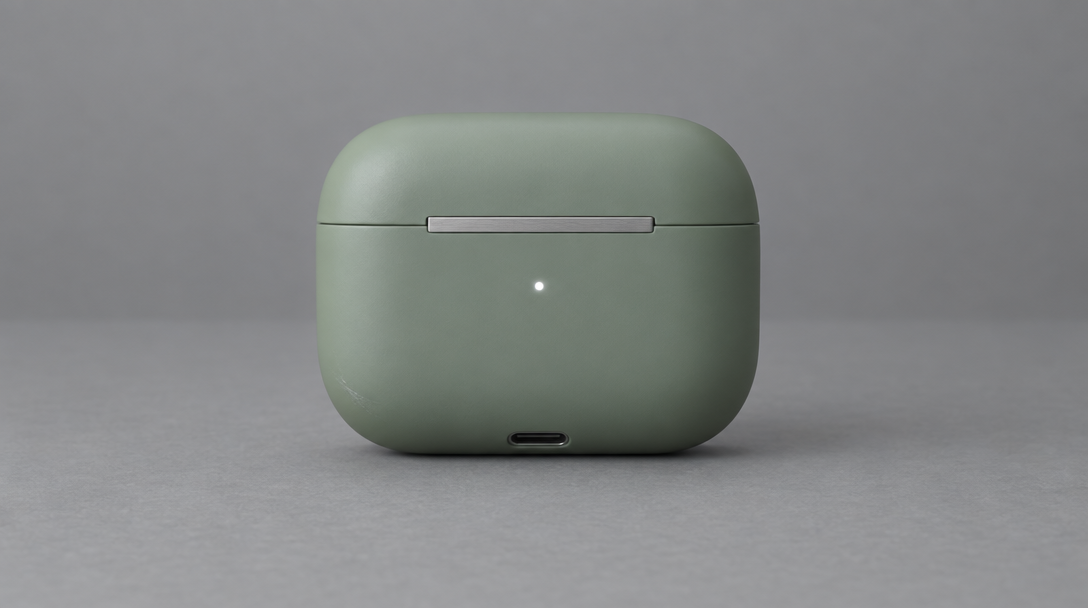
Generated using GPT Image 2.5 Flare on fal, an AI model from OpenAI.
Video 1, a five-second clip generated with MiniMax H3 Max: Five seconds, 16:9. An unbranded square walnut trinket box alone on a slow motorised turntable against unbroken black, brass hinge across the back. The lid breaks open at one second, swings up to about seventy degrees by two and a half seconds, holds, then closes flat by five seconds. One hard key from the upper left. No hands, no people, nothing else in frame.
Generated using MiniMax H3 Max on fal, an AI model post-trained by fal from MiniMax H3.
Audio 1, generated with Seed Audio 1.0: A single English speaker recorded dry with no room on it. A woman in her thirties, calm and unhurried, reading product narration and not selling it. Roughly ten seconds, with a clear beat before the last sentence: "Six hours in the buds, twenty-four more in the case. Most people lose the charger long before they need it."
Generated using Seed Audio 1.0 on fal, an AI model from ByteDance.
Video prompt: Image 1 is the product. Video 1 supplies the camera and the hinge motion. Audio 1 supplies the narration. Match Video 1 move for move: the same turntable speed and direction, the same lens height, the same moment the lid breaks open and the same moment it closes flat. The charging case from Image 1 takes the place of the box in Video 1 and holds its appearance in every frame, including the matte sage green shell, the brushed steel hinge across the back, the single white status LED, the scuff low on the left corner and the USB-C port on the underside edge. The lid opens on the steel hinge at the back and nowhere else, stops at the angle the box stops at in Video 1, and the LED comes on as the lid passes vertical. Audio 1 runs as narration across the full ten seconds, with the final word landing as the lid closes. Nobody appears in frame and nothing touches the case at any point. Audio: a dead studio room, the turntable motor underneath, the lid releasing and seating with two distinct clicks, and the narration over the top. No music.
Generated using MiniMax H3 Max on fal, an AI model post-trained by fal from MiniMax H3.
Generated using Seedance 2.5 on fal, an AI model from ByteDance.
How do MiniMax H3 Max and Seedance 2.5 compare on pricing?
A flat per-second rate on MiniMax H3 Max meets a token count on Seedance 2.5 that moves with frame area and duration.
The two only become comparable once you pin down a clip length and a shape.
Seedance 2.5 works off this formula:
tokens = (output height x output width x duration x 24) / 1024
At $0.0214 per 1,000 tokens, a ten-second 720p clip at 16:9 comes to 216,000 tokens and $4.62.
The same ten seconds at 768P on MiniMax H3 Max is $0.80, because the rate there does not move with frame area.
Here's what the output pricing looks like:
| MiniMax H3 Max | Seedance 2.5 | |
|---|---|---|
| Billing unit | Per second of output | Per 1,000 tokens |
| Lowest tier | $0.05 per second at 480P | $0.0214 per 1,000 tokens at 480p |
| Middle tier | $0.08 per second at 768P | $0.0214 per 1,000 tokens at 720p |
| Highest tier | $0.16 per second at 1080P | About $0.0234 per 1,000 tokens at 1080p |
| 5 seconds, middle tier | $0.40 | About $2.31 |
| 10 seconds, middle tier | $0.80 | About $4.62 |
| 15 seconds, middle tier | $1.20 | About $6.93 |
| 30 seconds, middle tier | Not available, 15 second ceiling | About $13.87 |
| 10 seconds, lowest tier | $0.50 | About $2.15 |
| 10 seconds, highest tier | $1.60 | About $11.64 |
Note: every Seedance 2.5 figure in this table assumes 16:9 output, since frame area feeds the token count and a wider or narrower shape moves the price.
The 480p and 720p figures come from the token formula using our published frame dimensions.
And here's how the reference input pricing looks:
| MiniMax H3 Max | Seedance 2.5 | |
|---|---|---|
| Unit billed | Tokens pooled across images, video and audio | Input video seconds folded into the output token count |
| Free allowance | First 4,096 tokens | No separate allowance |
| Past the allowance | $0.02 per 1,000 tokens | The whole request multiplied by 0.6 when any video reference is present |
| Reference images | (width x height) / 1024 tokens each | Not billed |
| Reference video | 2,886 tokens per second at 480p, 7,459 at 768p | Billed as extra seconds of output |
| Reference audio | About 80 tokens per second | Not billed |
Test 6 makes the gap concrete.
It runs one reference still of about a megapixel, a five-second reference clip and ten seconds of audio, for a ten-second result.
MiniMax H3 Max at 768P: $0.80 of output, plus 39,120 reference tokens less the 4,096 allowance, which bills 35,024 tokens at $0.70, for $1.50 all in.
Seedance 2.5 at 720p: the five reference seconds join the ten output seconds in the formula for 324,000 tokens and $6.93, then the video-reference multiplier brings it to $4.16, with the still and the audio free.
That lands under the $4.62 that ten seconds of output alone would cost, because the 0.6 multiplier outweighs the five added seconds.
The effect reverses once the reference runs past about two thirds of your output length.
Reference packs narrow the difference, and output-only work does not.
A thousand ten-second clips a month at the middle tier runs $800 on MiniMax H3 Max and about $4,622 on Seedance 2.5, and ten thousand runs $8,000 against about $46,224.
💡 I'd say that 480p is cheap enough on both models to experiment freely, so settle composition and reference weighting down there before spending anything at the higher tiers.
A ten-second look costs $0.50 on MiniMax H3 Max and about $2.15 on Seedance 2.5.
Which one should you use: MiniMax H3 Max or Seedance 2.5?
Clip length and unit cost do most of the deciding here.
Seedance 2.5 takes the work that has to run past fifteen seconds in one piece or arrive with a large reference pack, and MiniMax H3 Max takes the work where volume and per-second cost set the budget.
I would not call either one the default, and a fair number of pipelines end up with both wired in.
Reach for MiniMax H3 Max when
- Unit economics matter, as ten seconds at 768P is $0.80 where the same length at 720p on Seedance 2.5 works out around $4.62.
- 1080P is the delivery spec, at $0.16 per second, with the schema honest about it being a refinement pass on a 768P render.
- You are running batches, and the cost of the takes you discard adds up faster than the cost of the one you keep.
- The pipeline is instrumented, where
timings.inferencereports backend render time andexpanded_promptreports the text the model actually saw, both subject to the null cases above. - Prompt expansion needs a dial, with the two documented modes being balanced, back in about a second, and quality, spending up to thirty seconds building a richer prompt first.
enable_safety_checkerhas to be set explicitly, which the API allows and the playground does not.
Reach for Seedance 2.5 when
- The take runs past fifteen seconds, up to thirty in one pass, enough for a product demo with a setup before its payoff.
- The reference pack is large, at up to 50 files across 30 images, 10 videos and 10 audio clips.
- The job is editing or extension, since the
taskfield turns the reference endpoint into an editor that keeps original motion while you swap what is in the frame. - You need a route to silence, because
generate_audiocan be turned off when the picture is being handed to an audio team. - Encode quality matters, where
bitrate_modeset to high requests a larger, higher-quality file. - The product is B2B, where
end_user_ididentifies your end customer and is required for access.
💡 Neither model needs a plan on fal. Billing follows the requests you make, with no seats to buy and no capacity to size up front.
Recently Added













Get started with MiniMax H3 Max and Seedance 2.5 on fal
MiniMax H3 Max and Seedance 2.5 are both live on fal right now, and a single key covers all six endpoints across the two of them:
MiniMax H3 Max runs at minimax/h3-max/text-to-video, minimax/h3-max/image-to-video and minimax/h3-max/reference-to-video.
Seedance 2.5 runs at bytedance/seedance-2.5/text-to-video, bytedance/seedance-2.5/image-to-video and bytedance/seedance-2.5/reference-to-video.
MiniMax H3 Max vs. Seedance 2.5 FAQs
How is MiniMax H3 Max different from Seedance 2.5?
Speed of generation, clip length and unit price are what separate them.
Seedance 2.5 generates 4 to 30 seconds in one pass and accepts up to 50 reference files, with editing and extension modes on its reference endpoint.
On MiniMax H3 Max the range is 5 to 15 seconds with up to 12 reference files, at $0.08 per second at 768P, against a token rate on Seedance 2.5 that works out to roughly $0.46 per second at 720p.
Audio generation, three endpoints on fal, optional end-frame control on image to video and commercial use under fal's terms are common to both.
Which costs less to run, MiniMax H3 Max or Seedance 2.5?
MiniMax H3 Max costs less at every tier, and the gap widens as resolution goes up.
Ten seconds comes to $0.80 at 768P and $1.60 at 1080P.
The same ten seconds on Seedance 2.5 is about $4.62 at 720p and about $11.64 at 1080p.
Reference work narrows it.
Seedance 2.5 bills nothing for image and audio references and takes 40 percent off the whole request once a video reference is present.
The reference video's own seconds go into the count first, so how much you save depends on how long that reference runs.
Can MiniMax H3 Max generate 1080p?
Yes, across text, image and reference to video, at $0.16 per second.
The schema is specific about the mechanism, calling 1080P a latent refinement of a native 768P source.
That leaves 480P and 768P as the native modes.
Seedance 2.5 reaches 1080p as well, at roughly $0.0234 per 1,000 tokens.
Do MiniMax H3 Max and Seedance 2.5 both generate audio?
Both do, on every endpoint, and the audio is included in the price either way.
Speech and effects are produced inside the same generation as the image, with no alignment step afterwards.
Control over it differs.
Seedance 2.5 carries a generate_audio flag that is on by default and can be switched off, while MiniMax H3 Max does not expose a comparable setting.
Does one pipeline handle both MiniMax H3 Max and Seedance 2.5?
Yes, and nothing in either schema makes it awkward.
One SDK covers both, so the swap amounts to a different endpoint string and a few renamed fields.
Two things need handling in a router.
duration is an integer on MiniMax H3 Max and a string on Seedance 2.5, and the reference tokens inside your prompt text are spelled differently.


