GPT Image 2.6
GPT Image 2.6 is OpenAI's AI image generator and editing model, now live on fal. Sunburst is the base model for the most detailed work and Flare is the faster, smaller one. Both let you set how much the model reasons before it renders, edit an image by drawing on it, and generate animated GIFs.
Your prompt opens in the GPT Image 2.6 Flare playground, ready to generate.
What can you make with the GPT Image 2.6 image model?
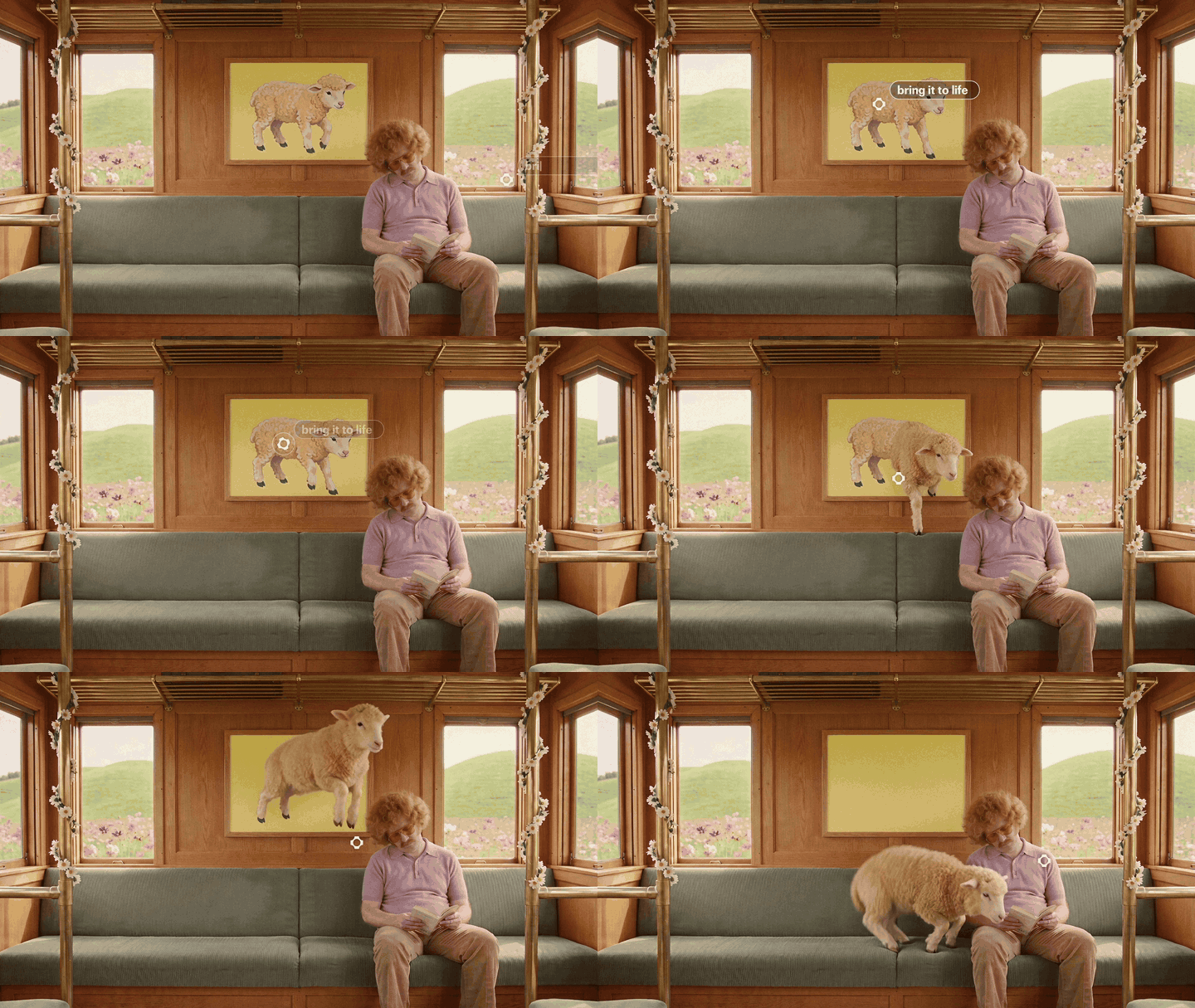
Bring any subject to life
GPT Image 2.6 reads a reference, whether a painting, a sketch, a mascot or a photo of your pet, and rebuilds that subject in a new form while everything you did not mention stays where it was. Here a painted lamb steps out of its frame and onto a real railcar bench, and the passenger beside it never moves.
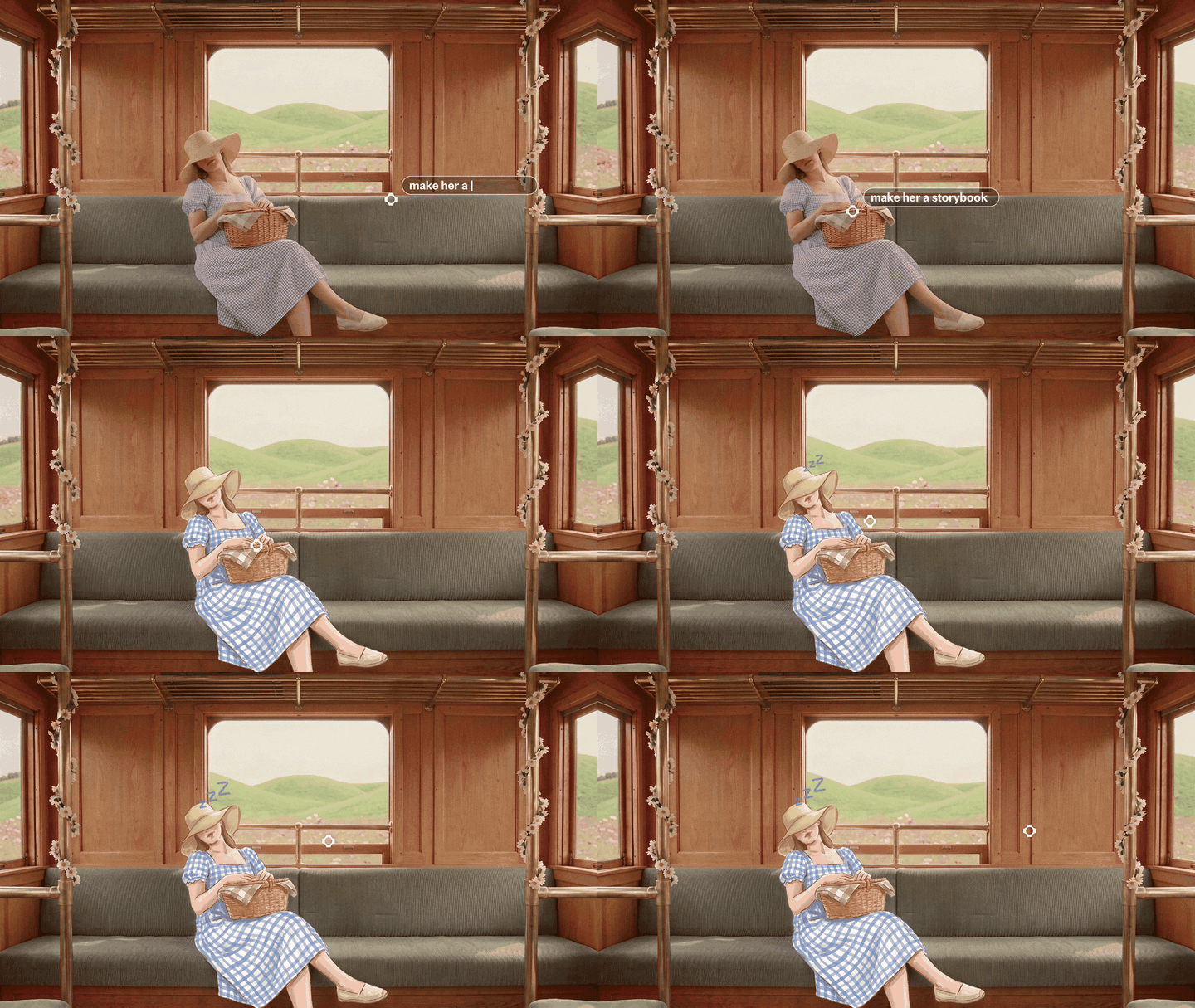
Generate across any style
Subjects stay recognizable as they move between styles, from photograph to storybook illustration to gouache, so one character can carry a whole campaign in different looks. The woman in gingham keeps her pose, her hat and her basket as she turns into a hand-drawn illustration inside a photographic railcar.
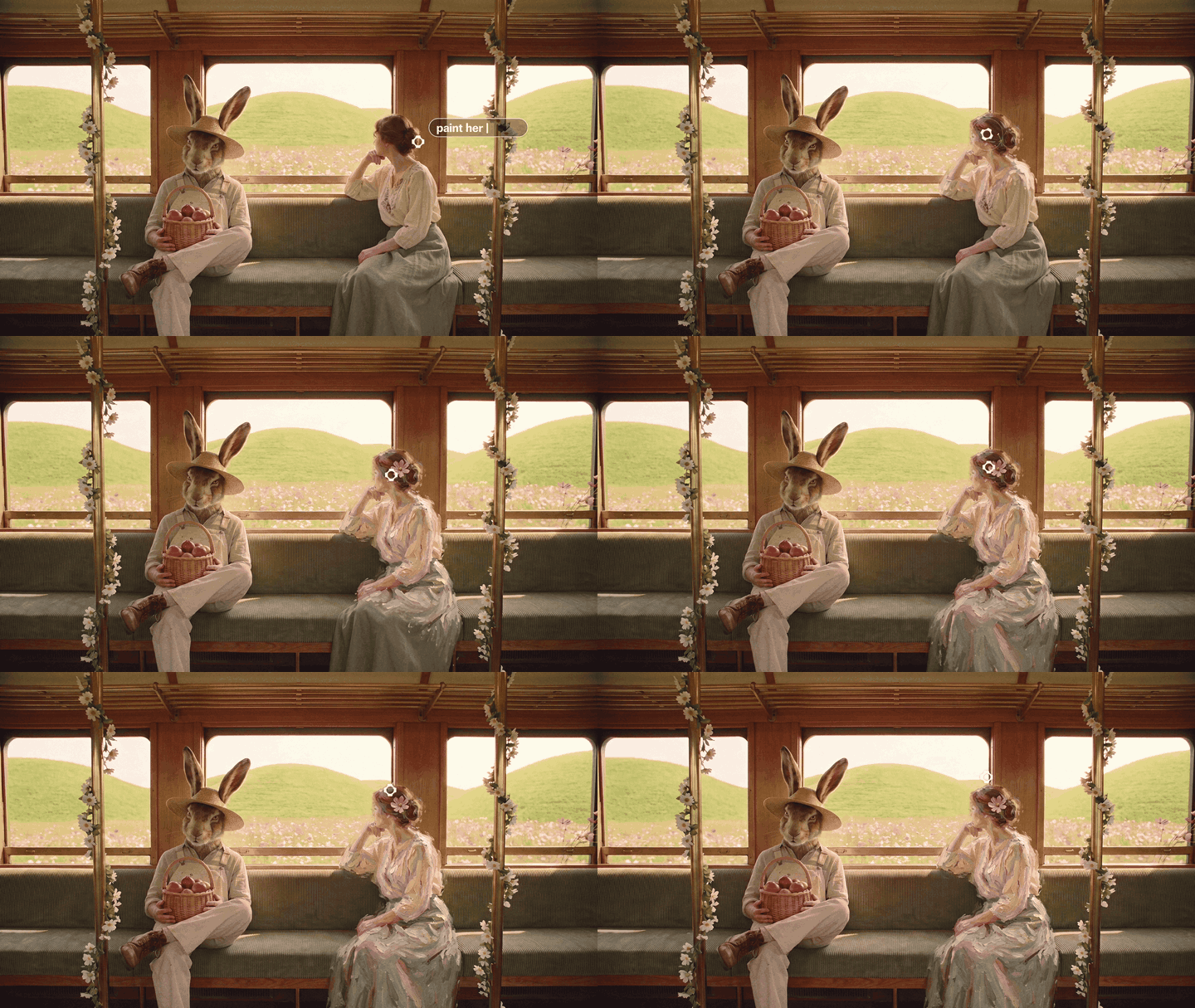
Point at exactly what should change
New on the API in 2.6, markup lets you draw on an image to show where an edit lands, instead of describing the spot in words. Point at one passenger and ask for oil paint, and only she changes: the rabbit beside her and the railcar stay photographic.
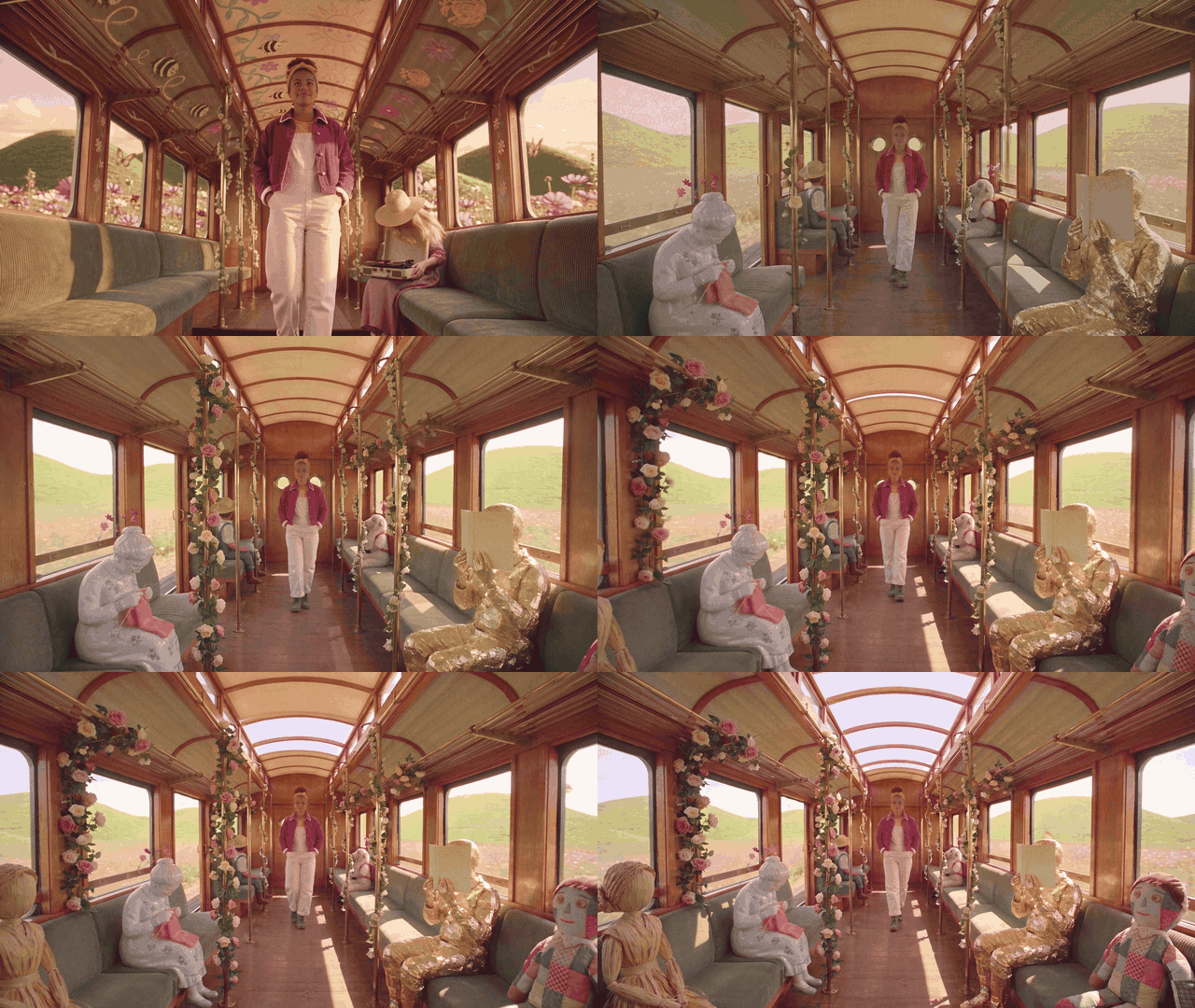
Many subjects, one edit, nothing drifts
Sunburst holds details steady from one edit to the next, and the new complexity setting lets the model plan more for crowded scenes. One instruction turns every passenger into a different handmade doll, in porcelain, gold leaf, straw and patchwork, while the woman walking the aisle stays herself.
Character sheet and location generation
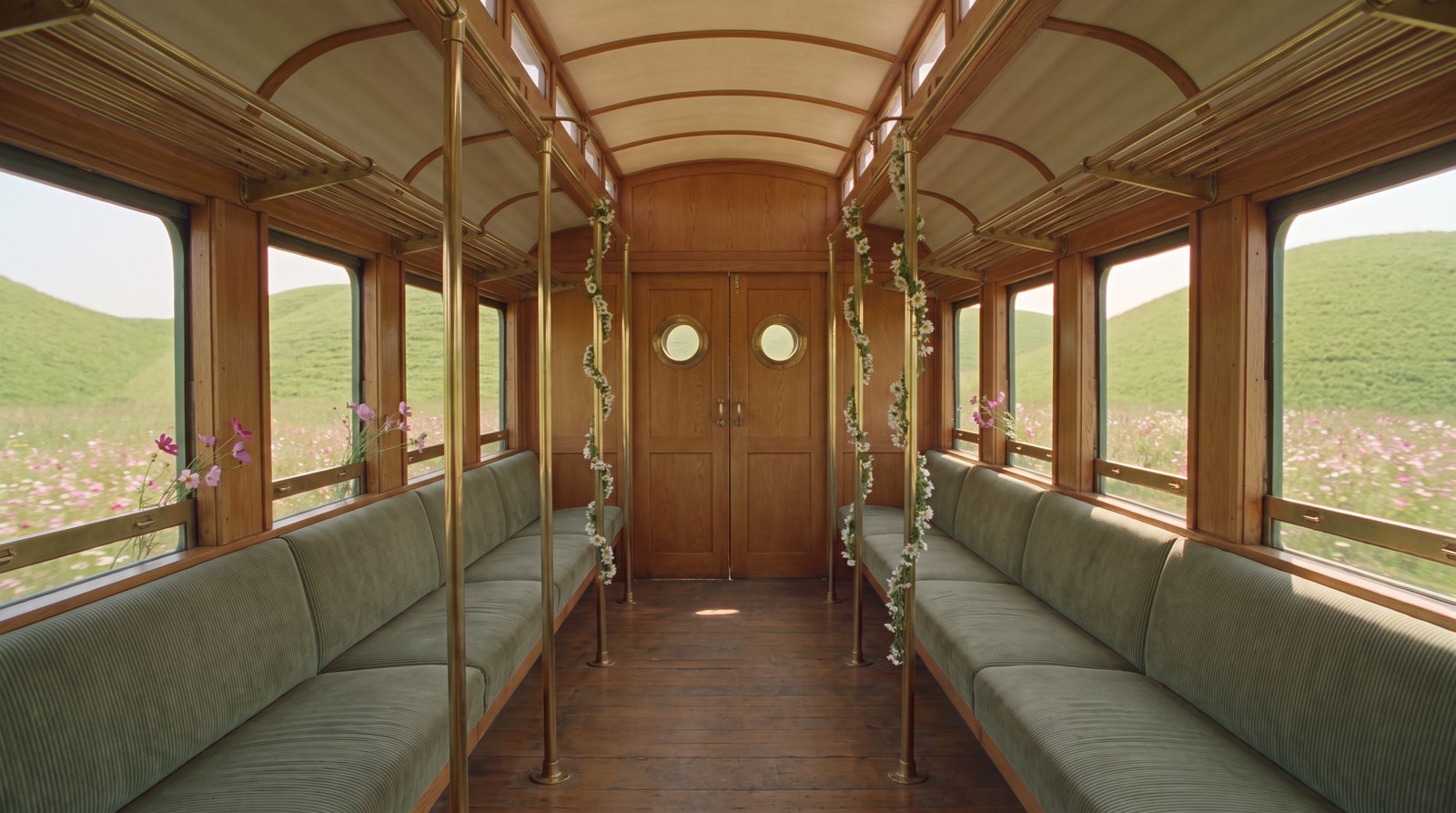
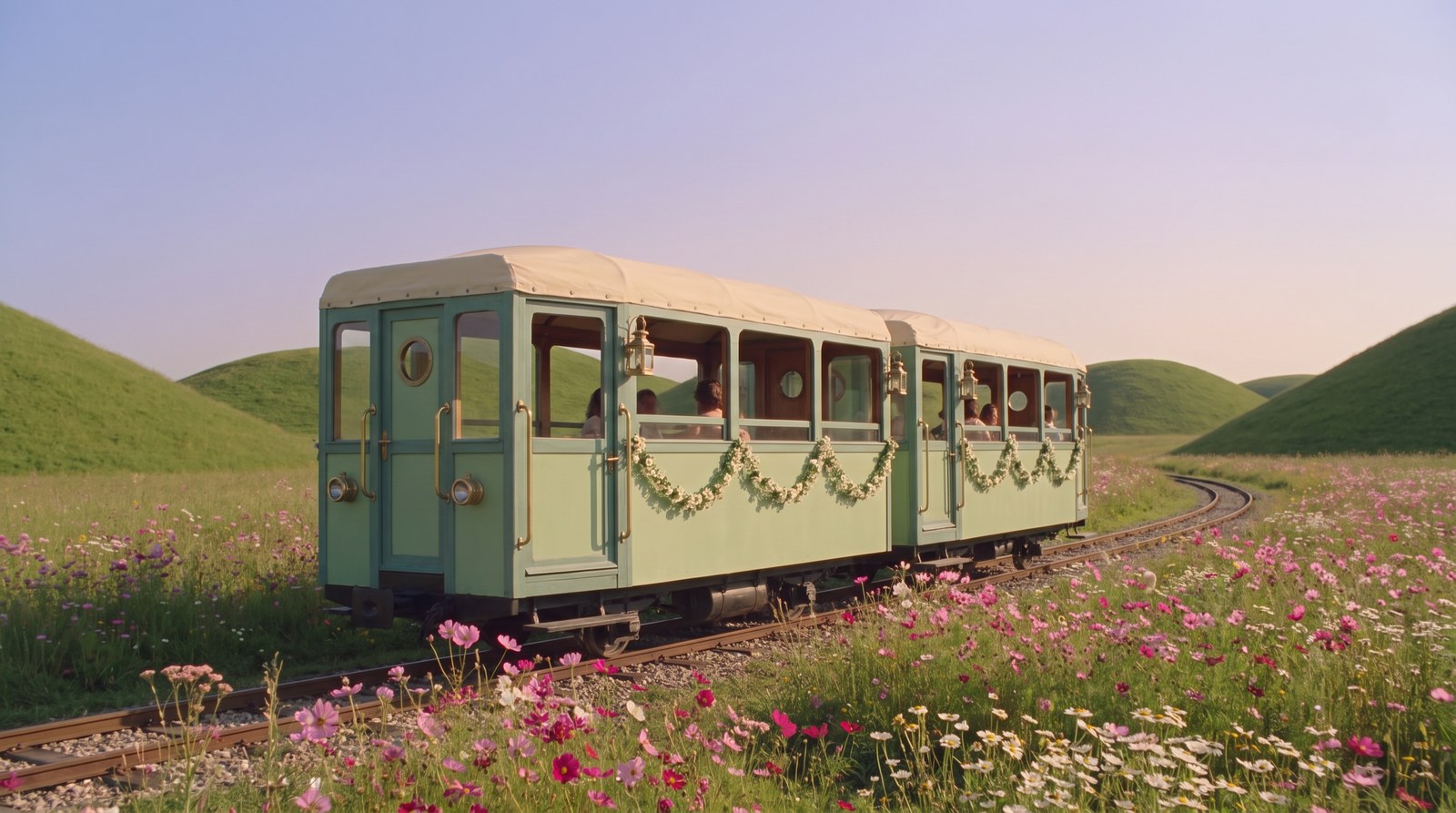
The lead character and the railcar, inside and out, for The Meadow Line, fal's Lush Valley commercial.
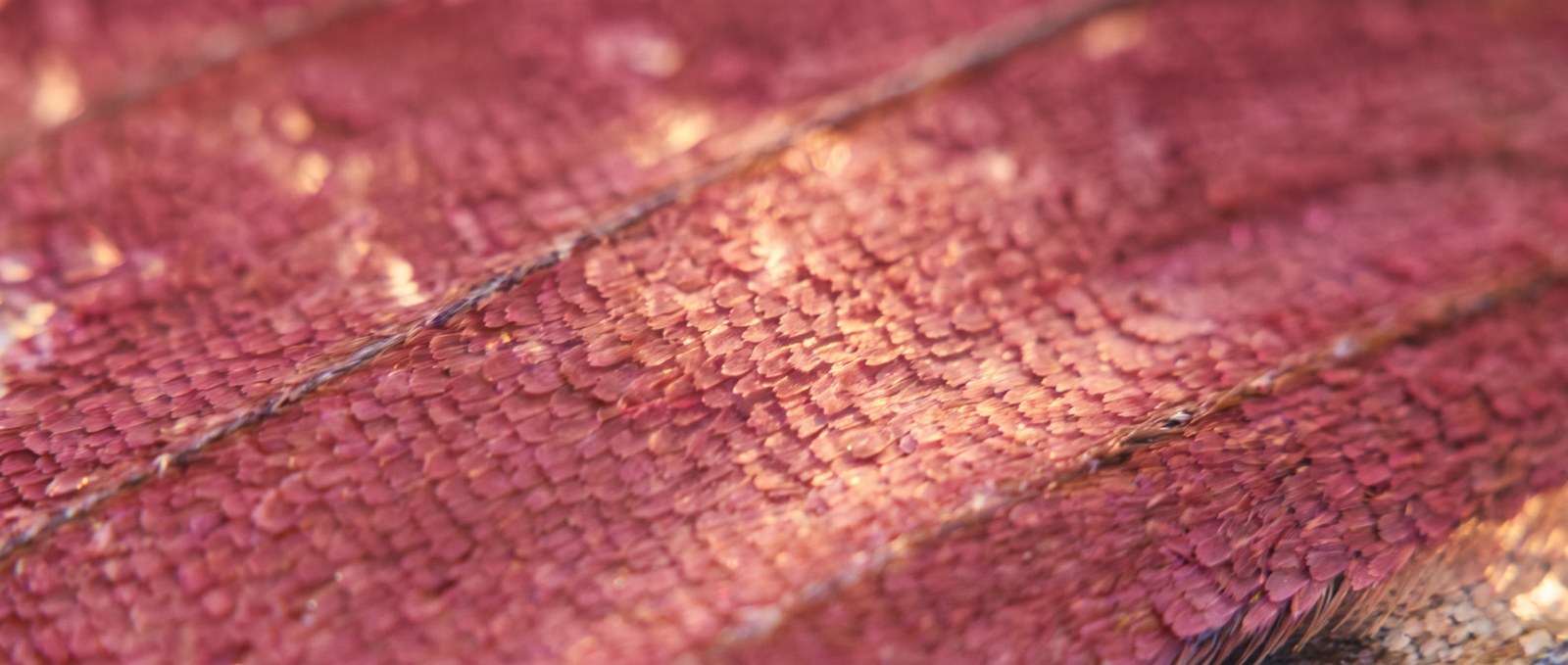
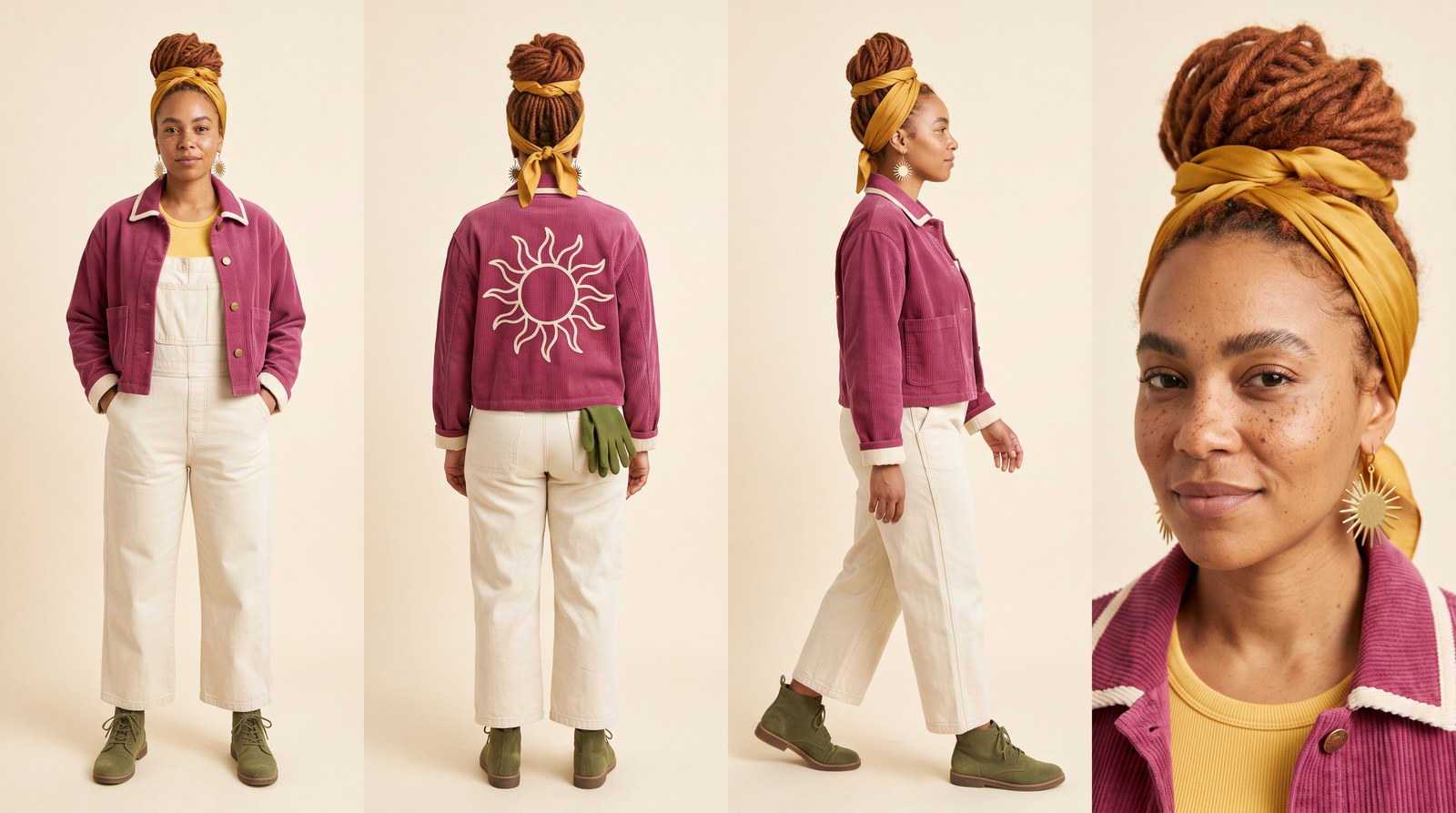
What are the examples of GPT Image 2.6?
Reference inputs, the prompt, and the frame that came back, from the production of The Meadow Line, fal's Lush Valley commercial.
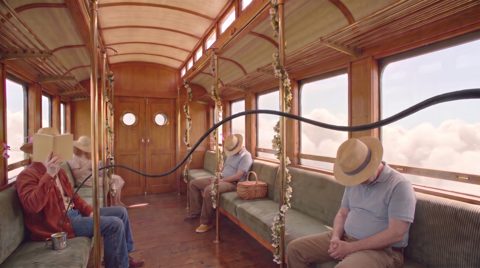
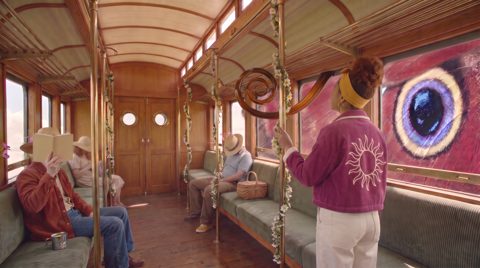
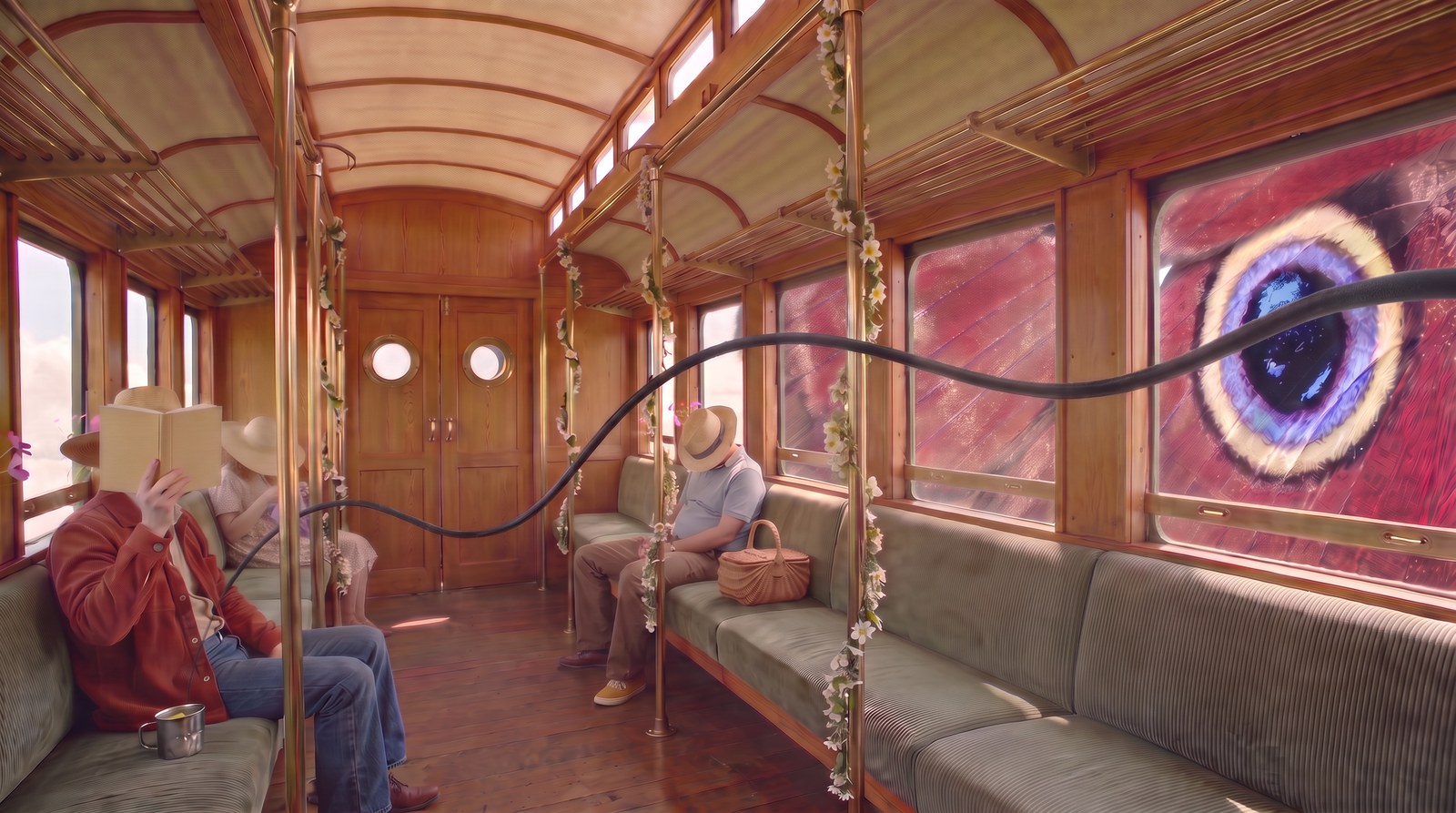 Generated result
A giant butterfly at the window
Starting from a railcar frame, one instruction removes a passenger, fills the windows with a colossal berry-red wing and threads the butterfly's tongue through an open window, while the reader, the mug and the light stay exactly as they were.
Prompt
"Edit image 1. Keep everything exactly the same - camera, framing, railcar, the reader with his book over his face, the mug, the middle dozing man, the knitting woman, the clouds in the left windows, light and colour - except: (1) Remove the dozing man sitting in the right foreground; that stretch of sage corduroy bench is now empty. (2) The large windows on the right side of the car are now completely filled by the colossal butterfly's dusty berry-red velvet wing pressed against the glass, with its great blue-ringed eyespot, exactly like the wing in the windows on the right of image 2; the butterfly is far too big to be seen whole. (3) The long proboscis comes in from the right edge of the frame through the open top of the nearest right-hand window, next to the wing. Keep the butterfly's proboscis on exactly the same path and at the same thickness, but make its surface matte dark charcoal-brown with a soft, slightly velvety texture and very faint fine rings along it, tapering gently to a fine tip, so it reads as a living insect's drinking tongue - not rope, not a hose, not a cable, no shine. (4) The knitting woman behind the reader bows her head a little more so the brim of her wide straw hat hides her whole face and chin. (5) The bench cushion beside the mug is plain sage corduroy with no stitching or marks. Nobody's face is visible. Film still from a dreamy 1970s summer movie, 16mm color negative, warm sun-faded grade, lifted milky shadows, creamy highlights, moderate saturation, fine grain. No text, no signs, no logos."
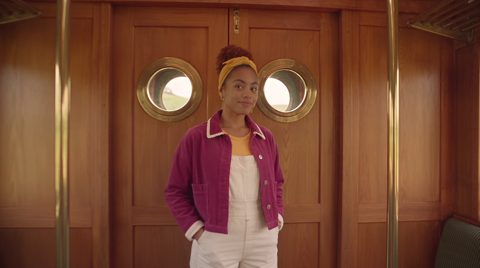
 Generated result
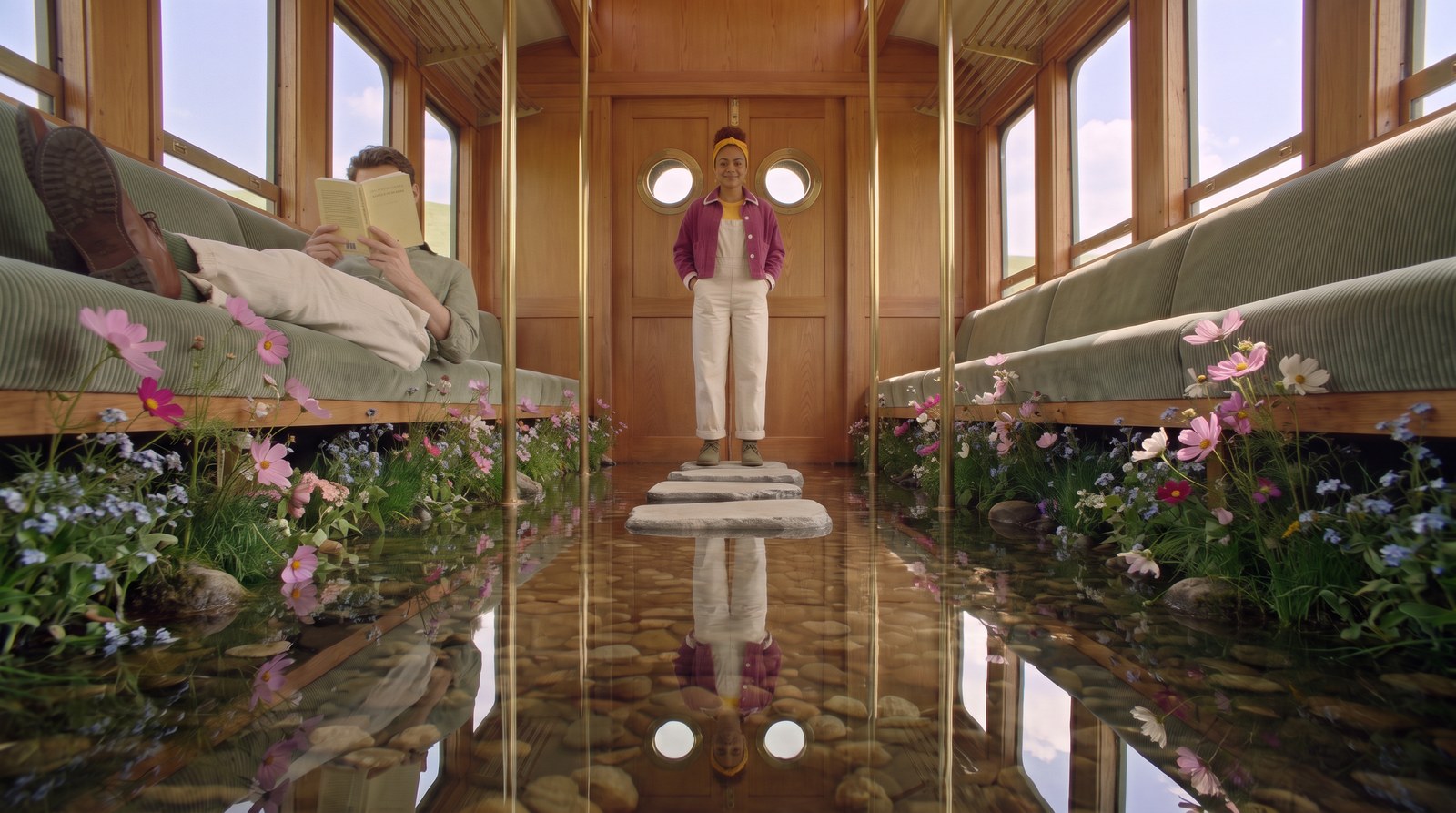
The aisle becomes a mirror pond
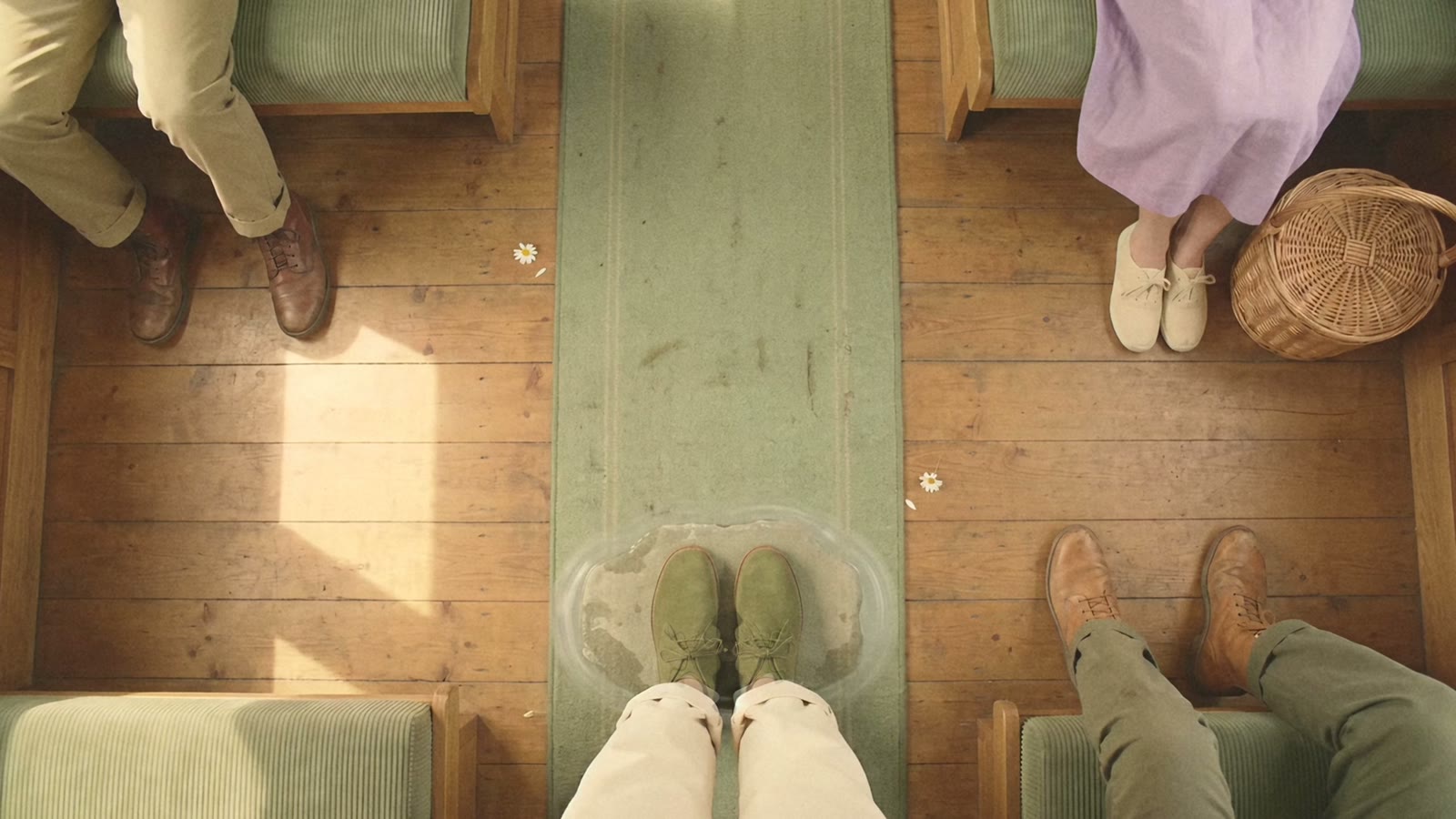
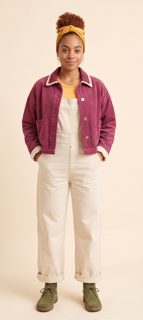
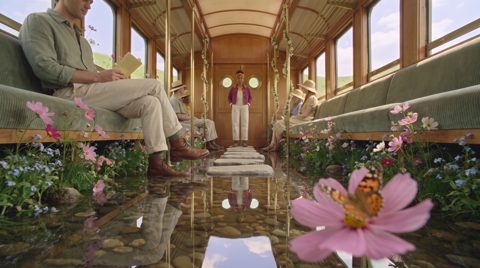
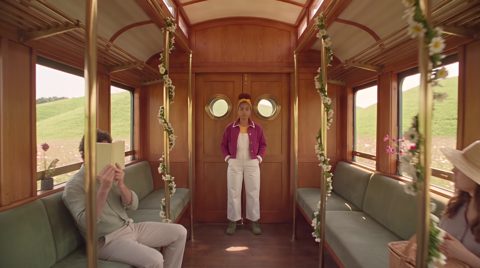
From a character sheet and two earlier frames comes a brand-new angle of the same set: Juno on a stepping stone, the floor turned into a clear pond that mirrors the sky, and a reader hiding behind his book.
Prompt
"Film still from a dreamy 1970s summer movie, 16mm color negative, the exact warm honey-oak look and sun-faded grade of image 1. NEW FRAMING of the same place: the camera stands in the middle of the railcar aisle a few metres back from the closed honey-oak double doors at the end of the car and looks straight at them, perfectly level, frontal and symmetrical, 50mm lens at chest height. The two round brass portholes in the doors sit in the upper part of the frame, one on each side of her head. the young woman from images 1 and 2 (same face, light-brown skin, curly copper-auburn hair in a high round bun with a mustard-yellow cotton headscarf band knotted on top, small gold drop-hoop earrings, cropped berry-magenta wide-wale corduroy jacket with cream fleece-trimmed collar and cream cuffs, buttercup-yellow tee, cream wide-leg denim overalls with rolled cuffs, moss-green suede lace-up boots) stands dead centre in front of the doors, full figure, hands in her pockets, facing the camera with a calm face. The floor of the railcar is no longer wood: it is a still, crystal-clear shallow pond like image 3, smooth round pebbles on the bottom, its glassy surface mirroring open periwinkle sky and soft white cloud; a short path of flat pale stepping stones leads up the aisle to her and she stands on the last stone, her upside-down reflection in the water beneath her boots. At the bottom-left and bottom-right of the frame, the ends of the sage-green corduroy side benches; clumps of pink and white cosmos and blue forget-me-nots grow along the bench fronts and spill over into the water. On the left bench, low in the bottom-left corner of the frame, the paperback reader from image 3 (sage linen shirt, cream trousers, brown leather boots) lounges back with his boots crossed up on the bench seat, holding an open plain cream paperback up in front of his face so his whole face is hidden behind the book; his head and book stay below the middle of the frame. Beside the doors, at mid-height on the left and right sides of the frame, plain calm honey-oak wall panels with nothing on them. Warm soft high-summer daylight, lifted milky shadows, creamy rolled-off highlights, olive-yellow greens, dusty rose pinks, moderate saturation, soft low-contrast lens, fine delicate grain. No text, no signs, no logos."
 Generated result
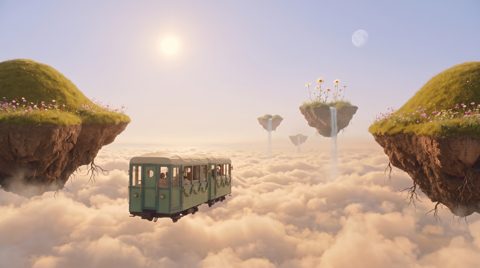
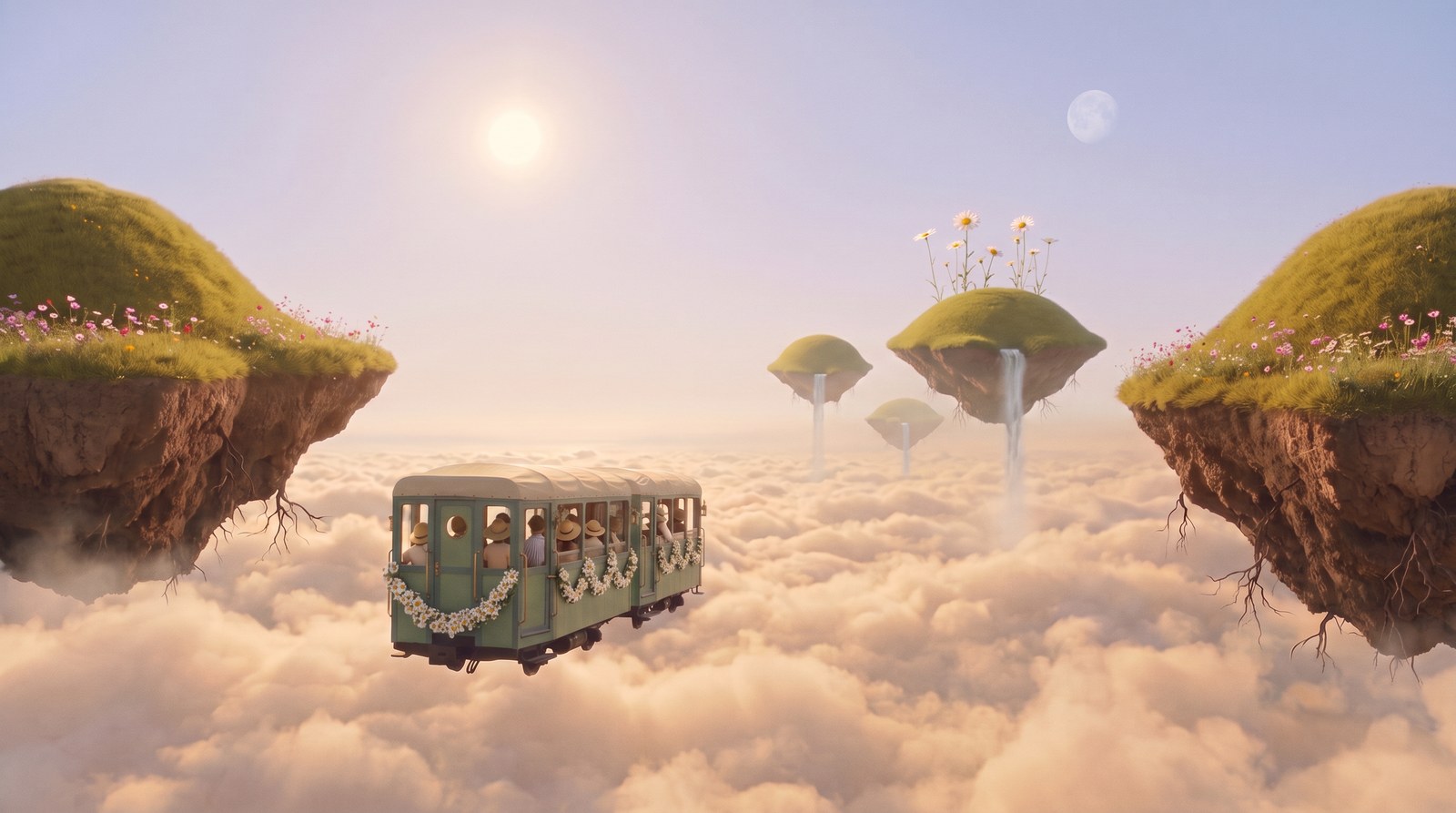
A railcar above the clouds
Targeted changes to an existing frame: the distant islands become round gumdrop hills with waterfalls, the garlands turn into white daisies, and the passengers face away, while the railcar, the two framing islands, the sun and the moon stay put.
Prompt
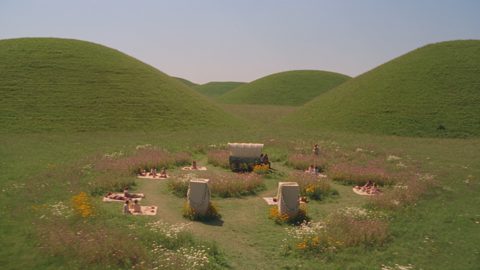
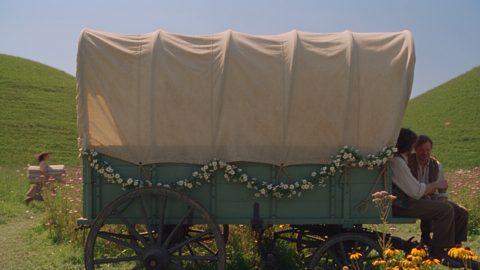
"Edit this film still and keep everything else exactly as it is: the railcar's position, angle, size and design, the two large framing islands at left and right, the sun, the moon, the sky and the cloud sea. Change only these things: (1) Replace the three flat slab-shaped distant floating islands with three round gumdrop-hill floating islands: each a smooth, rounded dome of olive-yellow meadow turf like the grassy hills in image 2, sitting on a small rounded base of brown earth with a few hanging roots, softened by warm atmospheric haze but clearly green. Keep a thin silvery waterfall trailing from the rim of each one down into the clouds, breaking into mist. On the largest one, keep the cluster of oxeye daisies and make them tower over the hill, as tall as trees. (2) Make the daisy garlands on the railcar's sides chunky swags of white oxeye daisies with yellow centres, clearly white, like the garlands in image 3. (3) Every passenger inside the railcar wears a straw hat and is seen from behind; no faces. (4) Make the whole image look like a real photograph shot on 16mm color negative film in the 1970s: real grass blades and real soil texture, soft low-contrast lens, fine grain, gentle halation; not a 3D render. No heart shapes. No text, no signs, no logos."
 Generated result
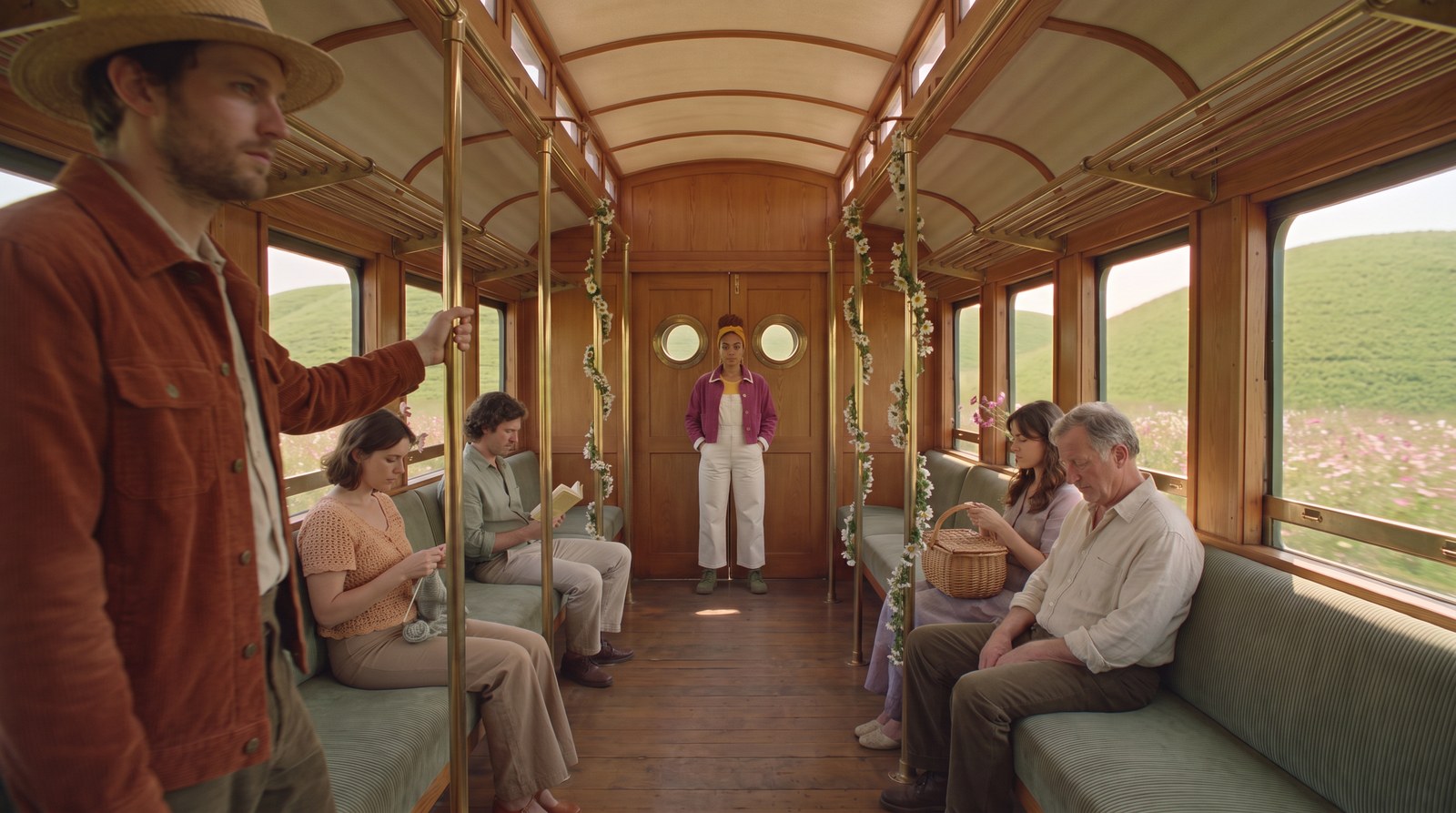
The whole cast, in one frame
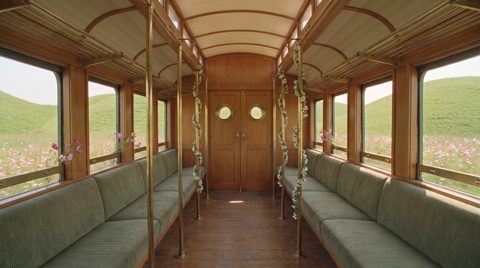
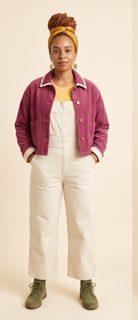
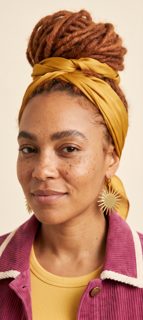
The empty interior plate, Juno's front view and portrait, and a style reference combine into the opening shot of the film: passengers knitting, reading and dozing on both benches, and Juno small at the far doors.
Prompt
"Film still from a dreamy 1970s summer movie, 16mm color negative, the warm sun-faded soft low-contrast grade of image 4. Use image 1 as the exact set: the same railcar interior, same one-point perspective straight down the center aisle from chest height, honey-oak panels, sage corduroy benches along both walls, brass poles with daisy garlands, cream canvas ceiling, open windows onto green gumdrop hills and cosmos, the oak double doors with two round portholes at the far end. Now the railcar is in motion with a few passengers: on the left bench a woman knitting and a man reading a paperback with a plain cover, on the right bench a woman with a wicker basket on her knees and an older man dozing in a cream linen shirt; all fictional adults in 1970s linen, corduroy and crochet in muted apricot, sage, lavender and rust, looking down, ignoring the camera. Far down the aisle, small in frame at the vanishing point in front of the double doors, stands the woman from images 2 and 3 (same face, copper locs in a high bun wrapped in a mustard silk scarf, berry-magenta corduroy jacket with cream collar, yellow tee, cream overalls, moss-green boots), hands in her pockets, facing the camera. In the near left foreground, very close to the lens and slightly out of focus, a tall man in a straw hat and rust corduroy jacket stands holding a brass pole, his shoulder occupying the left edge of the frame. Soft hazy morning daylight, gentle and slightly muted, no harsh sun yet. No text, no signs, no logos."


How to call the GPT Image 2.6 API
The client handles the queue protocol, polls for status and returns the result when the request completes. Flare and Sunburst take the same parameters, and the edit endpoints add image_urls, mask_url and markup_image_url.
import { fal } from "@fal-ai/client";

const result = await fal.subscribe("openai/gpt-image-2.6/flare/text-to-image", {
  input: {
    prompt:
      "A hand-painted wooden sign in a wildflower meadow reading 'BUTTERFLY SOCIAL', wrapped in a daisy garland",
    image_size: "landscape_4_3",
    quality: "high",
    reasoning_effort: "high",
  },
  logs: true,
  onQueueUpdate: (update) => {
    if (update.status === "IN_PROGRESS") {
      update.logs.map((log) => log.message).forEach(console.log);
    }
  },
});

console.log(result.data);
console.log(result.requestId);


The four GPT Image 2.6 API endpoints
Flare and Sunburst, each with text to image and editing. One API surface and one set of token rates, with a different balance of speed and detail.


OpenAI's default image model for most applications. Fast, high-quality generation with natural lighting, rich textures, and support for complex layouts including transparent backgrounds.
Precise image editing that changes only what's asked, keeping subject, composition, and background intact, with reference subjects staying recognizable across styles and successive edits.
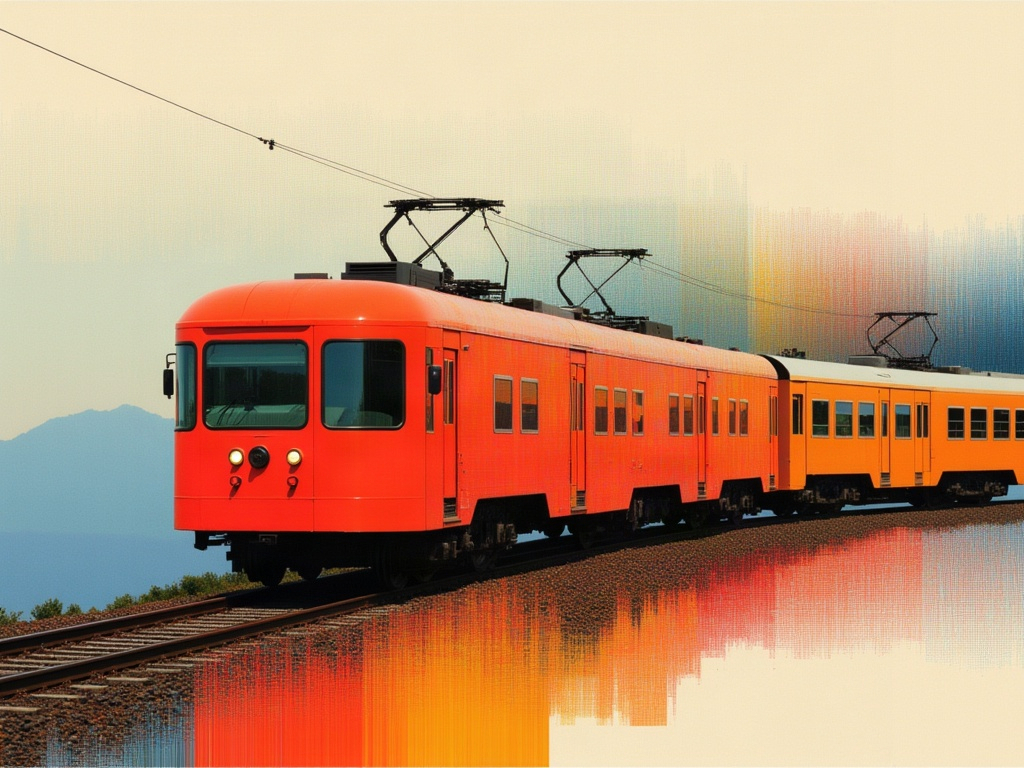
OpenAI's precision-focused image model, built for premium visual work, extra fidelity on intricate detail, in exchange for longer generation times.
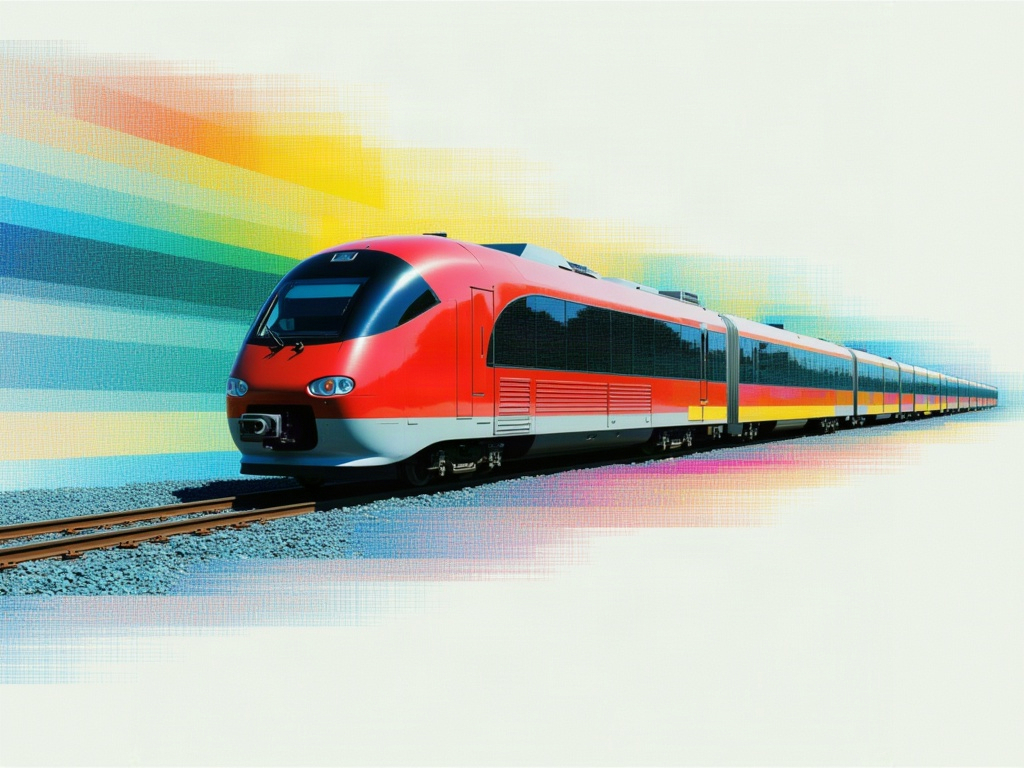
Editing built for the tightest control, edits scoped precisely to the instruction, with subject and composition preserved across many rounds of revision.
Common questions about GPT Image 2.6
What is GPT Image 2.6?
GPT Image 2.6 is OpenAI's AI image generation and editing model, available on fal in two variants. Sunburst is the base model, built for premium visual work and intricate detail. Flare is the smaller, faster model and the default for most applications. Each variant has a text-to-image endpoint and an editing endpoint, four in total, and all of them support adjustable reasoning, markup editing and animated GIF output.
What is the difference between Flare and Sunburst?
They share one API surface and the same token rates. Sunburst is the base GPT Image 2.6 model and spends longer on a request to hold intricate detail. Flare is the smaller model and returns faster, which makes it the everyday choice. Start on Flare and move to Sunburst when an image will be viewed large or cropped into.
How do I access the GPT Image 2.6 API?
Create a fal account, copy a key from your dashboard, and call any of the four endpoints with the Python or JavaScript client, or over REST. The API documentation lists every parameter.
How much does GPT Image 2.6 cost?
GPT Image 2.6 bills by token: text at $5.00 per million input and $10.00 per million output, and images at $8.00 per million input and $30.00 per million output, with cached input at $1.25 and $2.00. On launch day, real Flare text-to-image requests at high quality and low reasoning effort billed about $0.053 for a 1024 x 1024 image, $0.041 for 1536 x 1024 and $0.040 for 1920 x 1088. Higher reasoning effort spends more tokens, so it costs more. Flare and Sunburst bill at the same rates.
What does reasoning effort do?
Reasoning effort sets how much the model plans before it renders. Low suits precise edits such as background swaps and quick variations. Medium suits images that balance several subjects and constraints. High, the default, suits complex compositions: infographics, dense text, structured layouts and intricate lighting. More reasoning adds time and tokens.
How does markup editing work?
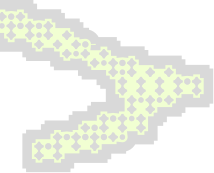
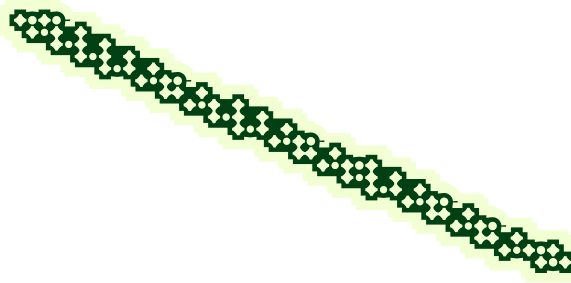
Draw your circles, arrows and notes on a transparent PNG the same size as the image you are editing, and pass it as markup_image_url alongside the image and a short prompt. GPT Image 2.6 reads the marks as the instruction and returns the edited image without them.
Can GPT Image 2.6 make animated GIFs?
Yes. Set output_format to gif on a text-to-image or edit request. frame_count sets the number of frames, from 2 to 16 with a default of 9, and frame_duration_ms sets how long each frame shows, from 20 ms to 2 seconds. The image size applies to each frame.
What resolutions does GPT Image 2.6 support?
Presets cover square, portrait and landscape at 4:3 and 16:9, and 'auto' lets the model pick. You can also pass an explicit width and height: both edges must be multiples of 16, the long edge caps at 3840px, the aspect ratio at 3:1, and the total pixel count must fall between 655,360 and 8,294,400.
How does GPT Image 2.6 compare to GPT Image 2.5?
GPT Image 2.6 keeps the same sizes, token rates and Flare and Sunburst split, and adds reasoning effort, markup editing, animated GIF output and up to ten images per request. GPT Image 2.5 keeps its own page and endpoints on fal.
Can I use GPT Image 2.6 for commercial projects?
Yes. Images generated through the fal API can be used in commercial projects. Check fal's terms of service for full details on usage rights and licensing.
Ready to transform your enterprise with AI?
Take the first step towards AI-driven innovation. Our team of ML engineers is ready to help you prototype, develop, and scale your AI solutions.