GPT-6 Astra arrived and shocked the internet with what it can do.
When I saw it live, I asked myself 1 question: what if I give it access to fal and it can access our 1,000+ generative media models across image, video, 3D, audio, etc.?
In this guide, I'll walk you through the 5 best use cases for GPT-6 Astra that I think will make you revisit your current generative media workflows.
TL;DR
GPT-6 Astra is OpenAI's frontier model, reachable inside ChatGPT or through the API as gpt-6-astra, and it adds the ability to plan a project, write the code it needs, review its own output, and iterate until the brief is met.
The five strongest use cases of GPT-6 Astra are video and motion production, image direction and visual production, 3D worlds built as browser scenes, playable browser games, and architecture and spatial visualization.
fal offers the best generative media plug-in to GPT-6 Astra, as our platform places over 1,000 image, video, audio, and 3D models behind one API that the agent can search, price, and operate without ever leaving the conversation.
What are the 5 best use cases for GPT-6 Astra?
Here are the 5 best use cases for GPT-6 Astra based on my testing and what we can create now:
| Use case | What GPT-6 Astra delivers | What can we create now? |
|---|---|---|
| 1. Video and motion production | A planned shot sequence, generated, evaluated, reshot where needed, and cut to length | A 10-second EV commercial, cinematic b-roll for a paid campaign, a product launch teaser, a UGC-style testimonial cut |
| 2. Image direction and visual production | A campaign package built around an approved visual specification, with variants and crops | A luxury watch launch campaign, a coffee brand identity kit, high-CTR YouTube thumbnails, a fashion lookbook with one consistent model |
| 3. 3D worlds and asset production | An explorable browser scene combining coded geometry with generated surfaces | A rainy cyberpunk district, an interactive anatomy explainer, a walkable concept store, a product you can spin 360 degrees |
| 4. Playable games and interactive experiences | A working browser build with generated art layered onto a tested game loop | A top-down delivery game, a playable ad, a browser racer, an educational simulation |
| 5. Architecture and spatial visualization | Three design directions invented from a written brief and rendered as a consistent room set | Concept directions for a client pitch, an interior materials study, a mood set for a property listing, a spatial study before a site exists |
Note: the order reflects where an agent changes the outcome most.
Video comes first because the distance between a generated clip and a finished sequence is the widest of the five, and closing that distance is the agent's whole contribution.
Image work follows closely, as the entire job gets done without anything leaving the two tools.
Why is fal the best generative media partner for GPT-6 Astra?
fal is a generative media platform that gives you API access to over 1,000 models spanning image, video, audio, 3D, and editing.
Connecting it to ChatGPT takes a single install from the apps directory, with no keys to configure and nothing to host.
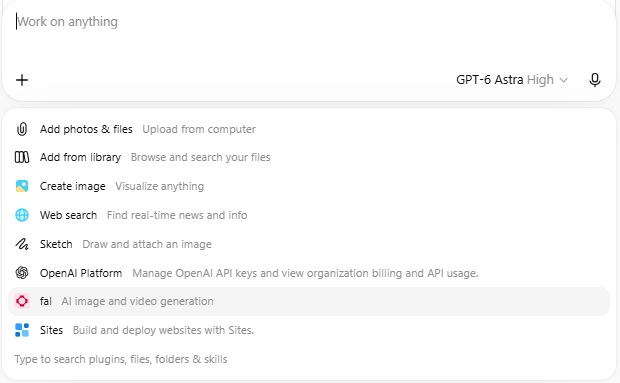
Once that connection is live, GPT-6 Astra reaches every one of those models inside the same conversation where you wrote the brief.
The range is what makes these five use cases workable, as a campaign needing a hero image, an animated cut, a voiceover, and a subtitle pass draws on four different classes of model without ever changing tools.
Direction is the other half of it, and a brief written with enough specificity can produce a finished piece in a single pass, with the agent selecting models, generating assets, reviewing its own output, and assembling the result.
How do GPT-6 Astra and fal work together?
The division of labor is simple:
GPT-6 Astra handles direction, planning, code, and review, while we handle every stage that requires a model to run.
You set the objective and approve the result, and the agent covers everything in between.
Nothing further needs configuring, as the agent discovers what it needs from the catalog while the project runs.
A brief goes in at one end and an organized set of finished assets comes out at the other.
How do you connect fal to GPT-6 Astra?
You install fal from the apps directory inside ChatGPT and authorize your account, with no configuration files to edit at any stage.
Asking ChatGPT to connect to fal should bring up the listing directly, which is what I did.
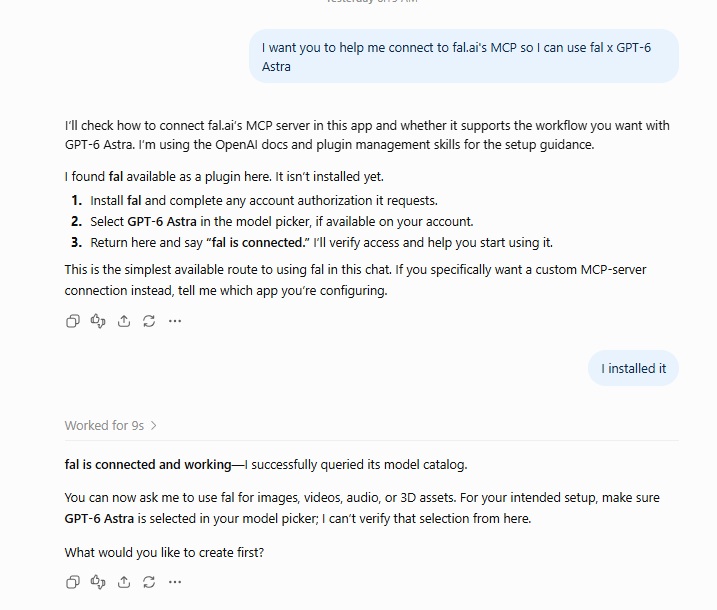
You can then confirm that the connection is live by asking GPT-6 Astra about it.
How should you prompt GPT-6 Astra once it has fal access?
You want to write a production brief that assigns the agent responsibility for the outcome and allows it to determine the steps.
That is a different exercise from writing a prompt.
The common failure among experienced fal users that I've seen is treating the agent as one more model in the catalog, so that a request like "generate a cinematic commercial" asks something capable of planning a shoot to behave like a text-to-video endpoint.
A brief that works assigns a role and states a definition of done.
Now, let's go over the 5 best use cases:
1. Video and motion production
Video is the strongest of the five, because the distance between generating a clip and producing a commercial is almost entirely direction, and direction is what the agent supplies.
The technique that carries the result is locking the subject first, approving a single still, and driving every animated shot from that frame so the vehicle holds its shape across cuts.
An agent keeps that discipline when consistency is named as a rejection criterion, and drifts without the instruction.
Assembly survives the absence of Premiere, as our FFmpeg utility endpoints handle trimming, scaling, blending, interleaving, audio merging, and subtitles, though that family is narrower than a timeline editor and worth checking against the operation your cut requires.
The 10-second spot brief
You are the creative director and production lead for a 10-second
advertisement for a premium electric vehicle.

The campaign should feel expensive, restrained, and futuristic.
It is going out as a social campaign.

You have fal connected for generative media, plus code and browser.
You do not have Blender, Unreal, Photoshop, Premiere, After Effects,
or DaVinci Resolve. Do not plan around them.

Work in this order:
1. Develop three concepts and pick the strongest. Tell me which and why.
2. Build a shot list.
3. Decide which shots should start as generated stills and which can
   go straight to video.
4. Search fal for candidate models and check their schemas and pricing
   before you run anything. Do not assume model ids.
5. Lock the vehicle. Generate stills, choose one hero frame, and drive
   every animated shot from approved frames so the car stays consistent.
6. Prototype the two hardest shots before you generate the rest.
7. Evaluate every clip for vehicle consistency, lighting continuity,
   composition, and motion artifacts. Regenerate anything that fails.
8. Assemble the sequence to 10 seconds using fal's utility endpoints.
   Tell me if an operation you need isn't available.
9. Organize the final assets with clear filenames.

Reject clips where the car changes shape, proportion, or trim between
shots, where the camera warps, or where objects deform mid-motion.

Do not accept the first usable take if another iteration would fix a
visible defect.

Only ask me a question if you cannot proceed without my answer.

Done means one assembled 10-second sequence plus the source clips,
not a folder of generations.
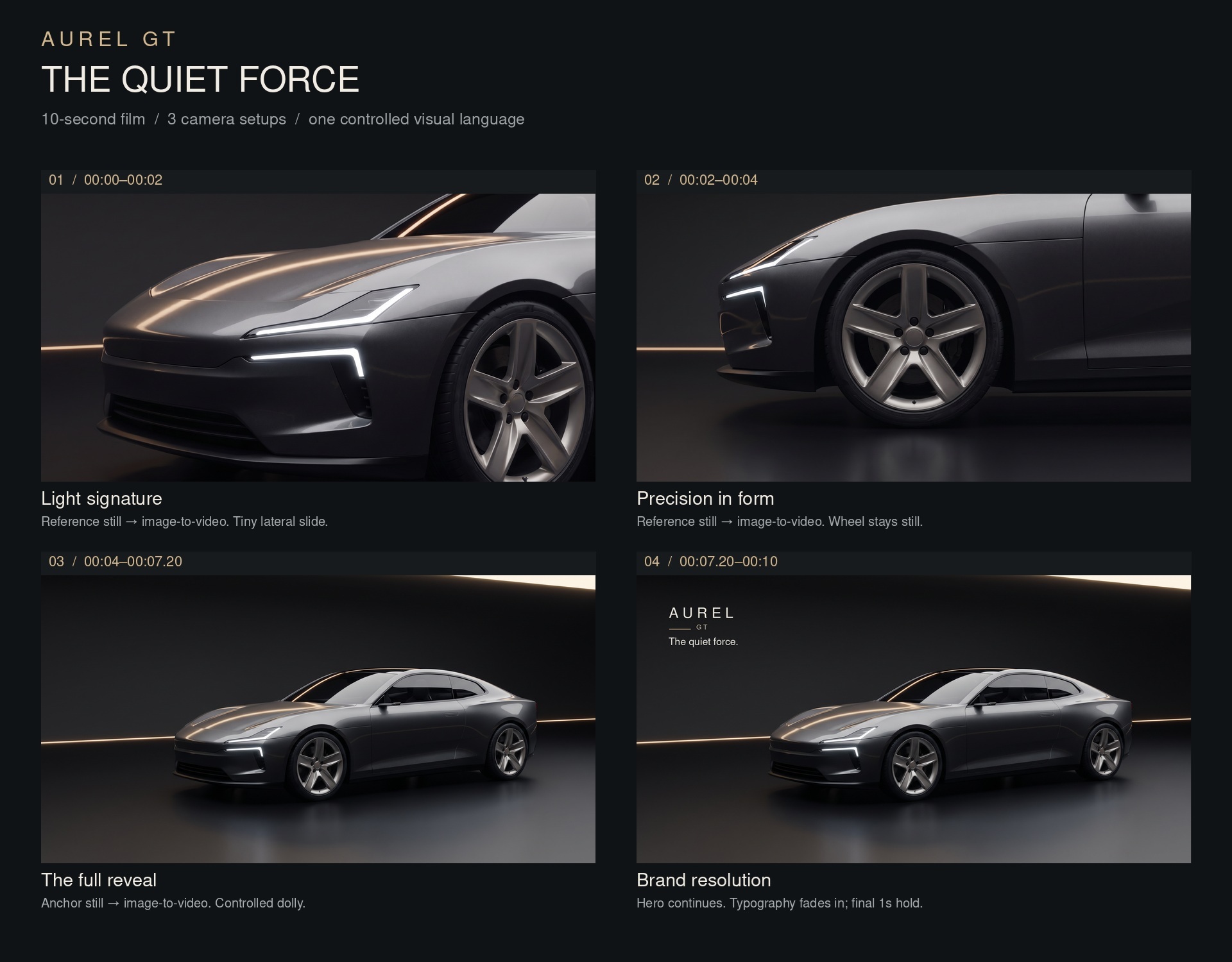
Here's how the car advertisement looks like:
The model was able to generate multiple images of Aurel GT in order to assist with the video generation process.
falMODEL APIs
The fastest, cheapest and most reliable way to run genAI models. 1 API, 100s of models
2. Image direction and visual production
Image work is the cleanest of the five, since the entire deliverable is produced and finished without anything leaving ChatGPT and our API.
Getting one good image is rarely the difficulty, whereas getting fifteen that look like a single shoot is a directing problem, solved by writing the visual language down early and holding every later generation against it.
Once a composition succeeds, reuse it through image-to-image or an editing endpoint for crops, variants, secondary shots, and social sizes, as starting each asset from text discards whatever was working.
The watch campaign brief
Act as senior art director and visual production lead for the launch
campaign of a new luxury watch brand.

The work has to communicate precision, craftsmanship, restraint, and
modern luxury in premium materials.

You have fal connected for image generation and image editing.
You do not have Photoshop, Figma, or any design application.

Define three visual directions and explain the logic of each before
you generate anything.

Pick one, then write down the reusable visual language: palette,
lighting model, materials, camera treatment, and composition rules.
Every later generation gets checked against that written spec.

Generate a small exploratory set, evaluate it against the spec, and
pick the strongest composition.

Build the campaign around that approved frame using image-to-image
and editing endpoints so the visual identity holds.

Produce hero, secondary, and cropped social variants.

Reject anything with malformed typography, inconsistent case geometry,
or a light source that contradicts the spec.

Done means a labeled campaign package with the visual spec attached,
not a set of unrelated good images.
The model ended up providing me with a brief in PDF format:
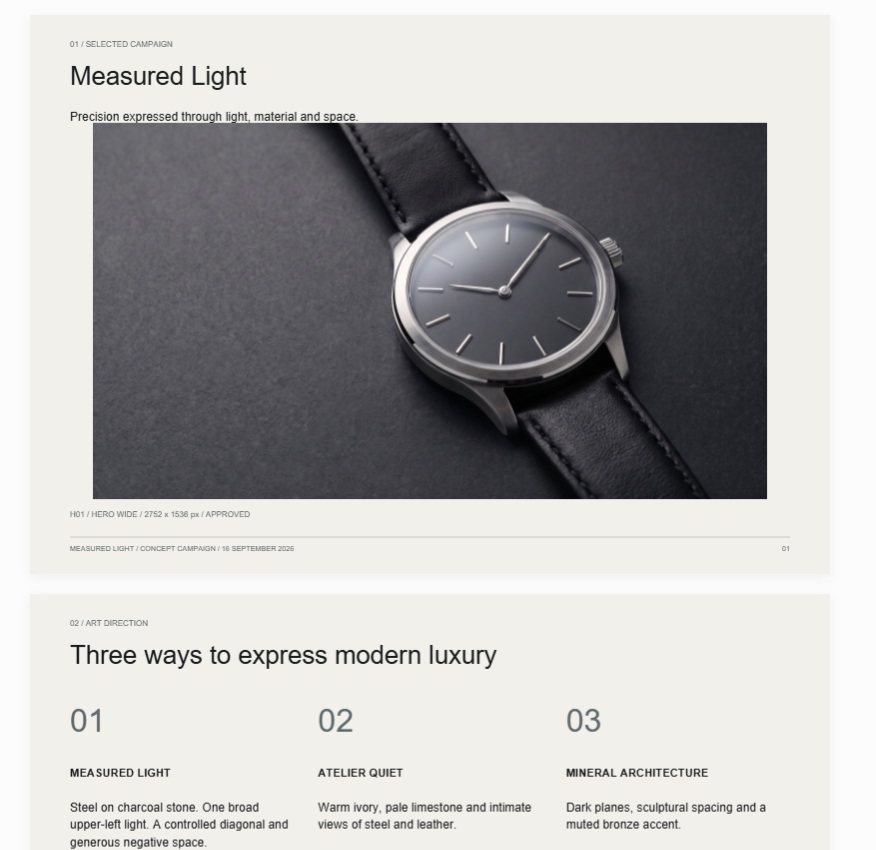
It used Nano Banana Pro and Nano Banana Pro Edit to generate 12 images in total, including three explorations and nine edits.
3. 3D worlds and asset production
Without a 3D application, the workable architecture is a browser scene in which GPT-6 Astra writes the geometry and the renderer in code while we generate the surfaces, textures, and signage that make the result look like a place.
Browser-based 3D reproduces under this constraint where the Blender and Unreal reconstructions do not, and several of the most widely shared demonstrations from the launch were exactly that.
Settling the split is the first decision in the workflow, as repeating structure such as street grids and building masses belongs in code while surface detail belongs with us.
Our text-to-3d and image-to-3d models are worth searching for hero props, and the agent should check the schema before writing loader code, since the output format determines how the mesh reaches the scene.
The cyberpunk district brief
Build a self-contained browser 3D environment: a rainy cyberpunk
district at night, roughly four city blocks, explorable with camera
controls.

You have fal connected, plus code and the browser.
No Blender, no Unreal, no Unity, no external 3D editor.

Decide which geometry should be procedural code and which visual
elements are worth generating through fal. Explain the split before
you build.

Check schemas and output formats on any fal model before you write
code that consumes its output.

Build it, test it, fix what's broken, and keep the frame rate usable.

A coherent explorable district beats a large pile of disconnected
assets. Prioritize accordingly.
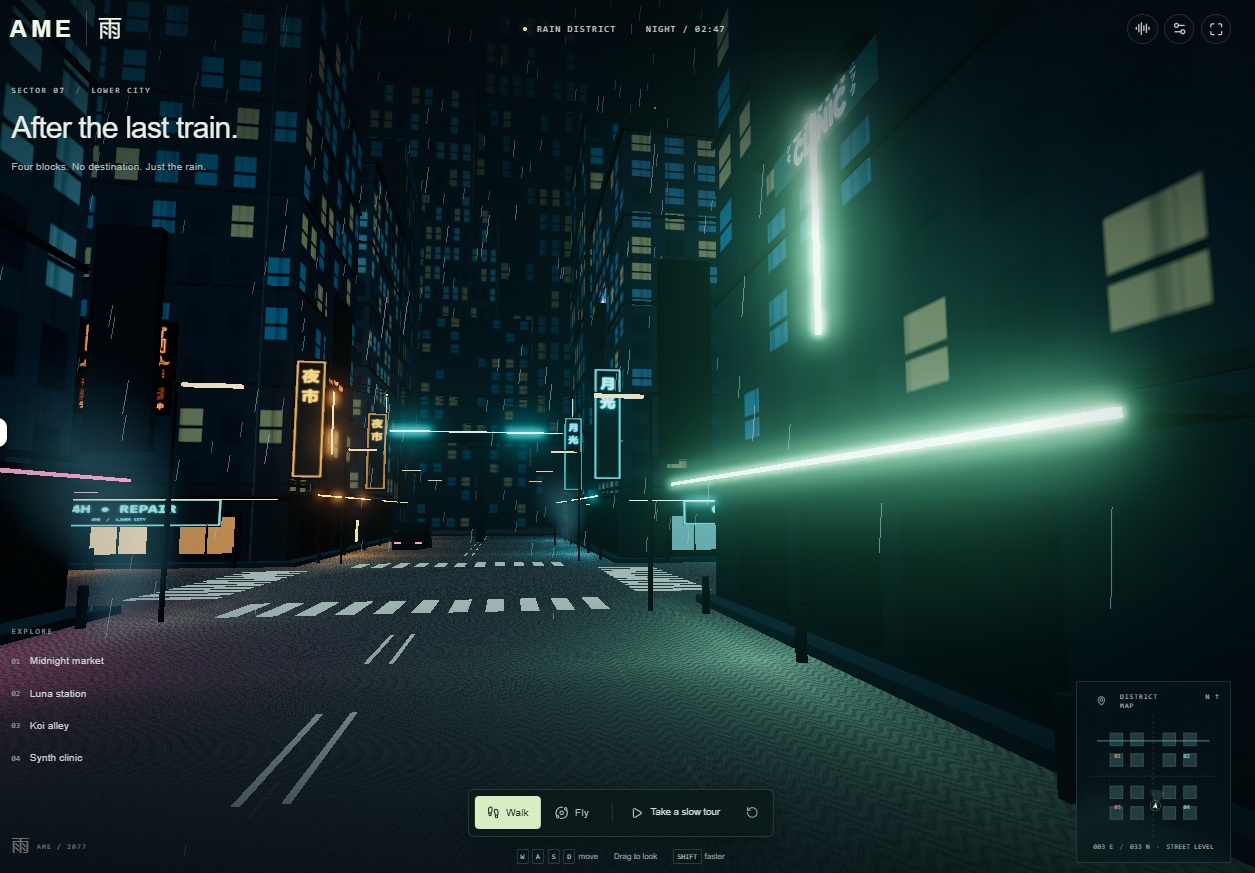
Astra ended up using fal's Nano Banana Pro to generate one 2048x2048 neon-sign atlas containing:
- Midnight Ramen
- Luna Transit
- Koi Club
- Synth Clinic
4. Playable games and interactive experiences
In game production, the agent takes the developer role; we operate as the content department, and the browser serves as the runtime.
GPT-6 Astra writes the game loop, the movement, the collision, the enemy behavior, the state handling, the levels, and the interface, while we produce the character art, environment elements, icons, textures, and whatever promotional visual the finished build warrants.
The Neon Courier brief
Build a playable browser game called Neon Courier.

Top-down sci-fi delivery game. The player moves packages across a
hostile city while avoiding drones and managing limited energy.

You have code, the browser, and fal for generative assets.
No Unity, no Unreal, no Godot, no Blender.

Before you generate a single asset:
define the core loop, define the minimum playable feature set, and
decide which visuals should be code-drawn versus generated.

Build the game first with placeholder visuals.
Test it yourself. Fix the bugs. Confirm the loop is playable.

Then generate only the assets that make the biggest visual difference,
and only after the loop works.

Reject builds with broken controls, console errors, or unreachable
game states.

Done means a playable build I can open in a browser.
Here's what ended up happening from the playable browser game:
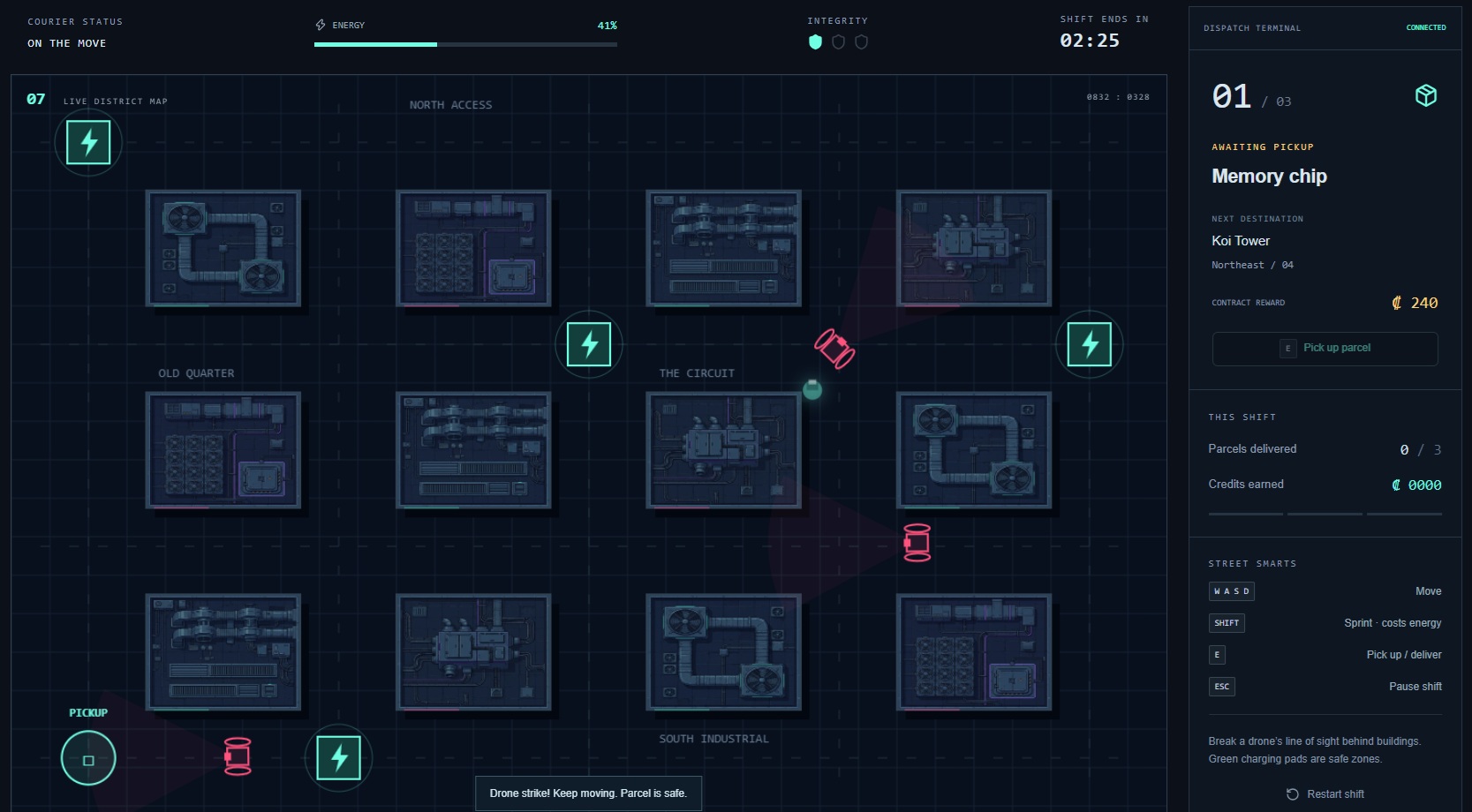
I was able to one-shot a playable game with GPT-6 Astra and fal, which also required me to log in to my ChatGPT account to play it.
5. Architecture and spatial visualization
This workflow produces design concepts from a written brief alone, and measured architectural documentation falls outside what it can honestly claim.
Given nothing but a creative brief, GPT-6 Astra invents a plausible apartment, fixes its layout and light conditions in writing, and drives our image models to show three directions inside it.
Those self-imposed constraints become the reference every later image gets checked against, which is what holds the set together.
The apartment redesign brief
Act as architectural visualization and interior design director.

Brief: an urban apartment for two people who both work from home and
entertain often. Nothing else about the space is fixed.

You are inventing this apartment. You are not documenting a real one,
and I am giving you no photographs or plans to work from.

You have fal connected for generative visuals, plus code and browser.
No Blender, no Unreal, no CAD software, no Photoshop.

First, write the spatial brief yourself:
1. Define the layout, floor area, orientation, ceiling height and
   light conditions your concepts have to respect. Write these down
   before you generate anything, and treat them as fixed afterwards.
2. Develop three design directions that differ at the level of
   material, palette and mood.
3. Specify furniture, materials, lighting and palette for each
   direction in enough detail to keep the visuals consistent.

Then produce the visuals:
4. Search fal for candidate image models and check their schemas and
   pricing before you run anything. Do not assume model ids.
5. Generate one establishing view per direction. Show me all three
   and tell me which you would take forward and why.
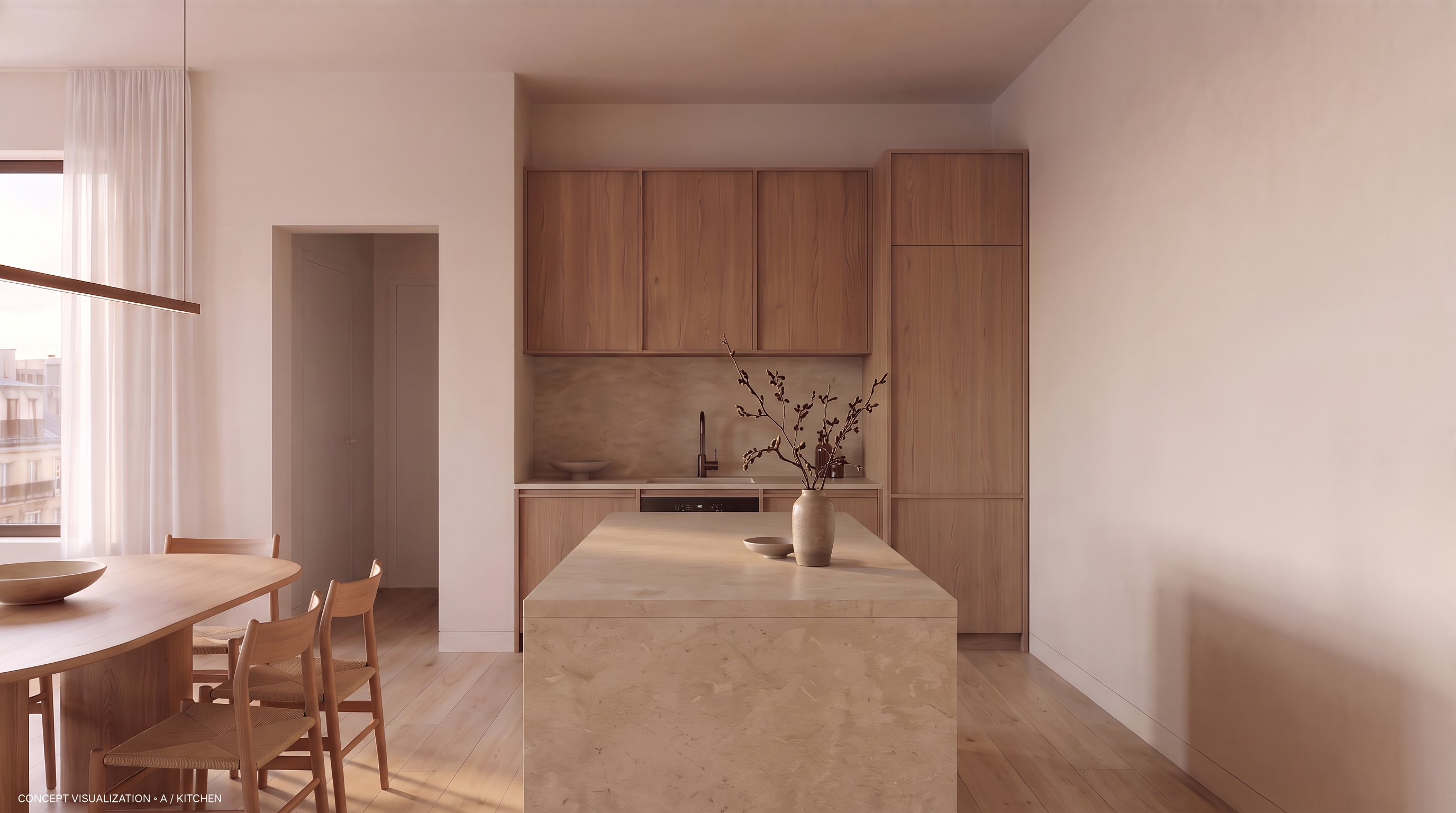
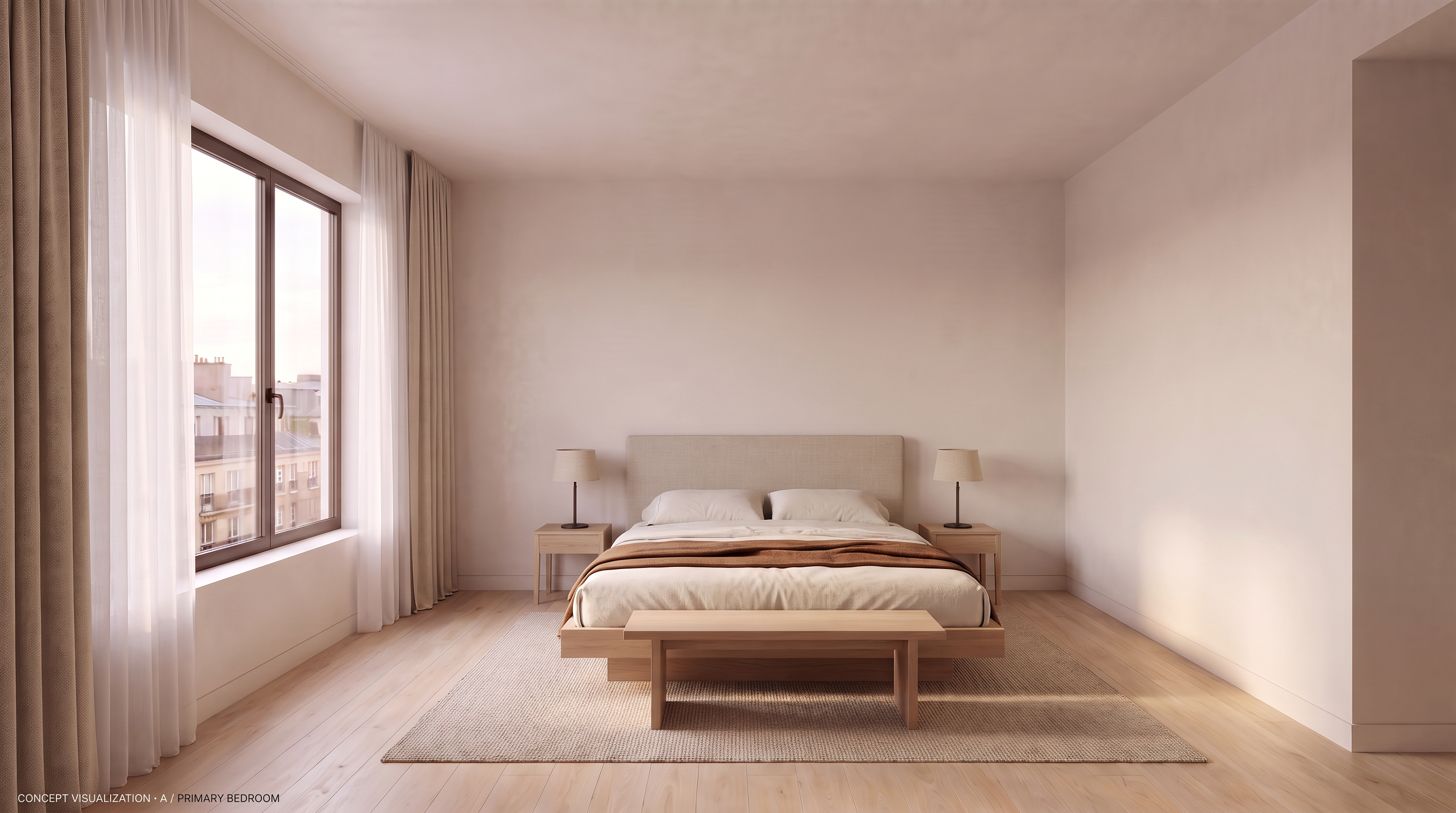
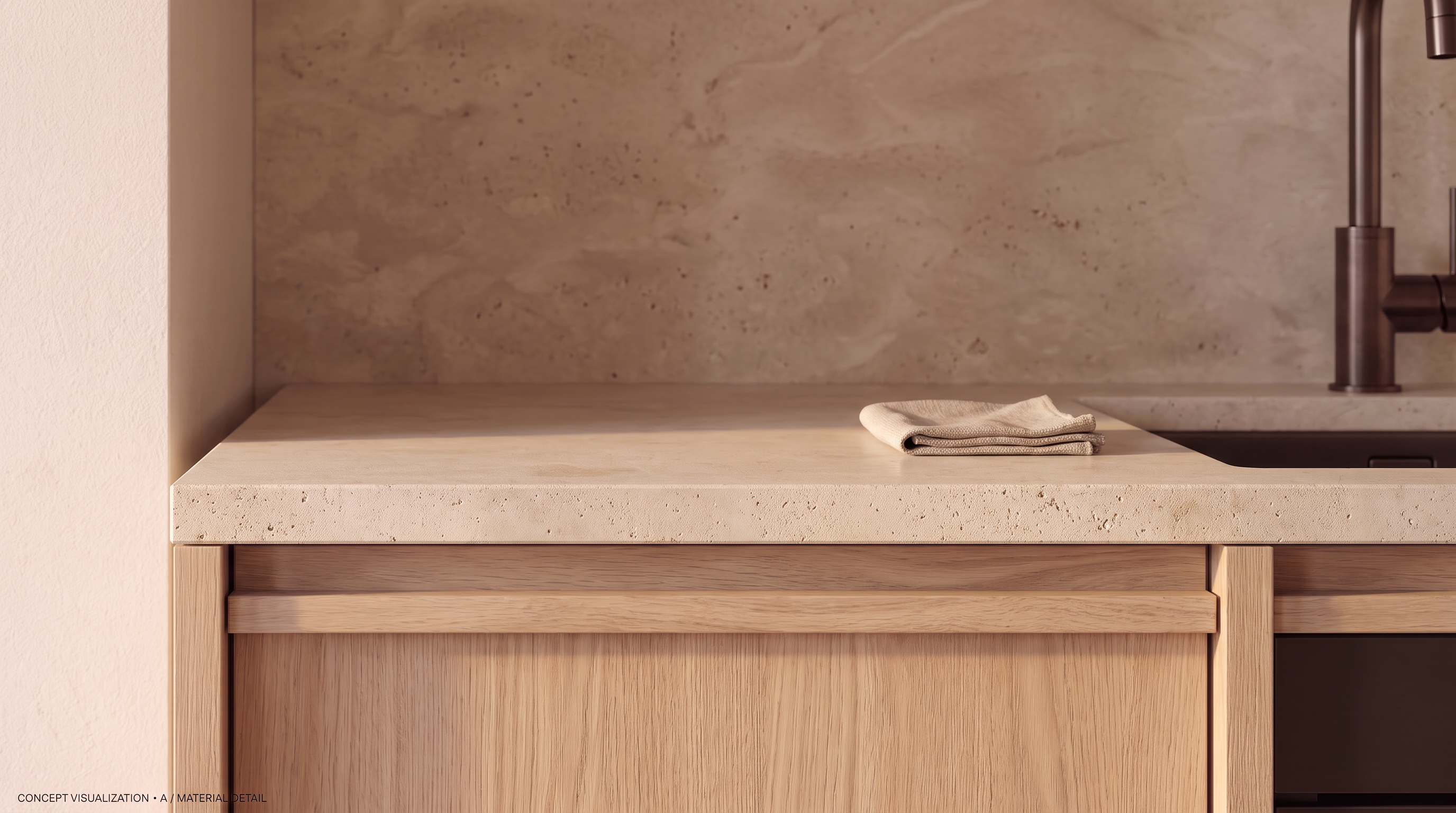
6. Build the chosen direction into a coherent set: living space,
   kitchen, primary bedroom and one material detail shot.
7. Drive every later image from the approved establishing frame so
   window positions, ceiling height and architectural language hold
   across all four rooms.

Reject any image where the geometry contradicts an earlier frame,
where windows move or change size, or where furniture scale reads
wrong against the ceiling.

Label everything as concept visualization. Do not present dimensions,
structural details or code compliance as fact, and state clearly that
the apartment is generated and was never surveyed.

Done means one labeled concept set of four consistent room visuals,
the written spatial brief, and the two directions you rejected.
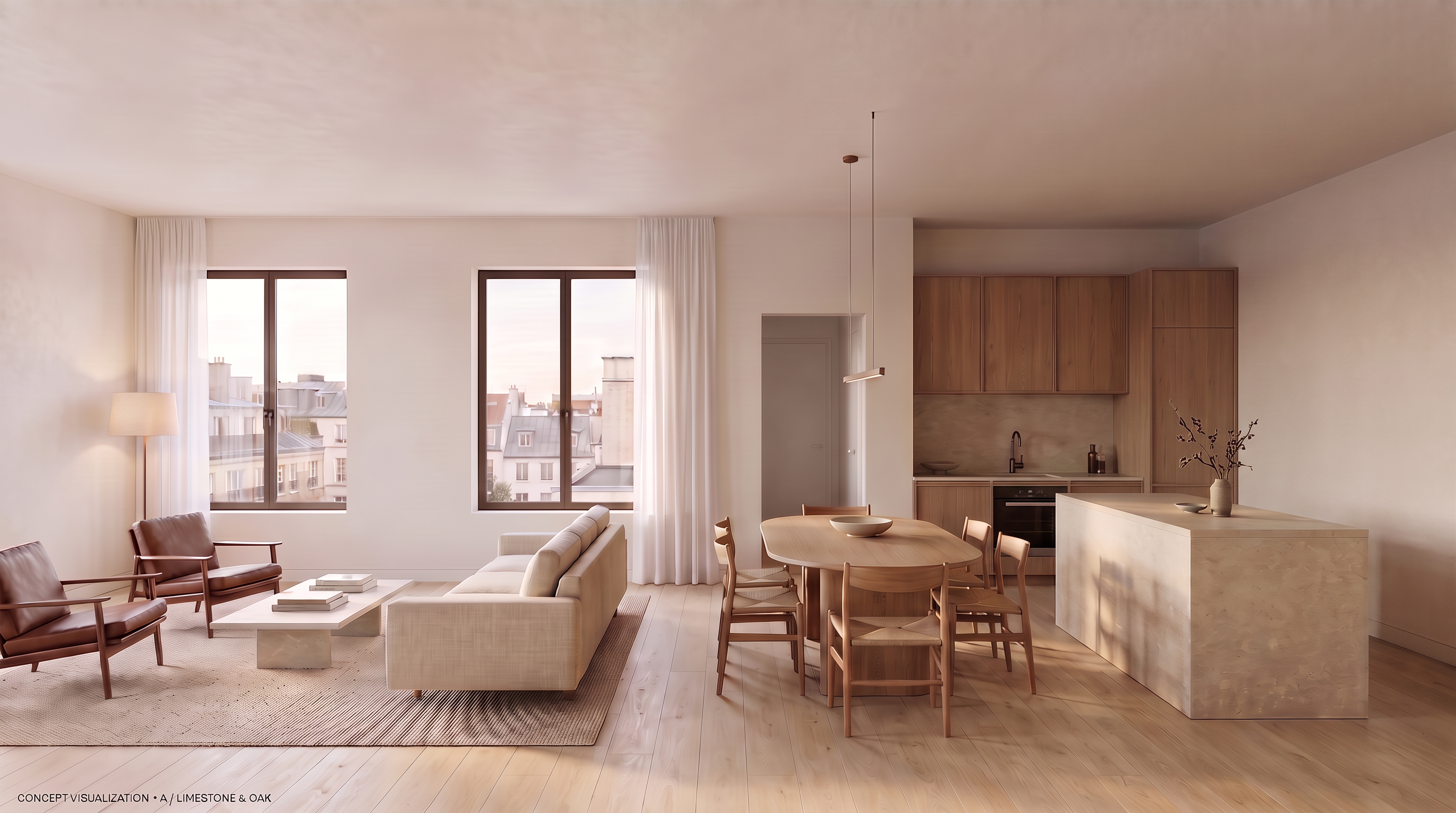
What GPT-6 Astra gave me is honestly amazing: concept visualization of the living room, kitchen, primary bedroom, and the material detail:
What's the difference between GPT-6 Astra and fal Agent?
fal Agent is our own agent, built specifically for generative media production, while GPT-6 Astra is a general-purpose agent that reaches our catalog through a connection you configure.
The deciding question is whether your project needs code written.
| GPT-6 Astra with fal connected | fal Agent | |
|---|---|---|
| Built for | General work, with media as one capability among many | Generative media production specifically |
| Memory | Held within a conversation | Scoped to a project and retained between sessions |
| Model selection | The agent searches our catalog and picks | Handled inside the run |
| Cost | Your ChatGPT plan, plus fal usage at standard rates | Add-on from $50/mo, credits included |
fal Agent operates at the level of a project, so the references you supplied and the takes you rejected stay attached along with the decisions made in between, and a project reopened next month still carries its context.
A single run can span several models, and the published examples report the cost of each step alongside the model count.
GPT-6 Astra contributes everything that is not generation, which covers code, browser control, testing, and the stages that never touch a model call.
That makes fal Agent the stronger starting point for the image, video, and architecture work above, while the 3D scene and the playable game need a general agent, since no quantity of generated texture will produce a working game loop.
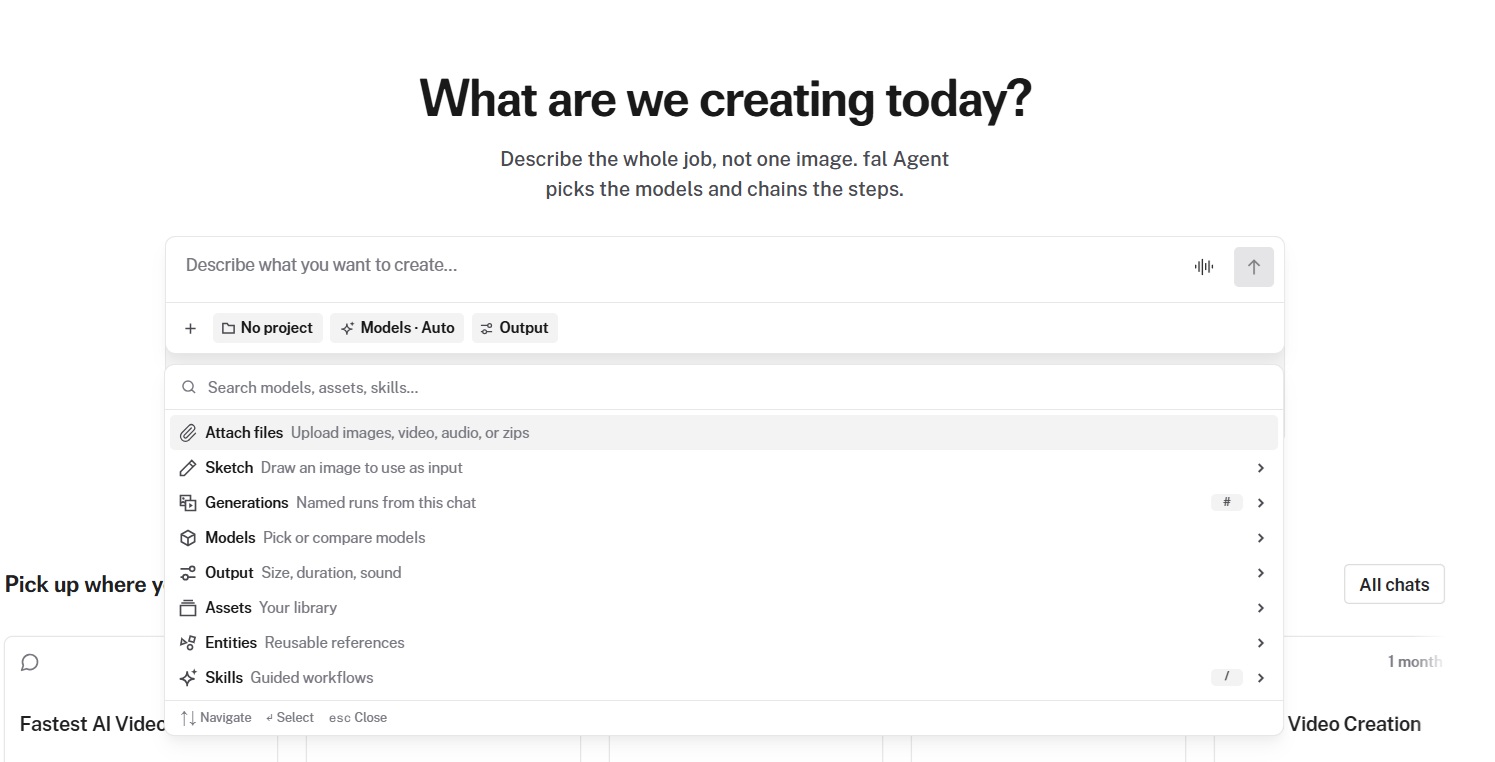
fal Agent attaches to an existing fal account as an add-on, with Starter at $50/mo, Pro at $200/mo, Max at $1,000/mo, and custom credit volumes negotiated under an enterprise contract.
Recently Added

















Start building with fal and GPT-6 Astra
The quickest way to judge any of this is to run one of the briefs above.
Install fal from the ChatGPT apps directory, select GPT-6 Astra in the model picker, and confirm the connection before you begin.
Then choose the use case closest to the work you already do and hand the agent the entire project, along with the quality criteria you would apply to a human team.
Start with the watch campaign for the shortest path to a finished deliverable, or the 10-second spot to see how much the direction layer actually contributes.
Over 1,000 models are waiting behind that connection, and one production run will tell you more about the arrangement than any amount of further reading.
You can start with fal for free.
Frequently asked questions
Does connecting fal to GPT-6 Astra cost anything extra?
The connection itself carries no separate fee, and you pay for the model runs you trigger at the same rates as a direct API call.
Can GPT-6 Astra keep the same character or product across every shot?
It can, provided you generate an approved reference frame first and instruct the agent to drive every later shot from it.
Naming consistency as a rejection criterion matters as much as the technique, because an agent without that instruction will accept takes that drift.
Should you name a specific fal model in your brief?
Generally not, since the agent has the shot list in front of it and can search the catalog against criteria you set.
Name a model only when a particular stage genuinely requires one you have already tested.
Do you need to write code yourself for these workflows?
No, as GPT-6 Astra writes and runs whatever code a project needs, including the renderers and game logic in the 3D and games use cases.
Your contribution is the brief, the quality criteria, and the final approval.
Can GPT-6 Astra assemble a finished video without an editor installed?
Partly, because our FFmpeg utility endpoints handle trimming, scaling, blending, interleaving, audio merging, and subtitles through the same connection.
Check the catalog for the specific operation your cut requires before promising anybody a finished sequence.
How should GPT-6 Astra choose which fal model to run?
Let the agent choose, and give it criteria in place of a model id, as it has the shot list in front of it while you were working from an impression.
Write down modality, input requirements, output resolution against the delivery format, speed against quality, cost per run, and consistency across repeated calls, along with whether a deterministic endpoint could handle the stage with no model at all.
Instruct it to check the schema before committing, because a model that looks ideal in a search result and needs an input you do not have wastes a planning cycle.
How do you stop an agentic workflow from overspending?
Give the agent an explicit budget in the brief, on the understanding that permission to iterate without a cost instruction produces free iteration.
Prototype on faster models before committing the strongest one to the final pass, and generate a small number of candidates chosen to differ from one another.
Reuse an approved hero frame or a settled visual specification wherever you can, and keep deterministic work away from the models entirely, because a city grid is code and a resize is not a creative decision.
Where do these workflows break down?
Consistency drifts across long sequences and temporal coherence stays harder than single-frame quality, so a clip can read correctly in every still and still carry motion that looks wrong.
Generative visualization interprets and does not measure, which is the reason the architecture brief carries an explicit honesty instruction.
Asset naming and versioning stop being housekeeping the moment final assembly depends on them, and evaluation remains the soft spot, as agents check written criteria reliably while judging visual quality only approximately.

![How To Use Krea 2 Open Source: Prompts, Workflows & LoRA [2026]](https://refinery.fal.media/url/https%3A%2F%2Fv3b.fal.media%2Ffiles%2Fb%2F0aa34f53%2F2y6ROgROzoiWnnXbs82n5.jpg/tr:w-1280,q-80/2y6ROgROzoiWnnXbs82n5.webp)