In this guide, I'll compare MiniMax H3 and Seedance 2.0 on fal across all three of the endpoints they share, with nine side-by-side tests and the pricing math that decides which one belongs in your pipeline.
How research was conducted: Every clip below was generated on fal, with nine identical prompts run through both models at 10 seconds each.
Source images come from GPT Image 2, the reference audio comes from Seed Audio 1.0, and the reference videos are clips generated earlier in this same article.
TL;DR
MiniMax H3 is MiniMax's open-weights multimodal video model, and it gives you two rungs to pick from: 768P for roughing things out at $0.16 per second and 2K for delivery, with 2K at $0.26 per second of generated output on fal.
Seedance 2.0 is ByteDance's closed flagship, and it hands the resolution dial back to you across four tiers, from 480p drafts up to 4K finals, with 720p at $0.3034 per second and 1080p at $0.682.
On capability, the two are closer than their spec sheets suggest: Text, images, video and audio go into one shared context on either model, and the picture comes back with its sound already written against it.
What separates them is the shape of the bill and the size of the frame: H3 charges a flat rate per resolution, then adds a surcharge for heavy reference packs, so a dense multimodal prompt costs more than a bare one.
Seedance prices by tier and takes 40% off its per-second rate whenever a reference video is in the request, but it also bills you for the reference clip's own duration on top of the output, so that discount is applied to a bigger base than it first looks.
How does MiniMax H3 compare to Seedance 2.0?
Here's how MiniMax H3 and Seedance 2.0 stack up:
| MiniMax H3 | Seedance 2.0 | |
|---|---|---|
| Developer | MiniMax | ByteDance |
| Weights | ✅ Open weights | ❌ Closed |
| Best for | Fixed 2K output at a flat rate, and long shot-list prompts carrying on-screen type | Tiered resolution up to 4K, and reproducible high-volume iteration |
| Price, 768P | $0.16/second | Not offered |
| Price, 720p | Not offered | $0.3034/second |
| Price, 1080p | Not offered | $0.682/second |
| Price, 2K | $0.26/second | Not offered |
| Price, 4K | Not offered | Token-billed at $0.008 per 1,000 tokens |
| Resolutions | 768P, 2K | 480p, 720p, 1080p, 4K |
| Ceiling | 2K | 4K |
| Duration | 5 to 15 seconds | 4 to 15 seconds, or auto |
| Frame rate | 24 FPS | 24 FPS |
| Aspect ratios | 6 on text-to-video, 7 on reference-to-video with adaptive | 7 including auto |
| Endpoints | Text, image, and reference to video | Text, image, and reference to video, plus a fast variant of each |
| Fast tier | ❌ No | ✅ Yes, from $0.2419/second |
| Native audio | ✅ Stereo on every generation | ✅ Included, and toggleable |
| Lip-sync | ✅ Yes | ✅ Yes, dialogue in double quotes |
| Reference images | Up to 9, first 5 free, $0.08 each after | Up to 9, no per-image charge documented |
| Reference video | Up to 3, billed at $0.26/second at 2K, same rate as output | Up to 3, 480p to 720p input only, 0.6x rate multiplier applied across input plus output duration |
| Reference audio | Up to 3, free | Up to 3, no charge documented |
| Reference syntax | Image 1, Video 1, Audio 1 | @Image1, @Video1, @Audio1 |
| End frame control | ✅ Yes | ✅ Yes |
| Seed control | ❌ Not exposed | ✅ Yes |
| Bitrate control | ❌ Not exposed | ✅ Standard or high |
| Prompt length | Up to 7,000 characters | Not documented |
| Commercial use | ✅ Yes | ✅ Yes |
💡 Neither model's resolution ladder lines up with the other's, so there is no setting where the two produce the same pixel count, which is why every test below runs H3 at its 2K ceiling against Seedance at 4K: flagship vs. flagship.
Where can you access MiniMax H3 and Seedance 2.0?
Both MiniMax H3 and Seedance 2.0 run on fal, in a browser playground and through the API, billed per second of output with no subscription and no minimum commitment.
You wire up the @fal-ai/client SDK once, and the same call shape carries across every video endpoint on the platform, plus the 1,000 or so other models in the catalog.
Authentication, the queue, webhooks, error handling, and billing behave identically whether you're calling MiniMax, ByteDance, or anything else.
Here's MiniMax H3:
javascript
import { fal } from "@fal-ai/client";

const result = await fal.subscribe("minimax/h3/text-to-video", {
  input: {
    prompt:
      "A colossal circular cosmic gateway fills the frame. A lone figure stands far below, wet ground reflecting the light. Slowly push the camera forward. Deep sub-bass pulse and distant metallic resonance.",
    aspect_ratio: "21:9",
    resolution: "2K",
    duration: 10,
  },
  logs: true,
  onQueueUpdate: (update) => {
    if (update.status === "IN_PROGRESS") {
      update.logs.map((log) => log.message).forEach(console.log);
    }
  },
});

console.log(result.data);
console.log(result.requestId);
And here's Seedance 2.0, same request, different endpoint string:
javascript
import { fal } from "@fal-ai/client";

const result = await fal.subscribe("bytedance/seedance-2.0/text-to-video", {
  input: {
    prompt: "An octopus throws a football in the ocean",
    duration: "5",
    resolution: "720p",
  },
  logs: true,
  onQueueUpdate: (update) => {
    if (update.status === "IN_PROGRESS") {
      update.logs.map((log) => log.message).forEach(console.log);
    }
  },
});

console.log(result.data);
console.log(result.requestId);
MiniMax H3 vs. Seedance 2.0: text-to-video tests
I picked shots that break video models in different ways.
Fast water physics first, then legible on-screen type, then a scripted line delivered by an animated character.
Test 1: Hollywood action, a rain-flooded night chase (21:9)
Prompt: [0 to 3 seconds] Ultrawide night shot of a rain-flooded side street in a dense Asian city, neon signage doubled in the standing water. A matte-black rally car slides into frame from the right, back end swinging wide, headlight beams cutting through the spray it throws up. [3 to 6 seconds] Cut to a camera mounted at wheel height. The front tyre bites, water sheets off the arch, and the car straightens and accelerates away from the lens. [6 to 10 seconds] Cut to a crane shot rising behind the car as it threads the gap between two parked delivery trucks, clipping a hanging string of paper lanterns that spins loose and falls through frame in slow motion. The camera keeps rising until the whole wet street is in shot. Audio: a turbocharged four-cylinder on and off the throttle, water displacement under the tyres, a wastegate flutter on each shift, distant traffic, rain drumming on metal awnings. No music. Look: anamorphic, high contrast, crushed blacks, practical light sources only, 35mm grain.
Generated using MiniMax H3 on fal, an AI model from MiniMax.
Generated using Seedance 2.0 on fal, an AI model from ByteDance.
Notes: Both models did a really good job with the water splash and the car chase overall, so I'm happy with the outputs.
Test 2: E-commerce, a sneaker drop with a title card (21:9)
Prompt: [0 to 3 seconds] A single running shoe in bone white and volt green rotates slowly on a black turntable inside a dark studio. One hard key light rakes across the knit upper. The camera orbits left at a steady speed, holding the shoe dead centre. [3 to 6 seconds] Cut to a macro push-in along the outsole. The lugs catch the light one at a time. A fine drift of studio dust crosses the beam. [6 to 8 seconds] The shoe drops out of frame and the lighting cuts to black. Two lines of clean sans-serif type fade up centred: "VOLT RUNNER" on the first line, "DROPS FRIDAY" on the second, white, kerned wide. [8 to 10 seconds] The type holds, a thin green rule wipes left to right beneath it, and the frame goes black. Audio: a low synth drone, one deep sub hit as the shoe leaves frame, a soft mechanical click on the wipe. No voiceover. Look: high-end product commercial, a glossy black sweep with no visible horizon line, controlled specular highlights.
Generated using MiniMax H3 on fal, an AI model from MiniMax.
Generated using Seedance 2.0 on fal, an AI model from ByteDance.
Test 3: Animation, a talking character with a scripted line (9:16)
Prompt: A cel-shaded 2D animated short in a modern anime style, vertical 9:16. [0 to 3 seconds] A young fox in a chef's jacket stands behind the counter of a tiny street ramen cart at night, steam pouring up past a paper lantern. Hand-drawn linework, flat colour over painted backgrounds, light animated rain. [3 to 7 seconds] The fox leans over the counter toward camera, ladle in one paw, and says: "Twelve hours on this broth. Do not insult me by adding chilli oil." The mouth animation matches the line and the ears flatten on the last word. [7 to 10 seconds] Cut to an overhead shot of the bowl as broth pours in, noodles settling, steam rising into the lantern light. A paw sets a soft-boiled egg on top, cut side up. Audio: the fox speaks in a dry, deadpan adult male voice with a slight rasp. Rain on the cart's canvas roof, broth pouring, a wooden ladle knocking the pot rim, distant city hum. One shamisen note under the final shot. Look: modern TV anime, warm lantern palette against cool blue rain, visible paper grain.
Generated using MiniMax H3 on fal, an AI model from MiniMax.
Generated using Seedance 2.0 on fal, an AI model from ByteDance.
falMODEL APIs
The fastest, cheapest and most reliable way to run genAI models. 1 API, 100s of models
MiniMax H3 vs. Seedance 2.0: image-to-video tests
Every source image in this section was generated with GPT Image 2 on fal, then handed to both video models untouched.
One note on framing: H3 inherits its aspect ratio from the input image, and Seedance infers it when aspect_ratio is left on auto, so the source image is doing more work here than the video prompt is.
Test 4: E-commerce, a single-frame product hero (16:9)
Prompt for the source image: A photoreal 16:9 product still of a brushed titanium dive watch lying on a wet black slate slab. Deep blue sunburst dial, orange minute hand, ceramic bezel with white markings, steel bracelet coiled once behind the case. One large softbox from the upper left, one hard rim light from behind picking out the bezel edge. Shallow water pooled across the slate, reflecting the case. Dark studio surround falling to black at the edges. Crisp macro detail in the dial texture and the bracelet links. No text, no logos, no hands, no people.
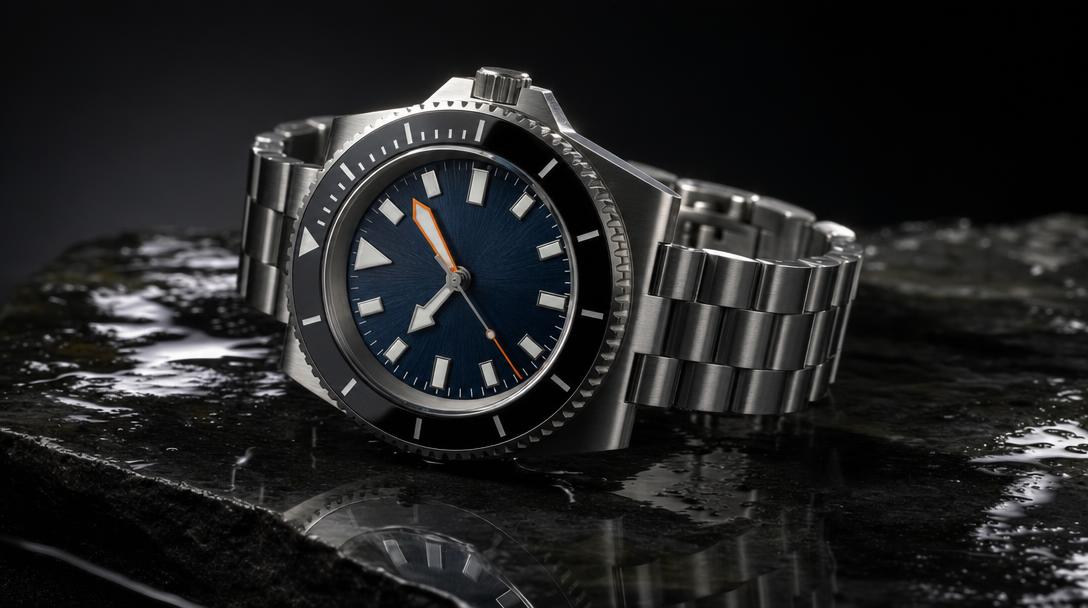
Generated using GPT Image 2 on fal, an AI model from OpenAI.
Video prompt: The camera pushes in slowly on the watch while rotating a few degrees clockwise around it. Water on the slate ripples once as a single drop lands beside the case at around two seconds. The second hand sweeps continuously. The rim light travels along the bezel edge as the camera moves, and the sunburst dial shifts from deep blue to near black across the move. Hold tight on the dial for the final second. Audio: quiet room tone, one soft water drop, the faint tick of a mechanical movement brought up close. No music.
Generated using MiniMax H3 on fal, an AI model from MiniMax.
Generated using Seedance 2.0 on fal, an AI model from ByteDance.
Test 5: E-commerce, a first-and-last-frame reveal (16:9)
Both models accept a start frame and an end frame and generate the transition between them, so this test runs two GPT Image 2 images through image_url and end_image_url.
GPT Image 2 prompt for the start frame: A photoreal 16:9 studio shot of a closed matte charcoal shoe box sitting on a circular concrete plinth in a dark room, lit by a single overhead spot. Fine dust suspended in the light beam. No text or branding anywhere on the box. Deep shadow pooling around the base of the plinth.
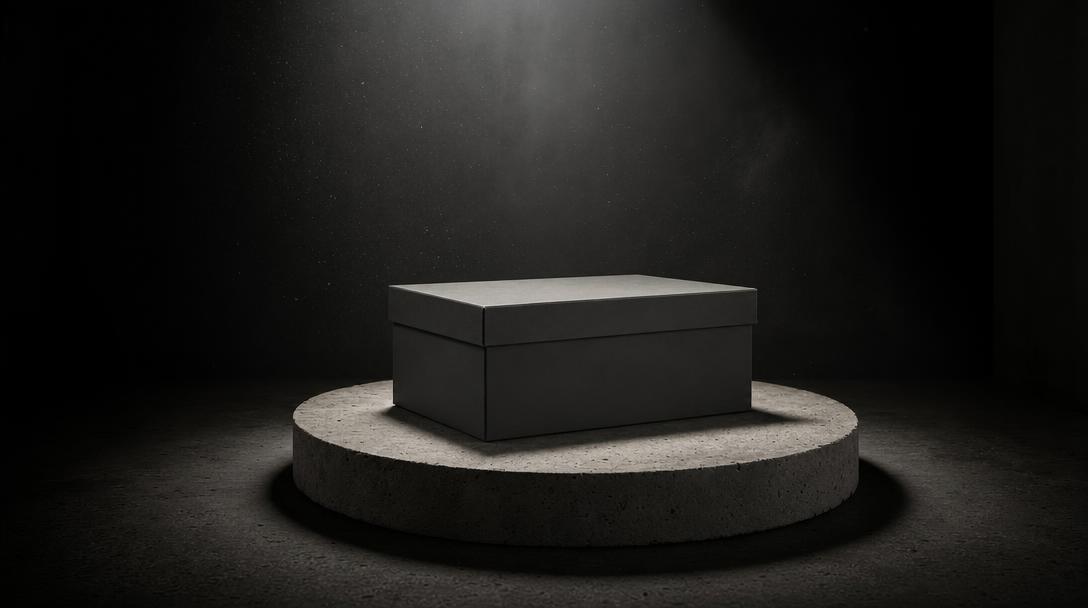
Generated using GPT Image 2 on fal, an AI model from OpenAI.
GPT Image 2 prompt for the end frame: The same dark studio, the same concrete plinth and overhead spot, the same 16:9 framing. The box lid is gone and a bone white and volt green running shoe hovers around thirty centimetres above the open box, tilted three-quarters toward camera, lit by the overhead spot with a green bounce coming up from below. Sheets of tissue paper suspended mid-air around it. Same dust, same shadow.
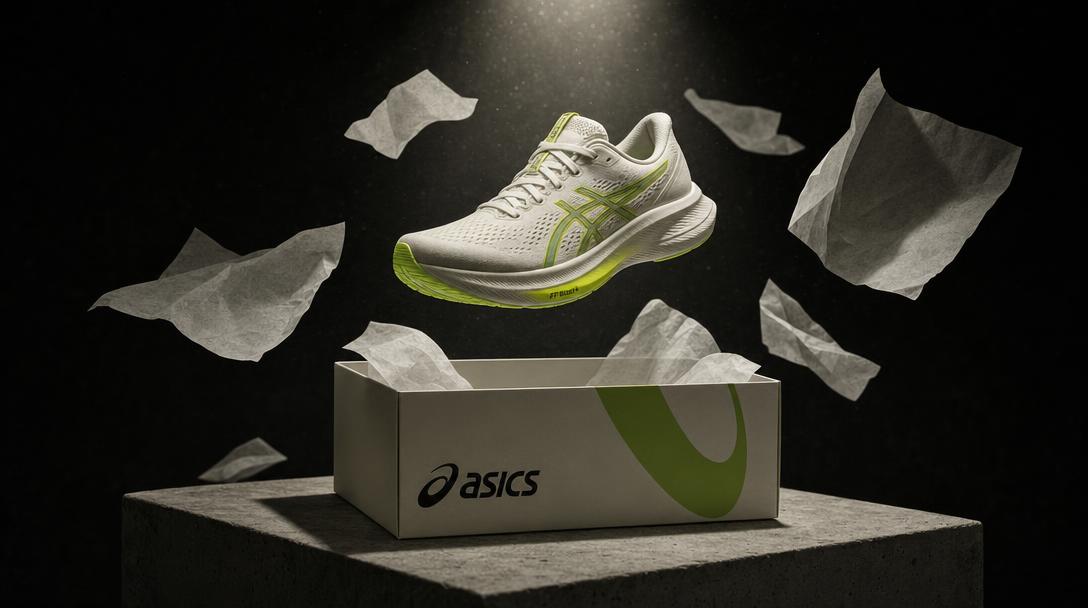
Generated using GPT Image 2 on fal, an AI model from OpenAI.
Video prompt: The lid lifts off the box and tumbles out of frame to the left. The shoe rises out of the box and settles into a slow three-quarter hover, tissue paper lifting and drifting around it. The overhead spot tightens as the shoe climbs. The camera creeps in a few centimetres across the whole move, then holds. Audio: a low rising synth swell, paper rustle, one soft impact as the lid leaves frame, room tone underneath.
Generated using MiniMax H3 on fal, an AI model from MiniMax.
Generated using Seedance 2.0 on fal, an AI model from ByteDance.
Notes: The first image goes to the 'image URL', and the second image to End Image URL.
Test 6: Animation, a painterly character in motion (9:16)
GPT Image 2 prompt for the source image: A 9:16 vertical illustration in a painterly 2D animation style. A small brass diving-helmet robot, roughly the size of a cat, stands on a moss-covered stone jetty at dawn. Round porthole face with a warm amber glow behind the glass, riveted copper body, four stubby legs, one arm holding a lantern. Mist over still water behind it, pine forest on the far bank, pale pink and grey sky. Hand-painted background with visible brush texture, soft rim light from the right.
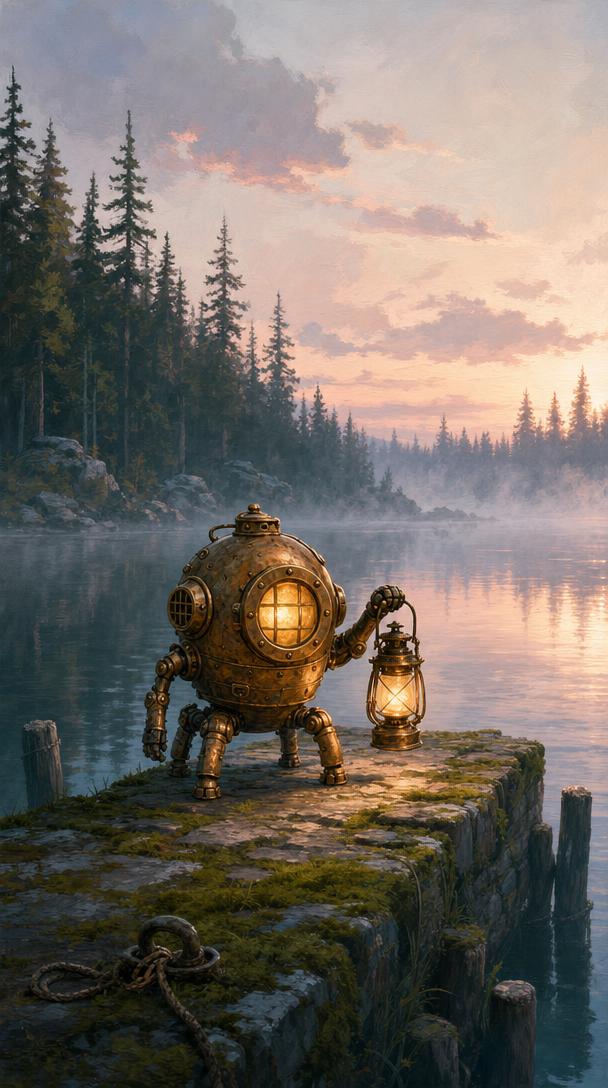
Generated using GPT Image 2 on fal, an AI model from OpenAI.
Video prompt: The robot turns its helmet toward the water and raises the lantern. Mist drifts across the jetty and the water's surface breaks as something large moves beneath it, sending one slow ring outward. The robot takes two careful steps toward the edge, the amber glow behind its porthole brightening. The camera drifts up and slightly back as the ring reaches the stones. Hold on the water. Audio: water lapping at the jetty, two metallic footsteps on wet stone, a lantern chain creaking, birdsong far off, one low resonant note from beneath the surface as the ring spreads.
Generated using MiniMax H3 on fal, an AI model from MiniMax.
Generated using Seedance 2.0 on fal, an AI model from ByteDance.
MiniMax H3 vs. Seedance 2.0: reference-to-video tests
This is the section where the two models stop being interchangeable, and it's also the section where the prompts can't be byte-identical.
H3 cites references by modality and order in ordinary prose, so you write "Image 1" and "Video 1."
Seedance uses an @ token, so the same instruction reads "@Image1" and "@Video1."
Everything else in each prompt below is word for word the same across both models.
Every asset is recycled from earlier in this article, which I think is also a decent stress test of whether these models can hold a character across a whole production.
Test 7: Images only, three subjects in one frame (16:9)
This one passes three GPT Image 2 stills: the dive watch from Test 4, the brass robot from Test 6, and one new environment plate.
GPT Image 2 prompt for the environment plate: A 16:9 photoreal interior of a small watchmaker's workshop at night. A worn oak bench under a swan-neck brass lamp, a loupe and tweezers laid out, brass shavings scattered, a wall of tiny labelled drawers behind, one window with rain running down it. A warm tungsten pool of light on the bench, everything past it falling into shadow. No people, no text.

Generated using GPT Image 2 on fal, an AI model from OpenAI.
Prompt (MiniMax H3 version, with Seedance using @Image1, @Image2, and @Image3 in the same positions): Image 1 is the dive watch. Image 2 is the brass diving-helmet robot. Image 3 is the workshop set. Keep the watch's blue sunburst dial, orange minute hand and steel bracelet exactly as they appear in Image 1. Keep the robot's porthole face, amber inner glow and riveted copper body exactly as in Image 2. Stage the shot inside the workshop from Image 3, matching its lamp position and rain-streaked window. [0 to 4 seconds] The robot stands on the oak bench beside the watch, lifts the loupe in one arm and leans in over the dial. The camera pushes in low across the bench, past the brass shavings. [4 to 7 seconds] Reverse angle over the robot's shoulder onto the watch, the swan-neck lamp throwing a hot highlight across the crystal. [7 to 10 seconds] The robot sets the loupe down, nudges the watch a few degrees to square it to camera, and its porthole glow brightens once. The camera pulls back to a wide of the bench with rain on the window behind. Audio: rain on glass, a faint electrical hum from the lamp, small metallic clinks as the loupe is set down, a mechanical movement ticking close to the lens, a soft servo whir whenever the robot moves. Look: warm tungsten against cool window light, photoreal set with the robot rendered as a physical practical object standing in it.
Generated using MiniMax H3 on fal, an AI model from MiniMax.
Generated using Seedance 2.0 on fal, an AI model from ByteDance.
Test 8: Video plus images, motion transfer onto a new vehicle (16:9)
The motion reference here is the rally car clip from Test 1, and the subject is one new GPT Image 2 still.
Worth flagging before the results: Seedance caps reference video input at roughly 720p, so the 2K clip had to be downscaled before it would go in.
H3 documents no resolution ceiling on reference video, so the same clip should go in untouched.
GPT Image 2 prompt for the vehicle: A 16:9 photoreal three-quarter front studio shot of a 1960s-style pastel mint delivery van. Rounded body panels, chrome bumper and grille, whitewall tyres, a small roof rack with two wooden crates strapped down. Even soft studio lighting against a light grey sweep with no visible horizon line. No text, no branding, no people.
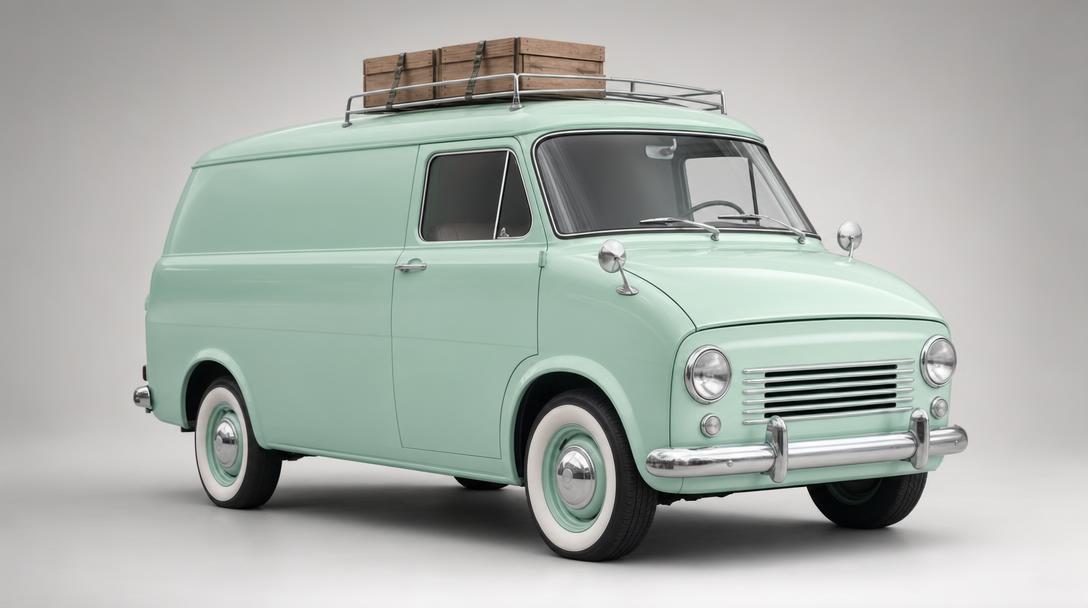
Generated using GPT Image 2 on fal, an AI model from OpenAI.
Prompt (MiniMax H3 version, with Seedance using @Video1 and @Image1): Video 1 is the motion and camera reference. Image 1 is the vehicle. Recreate the three shots in Video 1 beat for beat: the ultrawide slide into frame, the wheel-height low angle, and the crane rise behind the vehicle. Keep the timing of each cut and the speed of each camera move identical. Replace the rally car with the pastel mint delivery van from Image 1, preserving its rounded body, chrome bumper, whitewall tyres and roof rack exactly. The van is taller and heavier than the car it replaces, so let it lean into the slide and let the crates shift against their straps. Keep the rain-flooded street, the neon reflections in the standing water, the spray off the tyres and the falling paper lanterns. Audio: swap the turbocharged engine for a small naturally aspirated four-cylinder under load. Keep the water displacement, the rain on metal awnings and the distant traffic.
Generated using MiniMax H3 on fal, an AI model from MiniMax.
Generated using Seedance 2.0 on fal, an AI model from ByteDance.
Test 9: Video, images, and audio, a voice transplanted onto a new character (9:16)
The hardest ask in the article.
The motion reference is the ramen fox clip from Test 3, the subject is the brass robot from Test 6, and the voice comes from Seed Audio 1.0.
The robot has no mouth, so both models have to carry a spoken performance through something other than lip-sync.
Seed Audio 1.0 prompt for the voice track: English. One speaker, no music, no background sound effects, clean dry studio recording, around eight seconds. The voice is an older man, gravelly and unhurried, with the flat delivery of someone who has said this a thousand times and still means it. He speaks one line with a short pause after the first sentence: "Broth's been on since five this morning. You'll take it as it comes." Keep the room dead. No reverb, no ambience, no music bed, no second voice.
Generated using Seed Audio 1.0 on fal, an AI model from ByteDance.
Prompt (MiniMax H3 version, with Seedance using @Video1, @Image1, and @Audio1): Video 1 is the performance and camera reference. Image 1 is the character. Audio 1 is the dialogue. Rebuild Video 1 shot for shot, keeping the ramen cart, the paper lantern, the rain and the overhead bowl shot, along with the same cuts and the same timing. Replace the fox chef with the brass diving-helmet robot from Image 1, keeping its porthole face, amber inner glow, riveted copper body and stubby limbs. Render it in the same cel-shaded 2D animation style as the rest of the shot, not as a photoreal object dropped into a drawing. The robot delivers the line in Audio 1, in that exact voice. Time its movement to the line: the lean toward camera on the first sentence, a small tilt of the helmet on the pause, the ladle raised on the second sentence. Since the robot has no mouth, carry the performance through the porthole glow pulsing with each syllable and through the angle of the helmet. Keep the rain on canvas, the pouring broth and the shamisen note from Video 1 sitting underneath the voice.
Generated using MiniMax H3 on fal, an AI model from MiniMax.
Generated using Seedance 2.0 on fal, an AI model from ByteDance.
How do MiniMax H3 and Seedance 2.0 compare on pricing?
Both AI video generators bill per second of generated output, with no subscription and no minimum.
You can start with a bare 10-second clip and no references.
MiniMax H3 charges $0.26 per second at 2K, the upper of its two tiers, so that clip is $2.60.
It costs $0.16 per second when generating videos at 768p on fal.
Seedance 2.0 charges $0.3034 per second at 720p and $0.682 at 1080p, putting the same clip at $3.03 or $6.82.
Line those up and H3's 2K second undercuts Seedance's 720p second by about four cents, which is worth checking before you assume the higher-resolution model is the expensive one.
Seedance's counter is the fast tier, which drops 720p to $0.2419 per second and brings the same clip to $2.42, coming in 18 cents under H3 for a frame with about a quarter of the pixels.
A hundred 10-second clips a month makes the spread easier to read.
H3 at 2K comes to $260.
Seedance runs $241.90 on the fast 720p tier, $303.40 on standard 720p, and $682 at 1080p.
Attach references and the two bills stop resembling each other.
Say you run 10 seconds of output with six reference images and one 10-second reference video.
On H3, that's $2.60 for the output, $0.08 for the sixth image, and another $2.60 for the reference video, totalling $5.28.
Seedance handles the same request on a different basis, and the basis is the bit that matters.
Its reference-to-video billing counts the reference clip's duration alongside the output, so 10 seconds in and 10 seconds out is 20 billable seconds, and the advertised 0.6x multiplier then applies to that total.
At $0.1814 per second across 20 seconds, 720p works out at $3.63, and 1080p lands at roughly $8.16.
The images and the audio add nothing on either model, but the reference clip itself is charged for on both.
💡 The 0.6x multiplier reads like a discount on reference work, but because Seedance 2.0 also bills the reference clip's duration, a 10-second 720p generation with a 10-second motion reference costs $3.63 against $3.02 for the same clip with no reference at all, so reference work is still the more expensive route on either model.
One footnote on 4K: Seedance's 4K tier isn't quoted per second at all, only at $0.008 per 1,000 tokens, where tokens work out to height times width times duration times 24, divided by 1,024.
Which one should you use: MiniMax H3 or Seedance 2.0?
MiniMax H3 makes the most sense when 2K is your delivery spec, and you'd rather not pay 1080p rates to get there.
It also handles long prompts well, the kind with time-coded blocks and detailed sound direction, so a full shot list can go in as one request.
You can pick MiniMax H3 if legible on-screen type is part of the brief, or if your legal team cares that the weights exist somewhere outside a vendor's API.
Seedance 2.0 is the better call the moment 4K appears anywhere on your roadmap, as H3 has no route there at all.
It's also stronger for volume work, where a 480p or fast-tier draft loop saves real money before you commit to a final, and for anyone who needs a seed to hold a shot steady between runs.
Just don't budget the 0.6x multiplier as a straight saving, since Seedance charges for the reference clip's runtime as well as the output.
💡 Running both is reasonable too.
You can draft on Seedance's fast tier, lock the composition with a seed, then push the final through whichever model handled that shot type better in your own testing.
They run behind the same SDK, so the routing logic is a conditional and an endpoint string.
Recently Added












Get started with MiniMax H3 and Seedance 2.0 on fal
Both models are live on fal right now, with playground access and one API, billed per second of output and no GPUs to manage on your side.
You'll find MiniMax H3 at minimax/h3/text-to-video, minimax/h3/image-to-video, and minimax/h3/reference-to-video.
Seedance 2.0 can be found at bytedance/seedance-2.0/text-to-video, bytedance/seedance-2.0/image-to-video, and bytedance/seedance-2.0/reference-to-video, each with fast and mini variants of the endpoints.
You test either one in the playground, then move to the API when you're ready.
MiniMax H3 vs. Seedance 2.0 FAQs
What actually separates MiniMax H3 from Seedance 2.0?
Architecturally, the two are close, since both read text, images, video and audio in one context and return the picture with stereo audio already written against it.
Licensing is the first hard split, because MiniMax released H3 with open weights while Seedance 2.0 stays closed behind its API.
On resolution, H3 gives you 768P and 2K where Seedance runs four steps from 480p up to 4K, which makes H3's 2K ceiling the one capability gap that no amount of prompt work will close.
Both charge you for reference video, which is the detail most likely to surprise you on a bill, with H3 billing it at the full $0.26 per second on top of $0.08 per reference image past the fifth, and Seedance 2.0 counting the reference clip's duration alongside the output before applying its 0.6x multiplier to the combined total.
Seedance does cap reference video input at roughly 720p, though, so clips generated at 1080p or higher need downscaling before they go back in, and H3 publishes no equivalent limit.
Which one is cheaper?
For a straight text-to-video clip, H3 is cheaper per pixel by a wide margin, since a second of its 2K output costs less than a second of Seedance's 720p.
For reference-heavy work at comparable resolution, H3 stays ahead: a 10-second clip with six reference images and a 10-second motion reference costs $5.28 on H3 at 2K against roughly $8.16 on Seedance at 1080p, though Seedance's 720p tier brings the same job down to $3.63.
Work out which shape most of your generations take before assuming either one is the budget option.
Can both models generate audio and lip-sync?
Yes, both MiniMax H3 and Seedance 2.0 write native audio in the same pass as the picture, covering dialogue, effects, ambience, and score.
On Seedance 2.0, you put spoken lines in double quotes and the model voices and syncs them.
On H3, audio is stereo on every generation, and you can hand it a reference recording to transfer or clone a voice onto a character.
How many reference files can each model take?
Both cap at 9 images, 3 video clips, and 3 audio tracks, with 12 files maximum in a single generation, and both require at least one image or video alongside any audio.
The difference is the syntax and the input limits.
H3 cites references as Image 1 and Video 1 in prose, and Seedance uses @Image1 and @Video1.
Seedance also requires reference video between roughly 480p and 720p, so higher-resolution clips need downscaling first.
Does MiniMax H3 support 4K?
No.
H3 tops out at 2K, which is 1,440 pixels on the short edge for ratios between 16:9 and 9:16, with a 768P tier underneath.
Seedance 2.0 is the one with a 4K tier, billed by token at $0.008 per 1,000 tokens.
Can I use both models in the same project?
Yes, and it's a common setup.
Both run on fal behind the same @fal-ai/client SDK, so switching between them is an endpoint string and a couple of parameter names.
The two differences are that H3 takes duration as an integer while Seedance takes a string, and that seed, generate_audio, and bitrate_mode exist only on the Seedance side.