Loading playground
Input
Additional Settings
Customize your input with more control.
Result
Idle

Customize your input with more control.
Customize your input with more control.
Hint: Drag and drop files from your computer, images from web pages, paste from clipboard (Ctrl/Cmd+V), or provide a URL.
Type # to reference inputs.
Customize your input with more control.
Your request will cost $0.021 per processed megapixel.
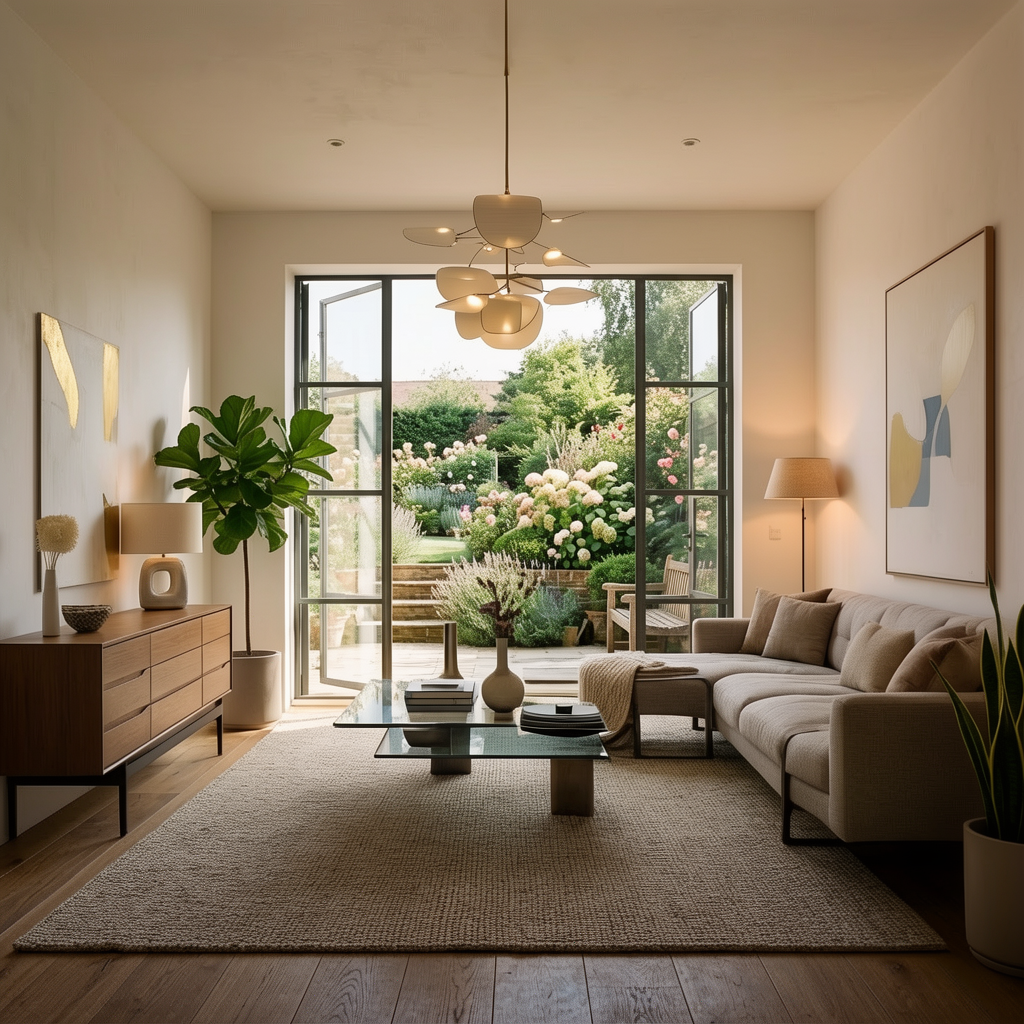
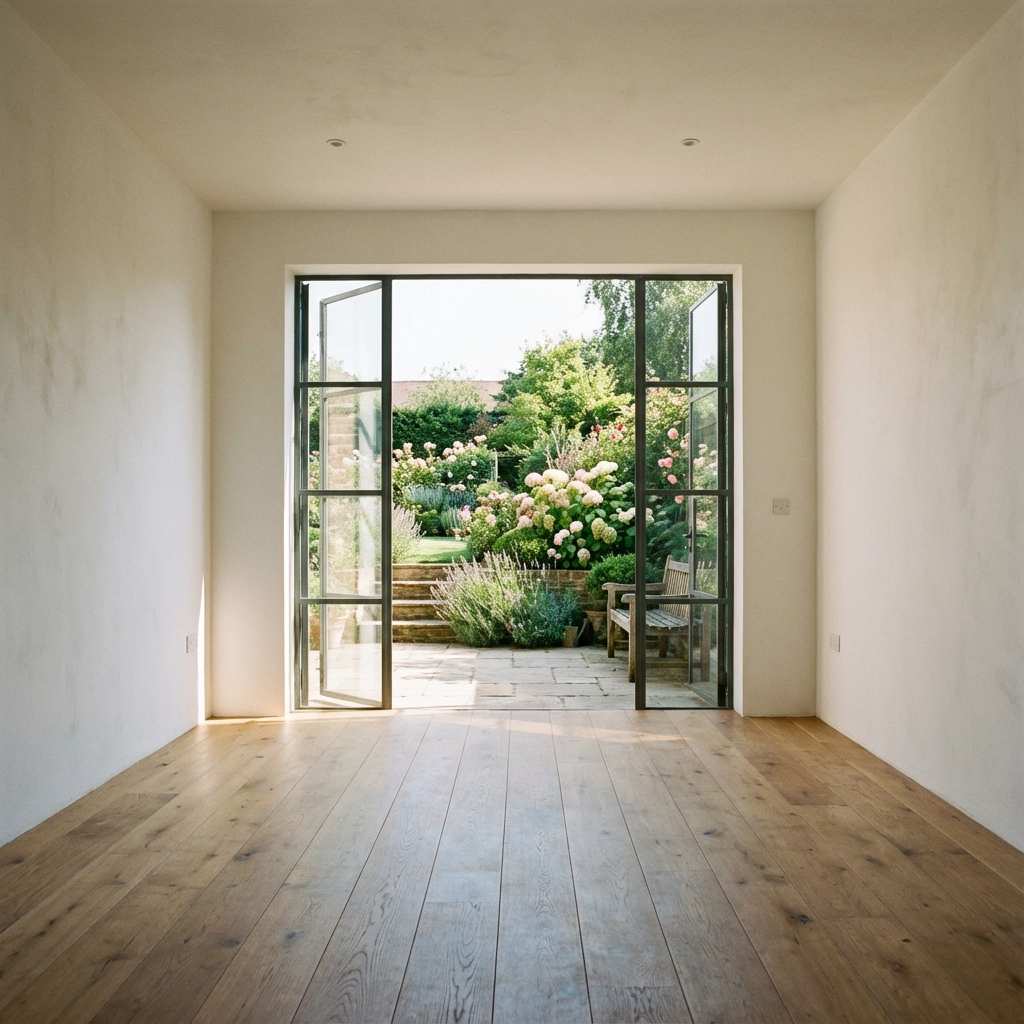
Black Forest Labs' FLUX.2 architecture delivers specialized apartment staging capabilities at $0.021 per megapixel through fine-tuned LoRA adaptation. This model trades general-purpose image editing flexibility for domain-specific furniture placement accuracy, using a constrained LoRA scale (0-2x) to maintain architectural coherence while adding furnishings. Built for real estate professionals and interior designers who need consistent, photorealistic virtual staging without manual 3D modeling.
Use Cases: Real Estate Virtual Staging | Interior Design Mockups | Property Marketing Automation
At $0.021 per megapixel, this specialized endpoint costs roughly half of general-purpose FLUX.2 editing workflows while maintaining the same 40-step inference quality baseline.
| Metric | Result | Context |
|---|---|---|
| Specialization | Apartment staging only | LoRA fine-tuned for furniture placement vs general editing |
| Inference Steps | 40 steps (default) | Configurable 1-50 range, trades speed for detail fidelity |
| Cost per Megapixel | $0.021 | Approximately 48 megapixel generations per $1.00 on fal |
| Output Flexibility | 1-4 images per request | Batch generation with consistent seed support |
| LoRA Strength Control | 0-2x scaling | Fine-tune staging intensity vs original architecture preservation |
FLUX.2's LoRA Gallery approach constrains the base model's parameter space to a narrow furniture placement domain, preventing the semantic drift common in general-purpose image-to-image workflows when users want "just add a couch, don't redesign the room."
What this means for you:
Architectural preservation: LoRA scale parameter (0-2x) lets you dial staging intensity without losing wall angles, lighting, or spatial proportions that matter for property listings
Prompt simplicity: "Furnish this room with modern furniture and decor" works reliably because the model's already trained on staging vocabulary, no need for negative prompts or multi-paragraph instructions
Flexible output sizing: Input image dimensions auto-detected or manually specified via image_size enum, maintaining aspect ratios critical for MLS photo standards
Reproducible results: Seed control enables A/B testing different furniture styles on identical room geometry, crucial for client presentations comparing staging options
| Spec | Details |
|---|---|
| Architecture | FLUX.2 |
| Input Formats | Image URL (empty room photo) + text prompt |
| Output Formats | PNG, JPEG, WebP (configurable) |
| Resolution Handling | Auto-detects input dimensions or accepts manual image_size override |
| License | Commercial use permitted |
API Documentation | Quickstart Guide | Enterprise Pricing
FLUX.1 [dev] Image to Image ($0.025/megapixel) – Flux 2 Apartment Staging LoRA prioritizes domain-specific staging accuracy through LoRA constraints at slightly lower cost ($0.021 vs $0.025). FLUX.1 [dev] offers broader general-purpose editing flexibility for workflows requiring diverse transformation types beyond furniture placement.
Flux 2 Image to Image ($0.025/megapixel) – Flux 2 Apartment Staging LoRA trades general editing versatility for specialized apartment staging at 16% lower cost. Flux 2 Image to Image handles arbitrary image transformations where staging-specific constraints would limit creative control.
FLUX.1 Kontext [pro] Image to Image – Flux 2 Apartment Staging LoRA focuses on single-image staging workflows with LoRA fine-tuning, while FLUX.1 Kontext emphasizes multi-image reference conditioning for complex context-aware edits requiring multiple input sources.