How Lemonpeel gives brand and film teams frame-by-frame control to tell one story across regions, and why the infrastructure under it matters
Some of the best stories in the world have never left the place they were told. They are known in one language, in one region, and nowhere else. The opportunity in global IP is that so many of these stories have yet to cross a border or an ocean to reach new audiences.
India is an interesting market and use case in that it has 22 scheduled languages, hundreds of dialects and wildly different regional cultures, yet most of the content that gets produced and promoted is made in only a few of them.
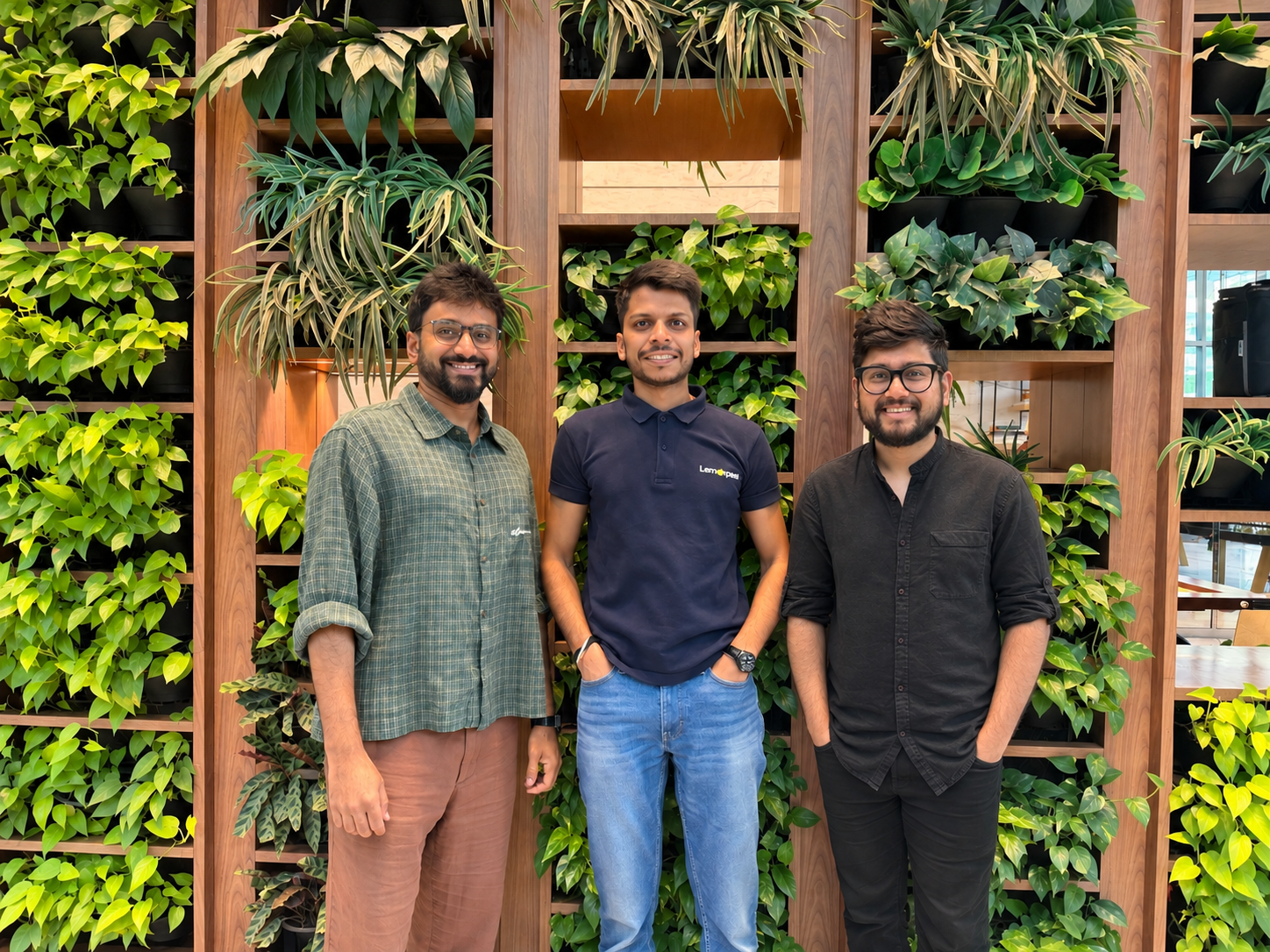
“The biggest untold stories are close to where we live,” says Hardik Goyal, (CEO and Co-founder) of Lemonpeel. “A story from a small town or a family business in a regional market rarely gets a production budget, even when the audience for it is huge.”
For decades the economics were simple. Each new region / target segment meant another production, so most stories were made once, for the largest audience, and the rest got subtitles. Lemonpeel is built on the idea that this no longer has to be true. A series, a documentary or a brand film can now be made once and adapted into regional versions: regional characters replaced flawlessly, settings, wardrobe and cultural details adjusted shot by shot, with dubbed voices, matching lip sync and localised on-screen text following. It takes a fraction of the time and cost of shooting a separate film for each market.
“A story that once reached one audience can now reach ten,” Hardik says. “I expect a lot of the best stories of the next decade to come from there.”
A translation is not a version
Lemonpeel’s customers are creative teams inside enterprises: brand teams, content teams and in-house studios. They are all being asked for far more video than they can make.
Most AI creative tools are built for one person making one piece of content. An enterprise team has a different problem. It needs the same quality across hundreds of videos, in many regions and formats with brand rules, approvals and handoffs along the way.
Regional adaptation makes this harder. A direct translation usually sounds wrong because idioms, humour and references all change, and so do the characters, the setting, the on-screen text and often the visuals. A campaign in a dozen markets is a dozen versions to produce, review and approve. It is not one video with subtitles.
Lemonpeel’s answer is a shared, node-based canvas where a whole team works on the same project, with frame-by-frame control over every shot without burning through unnecessary credits. Agents handle creation, editing and brand checks, and people make the creative calls. A team builds a workflow once and reruns it for each region. Characters, brand assets and tone stay the same, while the script and voice change.
Lemonpeel is also more than a tool. It is a managed service, with offerings like Forward Deployed Creatives, where Lemonpeel’s creatives work embedded within large enterprises and studios to help them build tomorrow’s content.
Getting the details right
A story feels local when the small things are right: how people speak, the setting, the clothes, the festival, how a family talks at the dinner table. Lemonpeel builds those details into the brief and the brand assets, and adapts each shot by region instead of simply translating the script. A saved character travels with the project, so the same face and look carry into every regional version, or are swapped for a local cast when the story calls for it.
Much of that instinct comes from co-founder Abhinav, who spent more than 15 years directing including his stint at TVF, where knowing what rings true to an Indian audience was the job.
This is also where fal sees generative media doing its best work. Its value isn’t in replacing the craft. It’s in making the details affordable to get right. When fixing a pronunciation, a gesture or a line of on-screen text means regenerating one shot rather than reshooting a scene, creators can afford the care that makes a story feel local. Lowering the cost of each generation is what turns that care from a luxury into the default.
Lemonpeel’s team recently made a nationwide TVC in the UAE for a leading beauty and personal care brand. The brief demanded accurate cultural nuance, from the characters and settings to the correct pronunciation of every word, which a single prompt rarely gets right. Because the canvas gives frame-by-frame control, the team refined the film shot by shot and fixed details at the exact frame or line that needed it, without regenerating the whole film.
No single model does it all
Behind the canvas is a deliberate choice: Lemonpeel doesn’t bet on one model (something that fal also does).
“No single model is best at everything,” Riddhiman Pal (CPO and Co-founder) says. “One is strong at realistic people, another at motion, another at text in the frame, another at speed and cost.”
Lemonpeel routes across more than 300 models, and its clients used over 200 of them last month. A creator can try a shot on one model, compare it with another and keep the better result without leaving the canvas or managing separate subscriptions. New models arrive every few weeks, so creators can switch to the best option without changing how they work.
That only works if adding a model is cheap. fal is Lemonpeel’s core infrastructure provider. Every generation job on the platform runs through a single execution layer, and fal provides access to a wide range of image and video models, including new releases soon after launch.
“We can add a model as data instead of rebuilding an integration each time,” Riddhiman says. “Adding a new model through fal takes us 30 to 60 minutes, compared with 24 to 48 hours with other providers.”
When the market changes week to week, that difference decides whether a new capability reaches customers in days or weeks. Lemonpeel now runs more than 100,000 generations a month through fal, with a success rate of about 98%. The same layer reaches into the tools people already use: through MCP, Lemonpeel works inside Claude and ChatGPT.
“Having fal lets our team focus on what makes Lemonpeel valuable,” Riddhiman says. “Creative control, collaboration, reusable workflows and creative agents.”
Where lip sync and audio go next
Once the visuals are right, the voice has to match. Localisation lives or dies on the voice. A dub that drifts from the lips, or a voice that loses its warmth in translation, breaks the story faster than any visual flaw.
That’s why fal is going beyond hosting models and experimenting with its own post-trained models, testing how far lip sync and audio quality can be pushed for creative work. Better sync across languages, more natural voices and more faithful performance in dubbing are the capabilities that decide whether a regional version feels made for its audience or adapted for it. Platforms like Lemonpeel, whose customers ship regional variations, in many languages, every month, are where those improvements show up first.
Scale that holds up
For Lemonpeel’s customers, scale means volume with consistency: hundreds of videos a month across regions, formats and products, all on brand and all approved. The platform now produces more than 50,000 videos a month. The goal is to keep removing manual steps so a team can ask for far more without hiring a matching crew.
Hardik thinks this is the start of a bigger change. Content has long been made for the average viewer. Next come versions for each audience, then interactive video, then real-time video.
“A large share of the world’s most-watched content will come from creators and teams outside the traditional production centres,” Hardik says. “Made for the phone, in local variations, personalised for the viewer. The teams that win will have a reliable way to produce that volume at high quality.”
Stories that travel
Countless stories are waiting for an audience on the other side of a border, and the hard part has rarely been the story itself, but the cost of carrying it across.
“There are incredible stories in every corner of the world, and most of them have never had the chance to travel,” says Michelle Wu, Storyteller at fal. “Our job is to make the infrastructure fast and affordable enough that teams like Lemonpeel can carry them to new audiences, with the nuances intact.”
For Lemonpeel, that work starts in India and the Gulf, telling stories that never got the budget, for the audiences who live them.