


LTX-2.5The world model the world builds on.
Lightricks' open-weights audio-video model, live on fal. Diffusion Fidelity Rendering puts more compute into complex scenes, native multishot holds a scene together across cuts, and synchronized audio comes built in. Open and customizable: train LoRAs, fine-tune on your own data, and adapt it to your domain. Try LTX-2.5 on fal.ai.


Built for real production.
Diffusion Fidelity Rendering
LTX-2.5 introduces Diffusion Fidelity Rendering, which puts more compute into complex scenes instead of spending it evenly across every frame. Crowds, fast motion, and dense detail hold together where they would otherwise soften. It runs on the quality-optimized Pro endpoints; the Fast endpoints trade some of that fidelity for speed, 4K output, and clips up to 20 seconds.
Sharper Faces, Legible Text
LTX-2.5 replaces plain VAE decoding with a Diffusion Video Decoder. Faces stay sharp, on-screen text stays legible, and fast motion comes through with fewer smears. It is the single biggest contributor to the jump in fidelity over 2.3.
One Generation, Many Connected Shots
A single generation yields multiple connected shots that hold character, environment, lighting, voice, and style across every cut. A custom Gemma 4 12B text encoder tracks multiple subjects, actions, lighting cues, and camera direction through a complex prompt, and Auto Duration reads the described action to pick the right clip length before diffusion begins.
Train LoRAs, Change What It Can Do
Train LoRAs, fine-tune on your own data, and adapt the model to your domain. LTX-2.5 ships a raw pretrained checkpoint alongside the production model, a non-SFT base built for aggressive adaptation toward new data and objectives: robotics, synthetic AV, industrial digital twins, private domain models. fal hosts LTX trainers and serves the fine-tunes people build, with more than 80 LTX fine-tunes already on the platform. It is not a black box, it is something you can control like a tool.
Iterate Fast, Ship at 4K
The distilled variant carries far more quality, prompt adherence, and motion into a smaller, faster model than previous distillations, and it is the variant that reaches 4K and 20-second clips at the lowest per-second price. Paired with Auto Duration and a dedicated Prompt Enhancer that expands short prompts into rich cinematic instructions at near-zero extra compute, it means fewer controls, fewer retries, and less app-side logic in production pipelines.


Six endpoints, one model
Generate from text, a still image, or an audio track. Every modality ships in a quality-optimized Pro variant for final output and a speed-optimized Fast variant for rapid iteration, which also reaches 4K, clips up to 20 seconds, and a lower per-second price.
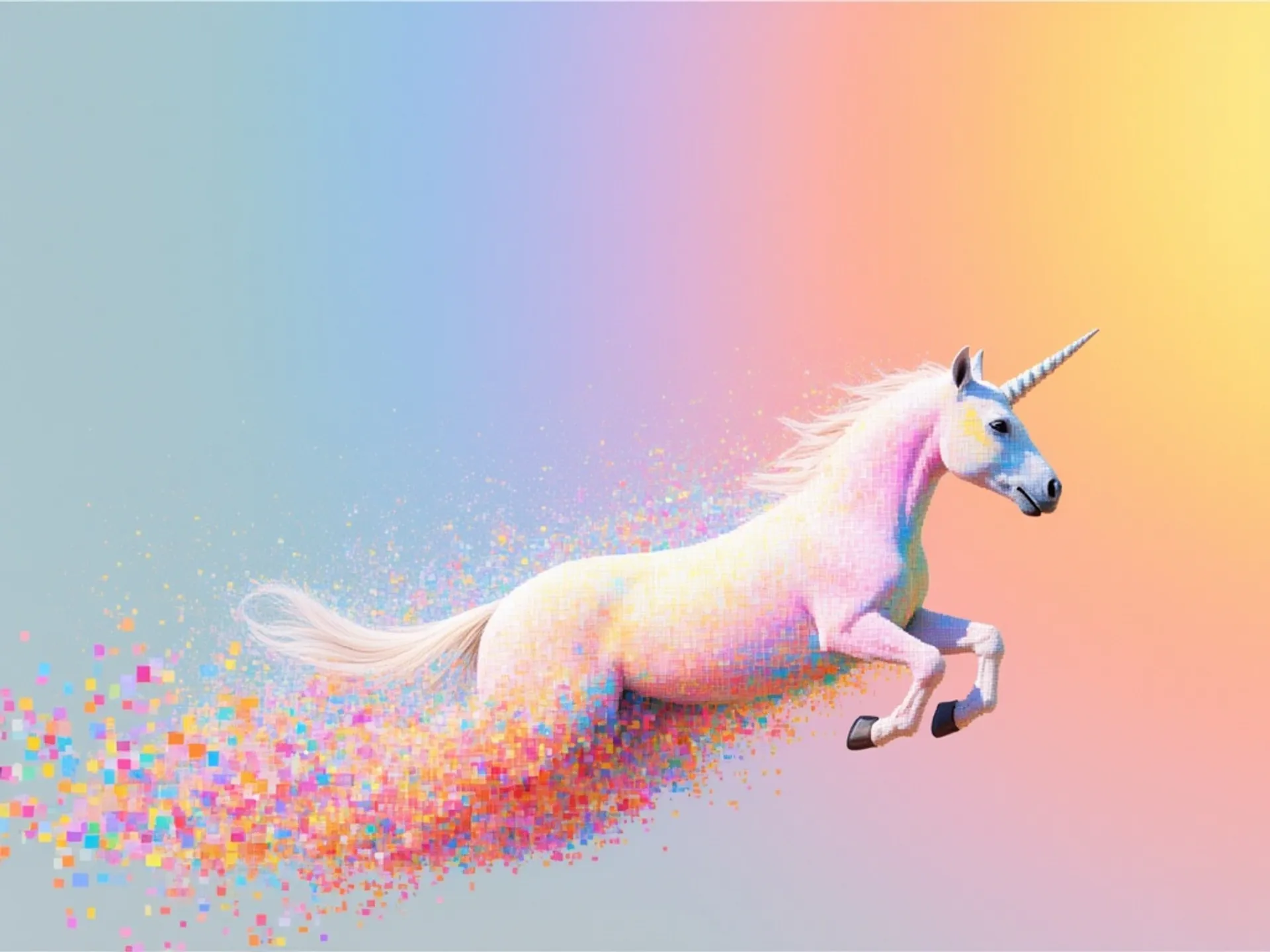
LTX-2.5 is Lightricks' open-source audio-video model. This endpoint generates synchronized video and audio from a text prompt in a single pass, in a quality-optimized mode for final, high-fidelity output.
LTX-2.5 is Lightricks' open-source audio-video model. This endpoint generates synchronized video and audio from a text prompt in a single pass, in a speed-optimized mode built for rapid iteration and previews.
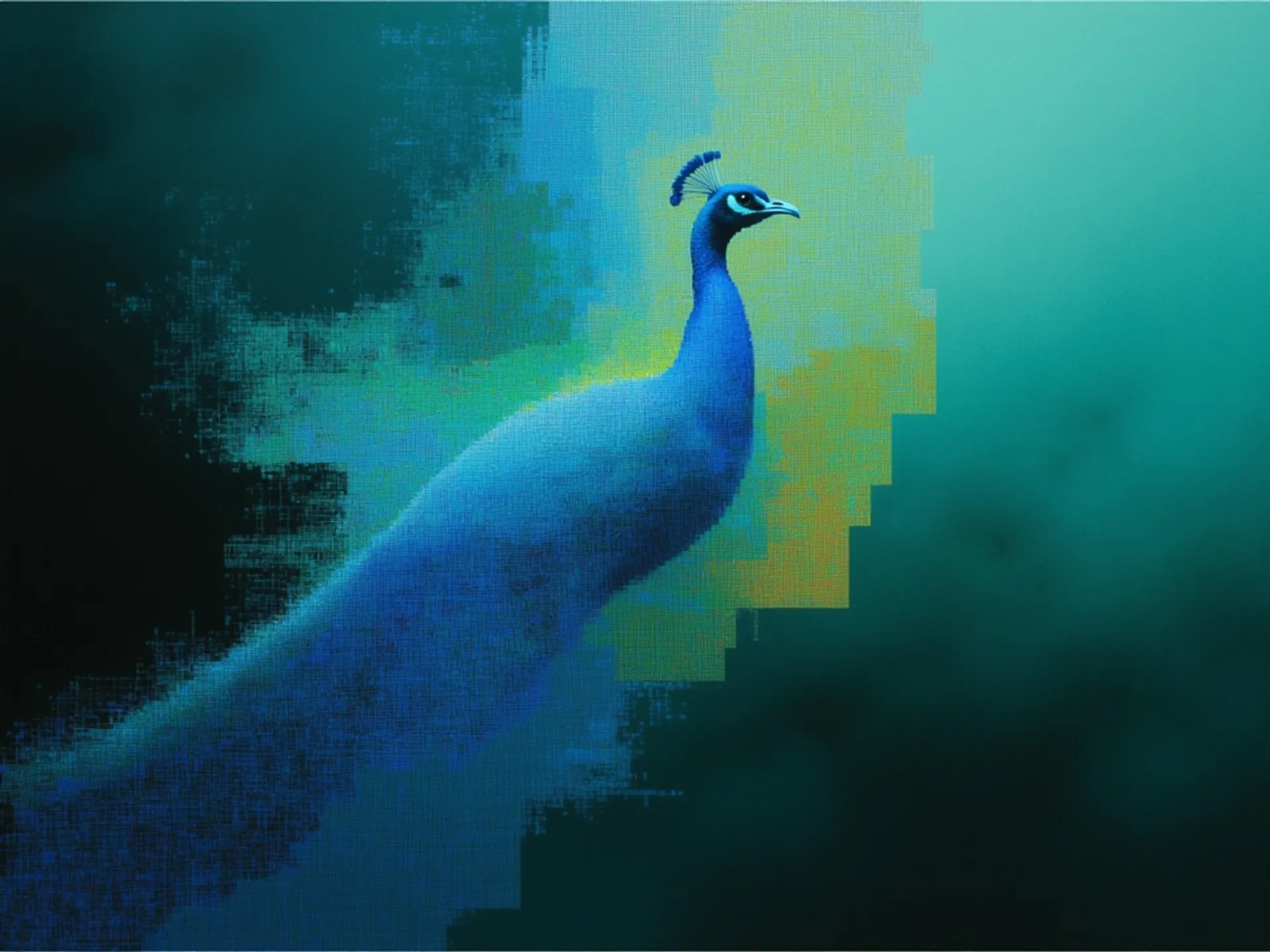
LTX-2.5 is Lightricks' open-source audio-video model. This endpoint animates a still image into video with synchronized audio in a single pass, in a quality-optimized mode for high-fidelity final output.
LTX-2.5 is Lightricks' open-source audio-video model. This endpoint animates a still image into video with synchronized audio in a single pass, in a speed-optimized mode for quick iteration.

LTX-2.5 is Lightricks' open-source audio-video model. This endpoint generates video timed to a supplied audio clip in a quality-optimized mode, for final visuals synchronized to music, dialogue, or a soundtrack.
LTX-2.5 is Lightricks' open-source audio-video model. This endpoint generates video timed to a supplied audio clip in a speed-optimized mode — useful for music-driven content, dialogue-led shorts, and ads keyed to a track.

Hard key light, haze, and deep falloff
"Slow push-in on a boxer standing alone in the center of a dark arena ring, hard overhead spotlights cutting through haze and raking across his shoulders, sweat catching the rim light, the crowd reduced to soft silhouettes beyond the ropes, 50mm at f/2, high-contrast Roger Deakins key with deep falloff, the stillness before the first bell"
Two connected shots from one generation
"Overhead shot of a yellow inflatable duck float drifting across a turquoise tiled swimming pool, caustics rippling on the floor below, then cut to an underwater shot looking up at the same float from beneath the surface, sunlight fracturing through the water, one continuous scene across both angles, 24mm wide, bright midday summer"
Natural light and unscripted human motion
"An elderly couple dancing together on a woodland path in late autumn, both in bright hand-knit sweaters, laughing as he spins her, low sun flaring through bare branches behind them, handheld 85mm at f/1.8 with soft focus falloff, warm natural light, the unhurried intimacy of a lifetime together"
Extreme deformation held frame to frame
"Close-up of a young man pressing his face flat against the inside of a car window, cheek and lips squashed against the glass, features distorting as he slides down, condensation and blurred street reflections on the outside of the pane, 35mm from outside the car, overcast daylight, absurd and affectionate"
Extreme dynamic range and airborne sparks
"Wide shot inside a working iron foundry as a crucible tips and pours molten metal into a mold, a curtain of orange sparks arcing across the frame, two workers in heat gear silhouetted against the glow, the cavernous timber roof lost in darkness above, 35mm, extreme dynamic range between white-hot metal and black shadow"
Fast motion with airborne debris
"Motocross rider leaning hard into a muddy berm on a rain-soaked track, rear wheel breaking loose and throwing a rooster tail of wet earth across the frame, suspension compressing through the rut, tracking alongside at wheel height on a 40mm, flat overcast light, fast shutter grit"
Direct sun on skin and a shifting expression
"Close-up of a woman in round tortoiseshell glasses standing in a forest, direct hard sunlight falling across one side of her face while the other drops into shade, her expression shifting from confusion to recognition, wind moving loose strands of hair, 85mm at f/1.4, unfiltered midday sun, no diffusion"
Layered reflections through glass
"A man in a beige jacket seen from outside through the sliding glass door of a 1970s suburban home at golden hour, the pane carrying a double image of the trees and telephone wires behind the camera, interior warm and dim beyond the reflection, 50mm, anamorphic flare across the glass, quiet period stillness"


How to access the LTX-2.5 API
The client API handles the request submit protocol. It will handle the request status updates and return the result when the request is completed.
import { fal } from "@fal-ai/client";

// Pro is the quality-optimized mode. duration defaults to "auto",
// letting the model pick the clip length from the described action.
const result = await fal.subscribe("lightricks/ltx-2.5/text-to-video/pro", {
  input: {
    prompt: "Cinematic drone shot over misty mountains at sunrise",
    resolution: "1080p",
    duration: "auto",
    generate_audio: true,
  },
  logs: true,
  onQueueUpdate: (update) => {
    if (update.status === "IN_PROGRESS") {
      update.logs.map((log) => log.message).forEach(console.log);
    }
  },
});

console.log(result.data);
console.log(result.requestId);

Common questions about LTX-2.5
What is LTX-2.5?
LTX-2.5 is Lightricks' latest open-weights audio-video model, released under the LTX-2.x Community License. It generates video with synchronized audio at up to 4K and 50fps, holds multiple connected shots in a single generation, and ships with a raw pretrained checkpoint so teams can fine-tune it on their own data. LTX has always been built around the same idea: powerful video generation should be open, fast, and accessible to anyone building with AI.
What is Diffusion Fidelity Rendering?
Diffusion Fidelity Rendering is new in LTX-2.5. It puts more compute into complex scenes rather than spreading it evenly across every frame, so busy shots hold detail where they would otherwise soften. It runs on the quality-optimized Pro endpoints.
What's new in LTX-2.5 compared to LTX-2.3?
The foundation is stronger across every stage of generation. A Diffusion Video Decoder replaces plain VAE decoding for sharper faces, legible text, and fewer smears in fast motion. Native multishot holds character and style across cuts in one generation. A custom Gemma 4 12B text encoder handles complex prompts, Auto Duration predicts the right clip length, and a substantially better distilled model brings near-full quality into a smaller, faster variant. Diffusion Fidelity Rendering is new on the Pro endpoints, and a native EXR workflow was added for professional color pipelines.
What is native multishot?
One generation yields multiple connected shots that hold character, environment, lighting, voice, and style across every cut. You describe a scene rather than a single shot, and the model handles the cuts internally instead of requiring you to stitch separate generations together.
Does LTX-2.5 support professional color workflows?
Yes. LTX-2.5 adds a native EXR workflow that reads and writes cinema-grade EXR inside professional color spaces including ACES and DaVinci Wide Gamut. Edits happen generatively and return EXR, so there is no lossy 8-bit round-trip in the middle of a color pipeline.
Can I fine-tune LTX-2.5?
Yes. You can train LoRAs to add styles, characters, or whole capabilities the base model does not ship with, and fal hosts LTX trainers as well as inference on the fine-tunes people produce, so a community fine-tune is something you can pick up and run. More than 80 LTX fine-tunes are already available on the platform. For deeper adaptation, LTX-2.5 also ships a raw pretrained checkpoint that has not been through supervised fine-tuning, built to move freely toward new data and objectives such as robotics, synthetic AV, industrial digital twins, and private domain models.
What resolution and frame rates does LTX-2.5 support?
It depends on the variant. Pro runs at 720p or 1080p at 24, 25, or 50fps, with clips of 6, 8, or 10 seconds. Fast reaches 720p, 1080p, 1440p, or 2160p (4K) at 24, 25, 48, or 50fps, with clips up to 20 seconds. Both generate synchronized audio by default and support 16:9 and 9:16. Duration defaults to "auto", which is 2.5's Auto Duration: the model reads the described action and predicts the right clip length before diffusion begins.
What endpoints are available?
Six: text-to-video, image-to-video, and audio-to-video, each available in a quality-optimized Pro variant and a speed-optimized Fast variant. Image-to-video also accepts an end frame so you can pin where a shot finishes. See the endpoints section above for the full list.
How much does LTX-2.5 cost on fal.ai?
Pricing is per second and varies by variant and resolution. The Fast variants run $0.09/s at 720p, $0.13/s at 1080p, $0.19/s at 1440p, and $0.30/s at 4K, with native audio included at every resolution. Pro image-to-video is $0.12/s at 720p and $0.17/s at 1080p. Audio-to-video bills per second of input audio instead of output: $0.13/s on Fast and $0.17/s on Pro at 1080p. Check each model page for the current rate.
How do I get started with the API?
Install the fal.ai SDK (Python or JavaScript), grab an API key from your dashboard, and make your first request in three lines of code. The API is serverless, so there are no GPUs to manage and no infrastructure to set up. Check the API documentation for all available parameters.
Can I use LTX-2.5 for commercial projects?
LTX-2.5 is released under the LTX-2.x Community License, not an OSI open-source license. It permits commercial use, but entities with annual revenue of at least $10 million must obtain a paid commercial license from Lightricks first, and the license carries use restrictions such as not training competing models. Read the full license on the model card before you build on it, and check fal.ai's terms of service for the terms that apply to usage through this platform. This is a summary, not legal advice.

Get in touch about LTX-2.5
Want to learn more about integrating LTX-2.5 into your workflow, or fine-tuning it on your own data? Leave your details and our team will reach out.