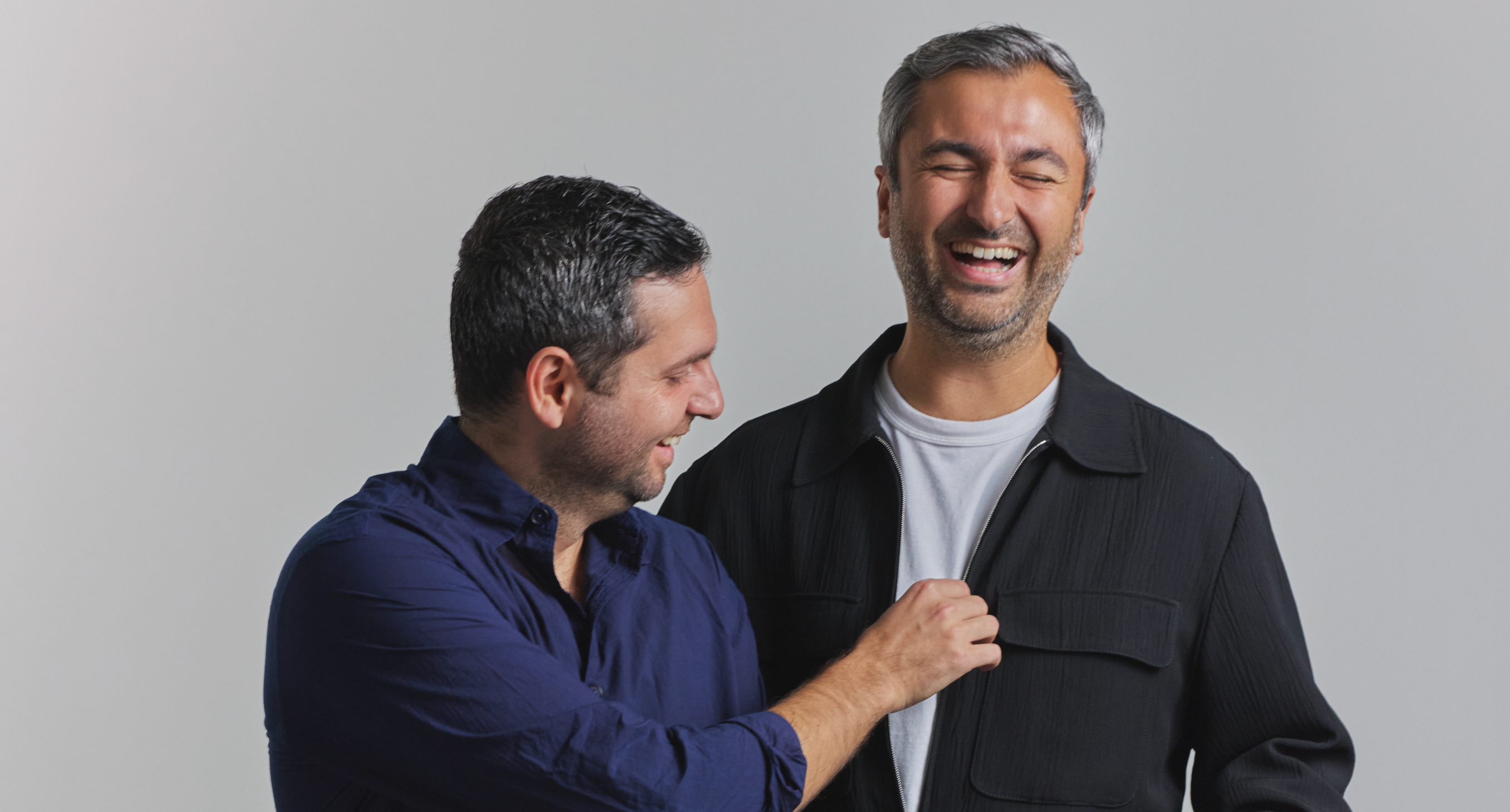
I sit down across from fal’s co-founders, Burkay Gur and Gorkem Yurtseven, and the first thing I notice is that they are wearing the same outfit.
Not similar, the same.
White t-shirts, black jeans, and tennis shoes, the kind of look that almost reads as intentional until I realize both of them showed up to the office dressed identically without planning it. I compulsively point this out, and they look at each other. Burkay laughs first, loud and delighted, pointing at Gorkem like he's caught him in something. Then he adds that Gorkem helped him buy the shirt. Gorkem, for his part, does not appear remotely surprised by any of this.
I've been working at fal long enough to know now, that this is, somehow, very on brand.
Building fal together
This week, fal announced it’s latest round; which felt like a good excuse to actually sit down with the two people who built this place and ask how they found each other. What I didn't expect was to spend the better part of an hour watching two people who are so clearly just friends, in a way that precedes and outlasts every professional category you could put them in.
I sit down in Burkay’s office to chat with the guys and Burkay has already found a pen and a scrap of white paper from somewhere and is drawing. Not nervously, but the way some people think, with their hands moving while their mind runs ahead. Gorkem has his laptop open. He's present and engaged, but he's also someone who always appears to be thinking about at least three things at once. When I ask why they became friends, the laptop lid comes down quickly, like the question requires his full attention. He first jokes that he has no idea how anyone becomes friends.
"Very trustworthy," he says, eventually. "And never boring." These are the two things, from Gorkem, that clearly mean a lot.
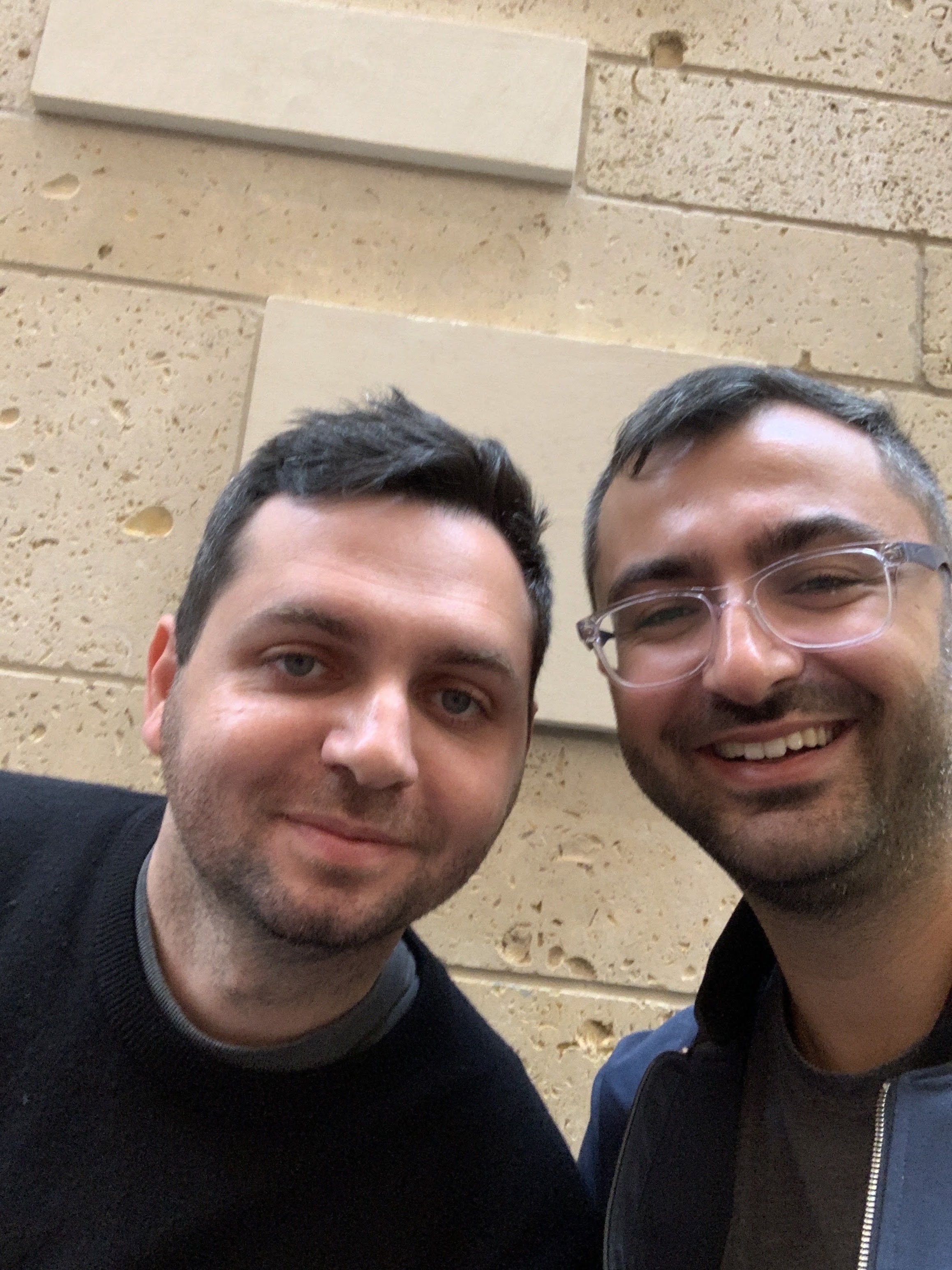
"Just two Turkish guys being Turkish in SF."
This is how Gorkem previously described how he and Burkay met. There was a blue house in the Mission District, where a largely Turkish friend group in San Francisco kept finding their way to the same rooms. A group so tight, that Gorkem eventually introduced Burkay to his wife, and later officiated their wedding. There was a run of dinners and weekends, the slow accumulation of time that turns acquaintances into people who actually know each other, and in their case, build together.
What's funny is that neither of them frames this as deciding to start a company together. Burkay was at Coinbase and knew he wanted to build something. Gorkem was at Amazon and not ready to jump into the fray. And there was a moment, which Burkay describes with this straightforward wonder, like he's remembering it fresh, where he looked at what Gorkem was working on and thought: oh, this person is really good.
Burkay is one of those people who holds the whole arc of an idea in his head while he's talking about the present moment. He speaks in full circles, not because he's unclear, but because he keeps finding new angles on the same idea and wanting to follow each one all the way down. It's not hard to see how a company built around unlocking what's possible is really just a distillation of all these ideas.
Gorkem is the one who figures out how to build towards a vision. Where Burkay expands, Gorkem lands. His sentences end in periods, not ellipses. When I ask Gorkem his top traits about Burkay, he lists three things: trustworthy, interesting to talk to, smart, and means all of them precisely without embellishment. “You meet a lot of people," he says, "and you're like, okay, cool. And then you meet someone different and you realize, oh, this person is smart." He nods once, like that explains Burkay in a nutshell. And it really actually does.
On building something that lasts
When I ask what positions a company for success right now, in AI where the whole landscape can reshuffle in a quarter, Burkay takes a beat and says: talent, and hard problems. You need to convince people that what you're working on is important and that there's real upside in it, especially in a sea of saturated options. What's interesting is what he doesn't name as needed for success. He doesn't say the right model, or the right feature set, or the right market timing. He says the right people, and a problem worth solving.
Burkay's version of this circles toward creativity, toward the idea that what fal really is building is an ecosystem for anyone with a story in their head that they haven't been able to get out yet. "It's like YouTube," he says. "Like Twitter. Or Tumblr. It's giving people with ideas the ability to tell those ideas." He means this in the largest possible sense, not content creation as an industry, but storytelling as a driving human need. The cost of entry has come down. What was once prohibitively expensive or technical is now within reach for anyone who has the vision for it. The tools got faster. The question of what to build with them remains exactly as interesting as it always was.
Gorkem thinks fal's real edge is simply that of credibility. "In this day and age, are you just selling fake AI snake oil?" he says. "Or are you showing up with 10, 15 years of experience building real things at real companies." His read is that AI has made people harder to impress and easier to spook. The glossiness is everywhere now. Anyone can produce something that looks finished. So people are falling back on gut instinct, on founders they've heard of, on teams with track records they can actually verify, products that can hold up when put to the test, the very ability to have discernment. Trust, in other words, has become the product.
The new normal is just normal
An hour in, we end up answering the question of what makes a good hire.
Burkay and Gorkem have clearly talked about this before, and also clearly have a shorthand for it that resists formal definition. But when Burkay tries to describe who we hire, what he comes back to is: normal, which he jokingly says is actually a hard quality to find. Someone with nothing that feels off. No weird ego, no strange evasiveness, nothing that trips a signal you can't quite name but can't ignore.
This is actually the whole story of fal in miniature. Two people who found each other because the conversations were easy and the trust came quickly and nothing ever felt off, and who have been, ever since, trying to find more people who give them that same feeling. They built a company out of that instinct and continue to bet on that instinct being the right one.
There's a version of fal's story that's about models and inference and post-training. That version is real and worth knowing and very much part of fal’s evolving story.
But there's another important version, and it's this one: two people who knew each other so well they stopped noticing they were dressed the same. Who built something because they trusted each other enough to try, and because the conversations never got boring.
I hope you read this and think: I want to work with people like that. I want to build something made by people like that. And we’ll simply say, come talk to us.