We at fal trained MiniMax H3 Max using H3's open weights, and I wanted to show you how both models stack up now.
I ran both through eight identical shots on fal, six from text and two from a still, and worked through the schema and billing gaps that decide which endpoint belongs on which job.
TL;DR
MiniMax H3 Max is fal Research's post-trained variant of MiniMax H3, generating at 480p or 768p.
MiniMax H3 generates at 480p, 768p, 2K or 4K, with the schema describing the top two options as upscales built on a 768p render.
Both models cover 5 to 15 seconds at 24 FPS, six aspect ratios on text to video, and native audio composed with the picture.
Both also run three endpoints on fal now, covering text to video, image to video and reference to video, with MiniMax H3 Max's reference endpoint arriving after its launch.
On fal, 768p costs $0.06 per second on MiniMax H3 and $0.08 per second on MiniMax H3 Max, and 480p costs $0.05 per second on both.
Test conditions: all eighteen clips ran on fal at 768p and 5 seconds, with identical prompt text sent to each endpoint and prompt expansion left on balanced.
I used Seedream 5.0 Pro to produce the three source images, and Test 8's night frame came from running Seedream 5.0 Lite Edit over the daytime frame, which holds the camera geometry identical across the pair.
Test 9 conditions on two reference images and no reference video, which keeps its whole reference pack inside the free token allowance.
How does MiniMax H3 Max differ from MiniMax H3?
fal Research took the open-weight MiniMax H3 base, post-trained it, and serves the result on fal's in-house inference stack under the name MiniMax H3 Max.
The differences that surface in an actual API call are resolution ceiling, endpoint coverage, prompt expansion options, per-second price and reported latency.
Here's how they stack up head-to-head:
| MiniMax H3 | MiniMax H3 Max | |
|---|---|---|
| Best for | 2K and 4K delivery, multimodal reference packs, video editing | Fast turnaround at 768p and prompt adherence per fal's own evaluations |
| Built by | MiniMax | fal Research, post-trained from MiniMax H3 |
| Weights | Open weights | Post-trained from the open-weight base, no separate weights release listed |
| Resolutions | 480P, 768P, 2K, 4K | 480P, 768P |
| Default resolution | 2K | 768P |
| Native generation | 480P and 768P native, 2K and 4K upscale a 768P base | 480P and 768P, both native |
| Duration | 5 to 15 seconds | 5 to 15 seconds |
| Frame rate | 24 FPS | 24 FPS |
| Aspect ratios, text to video | 6 in the schema enum | 6 in the schema enum |
| Endpoints | Text to video, image to video, reference to video | Text to video, image to video, reference to video |
| Prompt expansion modes | fast, balanced, quality | balanced, quality |
| Native audio | Yes, composed with the picture | Yes, composed with the picture |
| Lip-sync | Yes | Yes |
| End frame control | Yes, through end_image_url | Yes, through end_image_url |
| Reference files | Up to 12 total, across 9 images, 3 videos, 3 audio | Up to 12 total, no per-modality caps published |
| Timing data in response | No timings object | timings object with an inference field |
| Free daily generations | Not offered | Five a day on the tool page, five more in the fal sandbox when signed in |
| Price, 480p | $0.05 per second | $0.05 per second |
| Price, 768p | $0.06 per second | $0.08 per second |
| Price, 2K | $0.13 per second | Not offered |
| Price, 4K | $0.16 per second | Not offered |
| Commercial use | Yes, subject to fal's terms | Yes, subject to fal's terms |
MiniMax H3 vs. MiniMax H3 Max: text-to-video tests
Let's see how H3 Max compares to H3 over these 6 shots:
Test 1: Pit stop, fictional prototype series (16:9)
Three hard timed beats inside five seconds gives the cleanest read on whether events arrive in the order they were written, since the common failure is averaging a sequence into one continuous blur of motion.
The stop also needs four crew working four corners at once without the model inventing a fifth pair of hands.
Prompt: Five seconds, 16:9, one continuous shot from a low camera bolted to the pit wall. Style: broadcast motorsport with a commercial-grade finish, hard midday sun, heat shimmer off the tarmac, fictional livery in orange and gunmetal, no real teams and no sponsor marks. [0 to 1.5 seconds] A prototype racer arrives hard into the box, front splitter dipping under braking, and stops dead on its marks as four crew hit the corners at once. [1.5 to 3.5 seconds] Wheel guns whine, all four wheels come off and go back on, the front jack drops, the board lifts. [3.5 to 5 seconds] The car launches out of frame left with tyre smoke crossing the lens, the crew already turning away. Audio: pneumatic gun scream, wheel nuts rattling on concrete, a flat-plane engine idling then snapping to full throttle, clipped radio chatter underneath. No music. Constraints: no contact between people, no crash, no fire.
Generated using MiniMax H3 on fal, an AI model from MiniMax.
Generated using MiniMax H3 Max on fal, an AI model post-trained by fal from MiniMax H3.
Test 2: Motion poster, fictional tentpole (16:9)
Typography breaks in a recognizable way in generated video: the letterforms look right at a glance and the words turn out to be near-misses, with tracking that drifts across the hold.
This shot asks for two lines of type and a date, all of which have to come back spelled as written and still legible at 768p.
Prompt: Five seconds, 16:9, teaser motion poster. Style: IMAX-scale science fiction, volumetric god rays, ash in the air, anamorphic flares, near-monochrome with one cold cyan accent. [0 to 3 seconds] Slow vertical rise past a colossal ruined arcology, ash drifting upward through a single shaft of light, camera rolling a few degrees as it climbs. [3 to 4 seconds] The image falls away to black. [4 to 5 seconds] Two lines of type fade up centered, white on black, in a wide-tracked geometric sans: THE LONG QUIET on the first line, and beneath it, smaller and letter-spaced, IN THEATRES 07 . 24. The type holds dead still and legible to the last frame. Audio: sub-bass swell, distant structural groan, one percussive hit landing exactly as the title appears, then silence under the type. No dialogue, no score bed. Constraints: exactly two lines of type, spelled as written, no other text, no logo, no watermark, no subtitles.
Generated using MiniMax H3 on fal, an AI model from MiniMax.
Generated using MiniMax H3 Max on fal, an AI model post-trained by fal from MiniMax H3.
Test 3: Creature reveal, one unbroken crane-to-push (16:9)
One take, two linked camera moves, and a subject that has to be moving on its own while the camera moves around it.
Prompt: Five seconds, 16:9, single take, crane down into a push. Style: photoreal tentpole cinema, large-format spherical, storm-grey palette, practical spray on the lens, no game-engine look. [0 to 2 seconds] High and wide above a research trawler pitching in heavy swell at dusk, deck lights swinging, crew as small silhouettes at the rail. [2 to 3.5 seconds] The camera cranes down toward the waterline as the sea behind the vessel lifts and drains off a vast dark ridged mass rising in silence. [3.5 to 5 seconds] The camera pushes in low along the water, the trawler tiny in the foreground against the shape now filling frame, and holds. Audio: storm wind, hull slam, water sheeting off something enormous, one infrasonic pulse felt more than heard, a distant shout cut off by the wind. No music. Constraints: the creature is never fully lit and never contacts the vessel, original design.
Generated using MiniMax H3 on fal, an AI model from MiniMax.
Generated using MiniMax H3 Max on fal, an AI model post-trained by fal from MiniMax H3.
falMODEL APIs
The fastest, cheapest and most reliable way to run genAI models. 1 API, 100s of models
Test 4: Creator footage, drone launch (9:16)
Convincing creator footage is a harder ask than convincing cinema, because the imperfections have to be the right imperfections.
Autofocus that hunts once and settles reads as real, while autofocus that pulses through the whole clip reads as a model imitating handheld.
The spoken line has to survive wind buffeting on the mic without the lip-sync loosening, and this is the only vertical shot in the set, so it also confirms that the 9:16 ratio holds under a moving handheld frame.
Prompt: Five seconds, 9:16 vertical, shot on a phone at arm's length. Style: authentic creator footage at golden hour on a windy beach, autofocus hunting once, exposure shifting as the sun catches the lens, handheld wobble, no colour grade. [0 to 2.5 seconds] A guy in his twenties in a salt-stained windbreaker holds the phone up with the sea behind him, wind pulling at his hair, and says straight to camera: "Third try. If this one gets away from me I'm walking home." [2.5 to 4 seconds] He turns the phone toward a compact grey quadcopter on wet sand. The arms unfold and the rotors spin up. [4 to 5 seconds] It lifts fast out of the top of frame. He tilts the phone after it, laughing, losing focus for a beat. Audio: his voice close and wind-buffeted, gusting mic noise, surf, rotors spooling from a whine into a hard buzz. No music. Constraints: unbranded aircraft, one speaker, no burned-in captions.
Generated using MiniMax H3 on fal, an AI model from MiniMax.
Generated using MiniMax H3 Max on fal, an AI model post-trained by fal from MiniMax H3.
Test 5: Papercraft spot, fictional airline (16:9)
Video models pull a stylized look toward photography once motion starts, so five seconds of held paper fibre and visible cut edges is worth watching frame by frame.
Prompt: Five seconds, 16:9, advertising spot. Style: layered laser-cut paper animation shot on a real tabletop. Visible paper fibre and cut edges, hand-mixed gouache colour, warm practical keylight throwing soft real shadows between layers, gentle stepped motion. Not 3D render, not vector, not cel animation, and never resolving toward photography. [0 to 2 seconds] A paper aircraft in coral and cream banks left across three sliding layers of paper cloud, its own shadow travelling over the layer beneath it. [2 to 4 seconds] The clouds part and a paper coastline slides up from below: cut waves, a folded lighthouse, scored gulls on thin wires. [4 to 5 seconds] The aircraft levels and a small paper banner rises into the lower third reading FLY SOUTH, the letters visibly cut from card. Audio: paper rustle, card sliding on card, a felt thud on each stepped move, warm brushed-brass melody, one glockenspiel note as the banner lands. Constraints: every frame stays cut paper, hold the fibre and cut edges, no photography, no text beyond the banner as written.
Generated using MiniMax H3 on fal, an AI model from MiniMax.
Generated using MiniMax H3 Max on fal, an AI model post-trained by fal from MiniMax H3.
Test 6: Dive watch, three macro moves (16:9)
Every action in this shot has a sharp audio transient that has to land on the frame of contact, which makes it the strongest native-audio test in the set.
Prompt: Five seconds, 16:9, 100mm macro wide open, black-on-black product lighting with one raking key. [0 to 1.8 seconds] Extreme close on the crown. Two gloved fingertips draw it out and it clicks twice, each click landing on a visible detent. [1.8 to 3.4 seconds] Cut to a steel bracelet clasp lying open on slate. It folds and snaps shut flat. [3.4 to 5 seconds] Cut to the dial. The sweep hand steps across the six o'clock index eight times in discrete ticks, lume glowing faintly as the key falls off. Audio: dead studio room tone, two crisp crown detents, one metallic clasp snap, then eight dry ticks at even spacing. Every sound lands on the frame of contact. No music, no voice. Constraints: unbranded, nothing printed on the dial, no hands beyond the two fingertips in the first move.
Generated using MiniMax H3 on fal, an AI model from MiniMax.
Generated using MiniMax H3 Max on fal, an AI model post-trained by fal from MiniMax H3.
MiniMax H3 vs. MiniMax H3 Max: image-to-video tests
Both image-to-video endpoints take the still as frame one, both accept an optional end frame through end_image_url, and both inherit the output ratio from the image you pass in.
Test 7 uses a single start frame, and Test 8 uses a start and end pair.
Test 7: Flagship phone orbit with live UI (16:9)
Two failure modes are under examination at once here.
A phone is a hard-edged object with a fixed corner radius and a fixed bezel width, so a constant-speed orbit gives geometry drift nowhere to hide.
At the same time, the display has to animate legible interface work, which both fal model pages call out as a strength of the base architecture.
Seedream 5.0 Pro prompt for the start frame: A photoreal 16:9 studio still of an unbranded slate-grey flagship smartphone standing upright on a brushed aluminium plinth in a dark room. Screen off and reflective, one hard raking key from upper left, cool rim along the right edge, unbroken black falloff behind. No logos, no text, no hands.
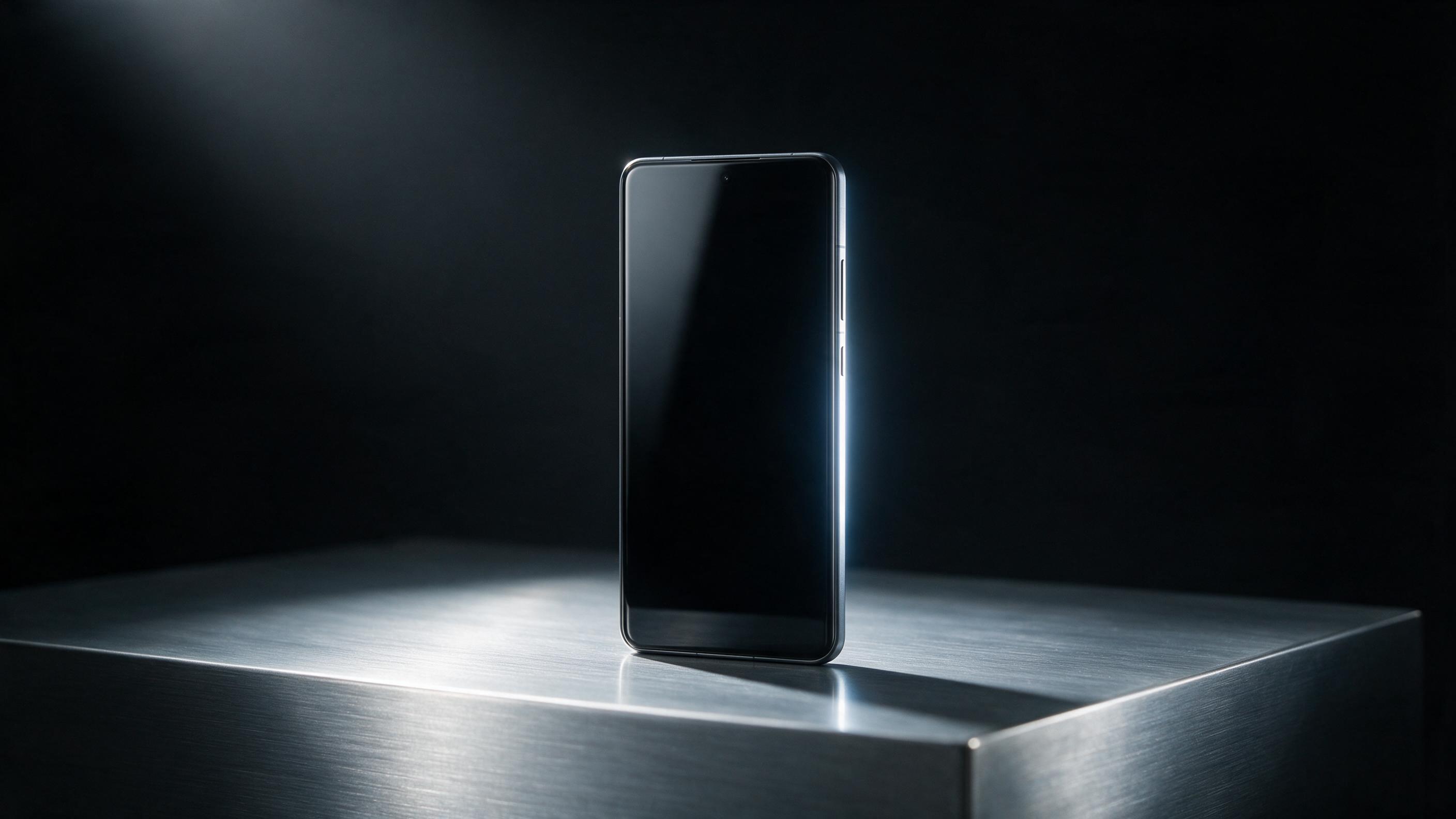
Generated using Seedream 5.0 Pro on fal, an AI model from ByteDance.
Video prompt: The camera orbits right around the phone at a constant speed across the full five seconds while the display wakes. A thin cyan arc draws clockwise from the top of the screen, then a readout resolves beneath it: 04 . 12 on the first line, smaller text under it. The device holds its exact proportions, bezel width and corner radius through the whole orbit, and the raking key travels across the glass as one unbroken specular. Audio: a low haptic thunk as the screen wakes, faint electrical hum, one soft ascending two-note tone. No music, no voice. Keep the phone unbranded and the screen content exactly as described.
Generated using MiniMax H3 on fal, an AI model from MiniMax.
Generated using MiniMax H3 Max on fal, an AI model post-trained by fal from MiniMax H3.
Test 8: Stadium, day to night on a locked camera (16:9)
Sharing one composition across two frames that agree on nothing but geometry makes the interpolation easy to grade honestly, because the roofline and the seat layout either hold or they do not.
I produced the night frame by editing the daytime one, which pins the camera to the same coordinates in both.
Seedream 5.0 Pro prompt for the start frame: A photoreal 16:9 still from the upper tier of an empty modern football stadium at midday. Bare green pitch, sunlit east stand, deep shade across the west stand, every seat empty, boards blank, hazy pale sky. No people, no text, no logos.
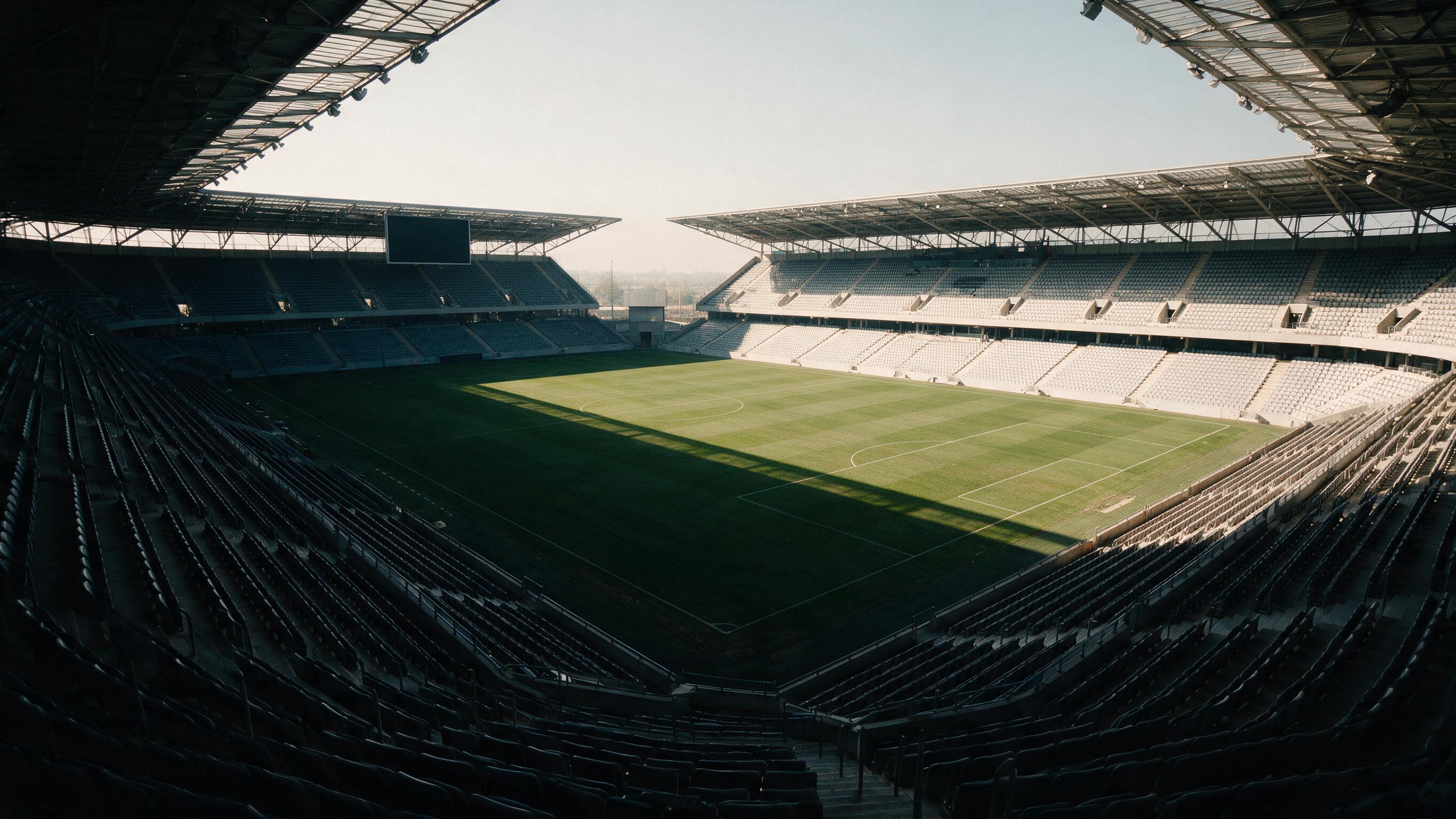
Generated using Seedream 5.0 Pro on fal, an AI model from ByteDance.
Seedream 5.0 Lite Edit prompt for the end frame, run on the start frame: Keep the camera position, framing, roofline, tier geometry and seat layout exactly as they are. Change the time to night: four floodlight banks at full output, the pitch brilliant green beneath them, every seat filled with a dense anonymous crowd, phone lights scattered through the tiers, boards lit white, black sky above the roofline. No text, no logos, no legible faces.
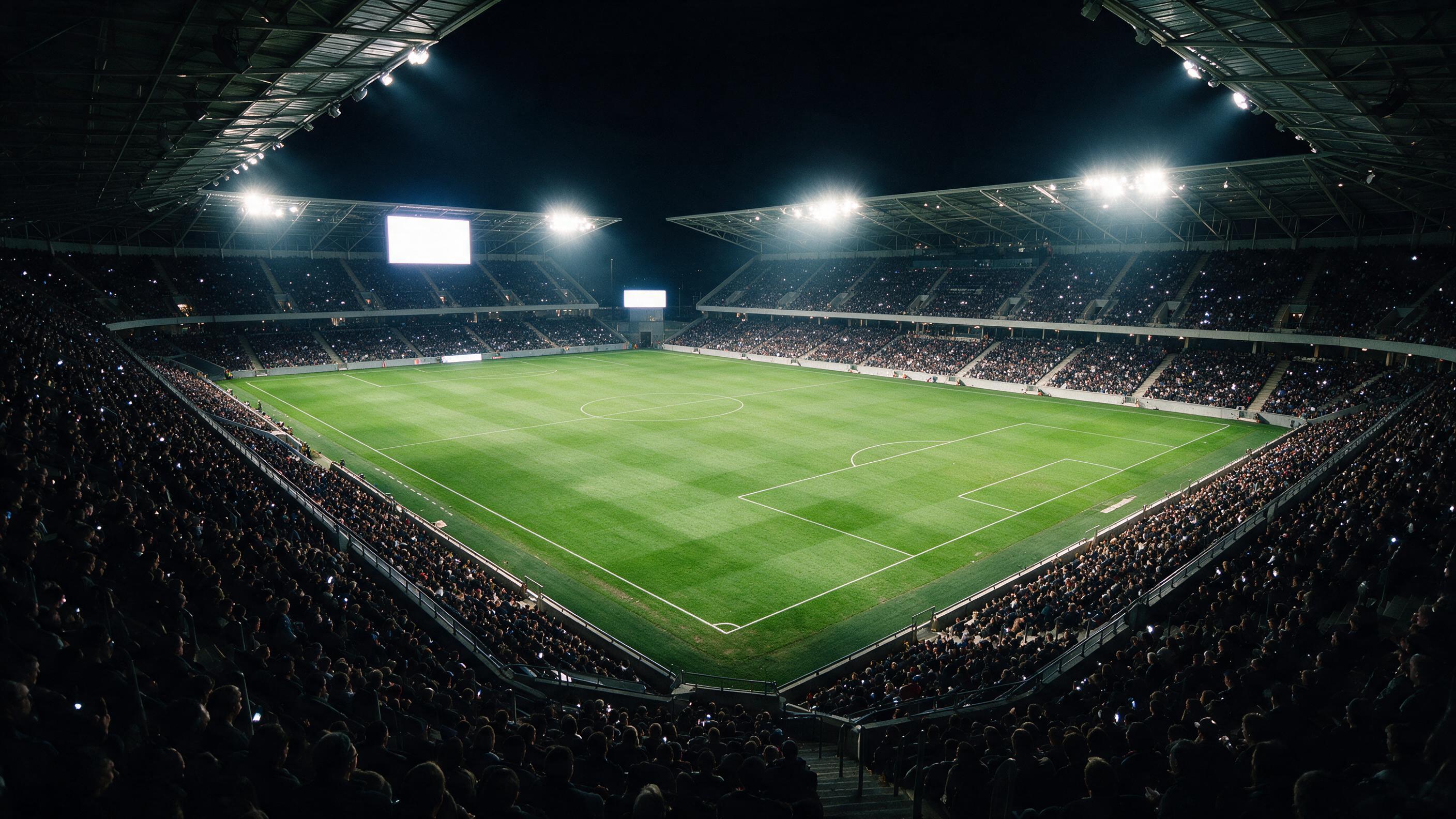
Edited using Seedream 5.0 Lite Edit on fal, an AI model from ByteDance.
Video prompt: Hold the camera locked for all five seconds. The sun falls, shade crawls off the west stand, the sky drops through amber to black, the four floodlight banks strike one at a time from left to right, and the tiers fill as the light goes. Perspective, roofline and seat geometry stay identical from first frame to last. Audio: empty concrete hum at the start, distant traffic, then a crowd building from nothing to a full roar as the last bank strikes, with a low brass sting under it. No commentary, no music bed.
Generated using MiniMax H3 on fal, an AI model from MiniMax.
Generated using MiniMax H3 Max on fal, an AI model post-trained by fal from MiniMax H3.
MiniMax H3 vs. MiniMax H3 Max: reference-to-video test
Reference conditioning is the easiest place to catch subject drift, because the source image sits right next to the output for comparison.
Both reference endpoints address inputs positionally, so the prompt below runs byte-identical against each.
Test 9: Two image references dropped into a location neither one contains (16:9)
Two references with two separate jobs here.
One carries a person, and the other carries an object with three specific manufacturing marks, and the shot happens somewhere neither reference has ever seen.
The scar and the dent are the smallest details in the pack and the first things a model quietly smooths away.
Seedream 5.0 Pro prompt for Image 1: A photoreal 16:9 three-quarter portrait of a woman in her thirties against a flat grey studio background, wearing a faded rust-orange technical shell jacket with a torn left cuff and a small steel carabiner clipped to the chest strap. Short dark hair pushed back, sunburn across the nose, a thin white scar through the right eyebrow. Even soft studio light. No text, no logos, no branding.
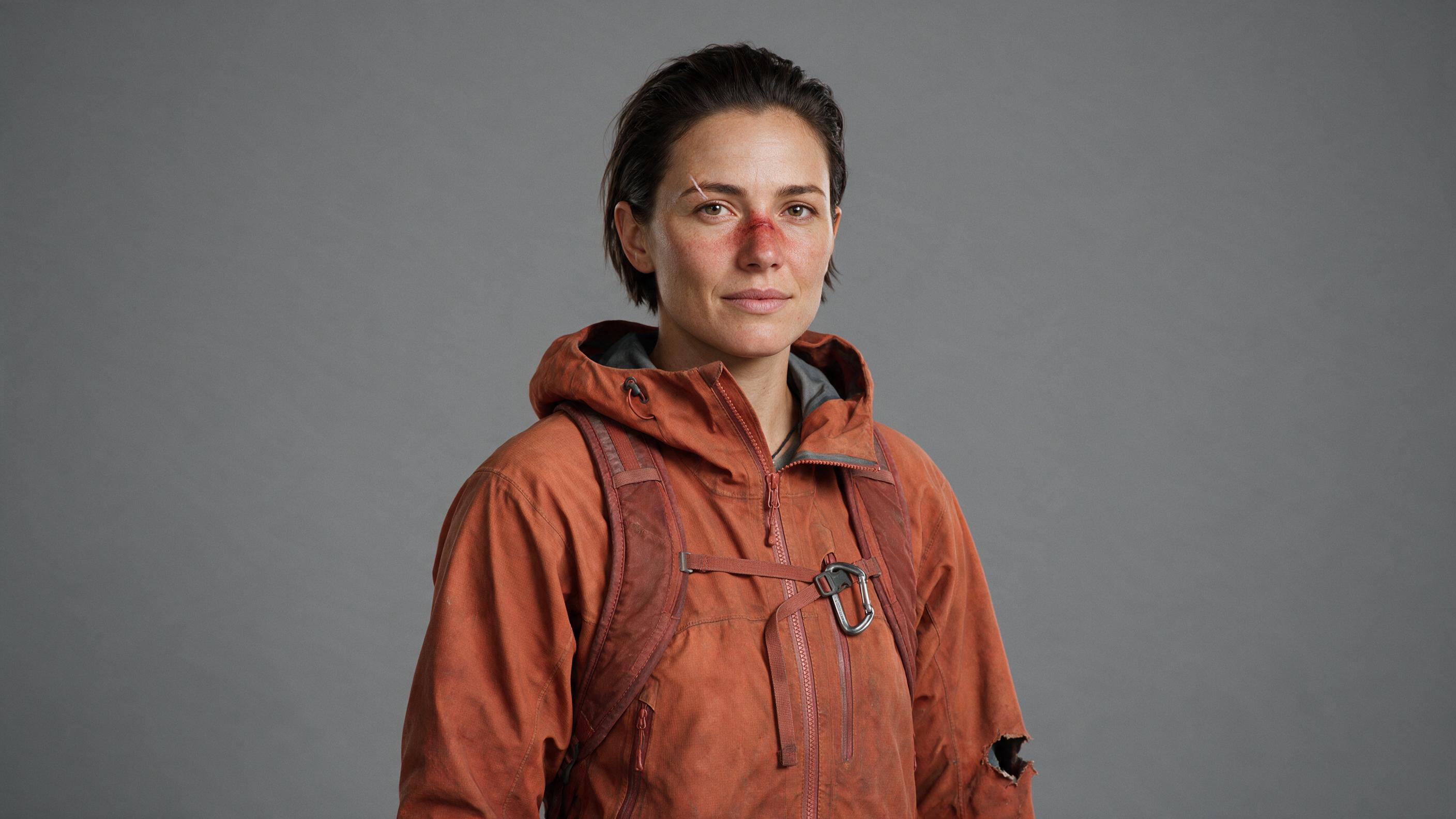
Generated using Seedream 5.0 Pro on fal, an AI model from ByteDance.
Seedream 5.0 Pro prompt for Image 2: A photoreal 16:9 product still of an unbranded insulated flask in hammered copper standing upright on bare concrete. A shallow dent low on the left of the body, a matte black screw lid, and a hairline scratch running diagonally across the front. One hard key from the upper right, flat grey falloff behind. No text, no logos, no branding.
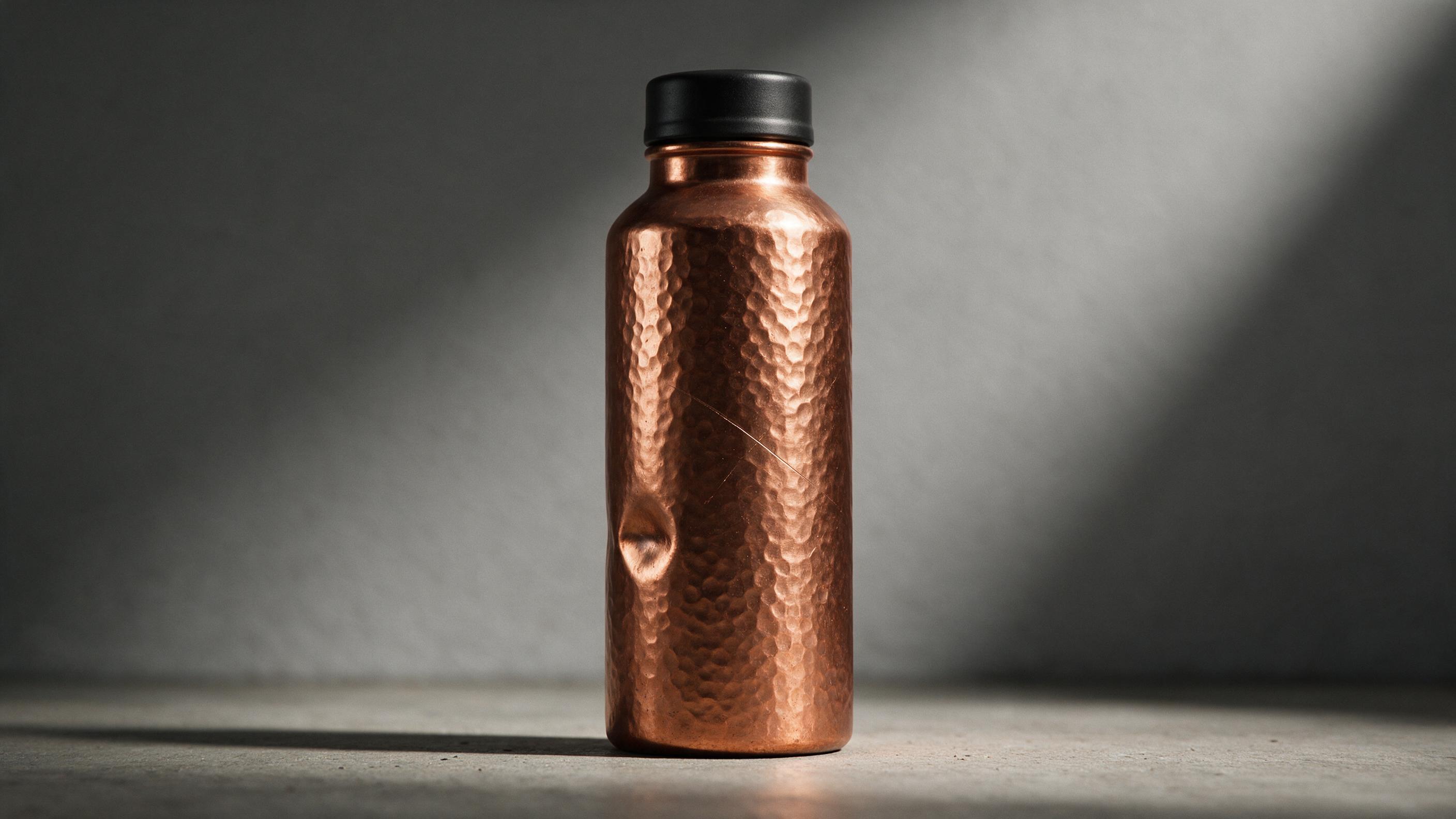
Generated using Seedream 5.0 Pro on fal, an AI model from ByteDance.
Prompt: Image 1 is the climber. Image 2 is the flask. Hold from Image 1: the rust-orange shell jacket, the torn left cuff, the carabiner on the chest strap, the short dark hair and the scar through her right eyebrow. Hold from Image 2: the hammered copper body, the dent low on its left side, the matte black lid and the diagonal scratch across the front. [0 to 2 seconds] She sits on a granite ledge above a valley filling with cloud at sunrise, the flask upright on the rock beside her, camera a little below her eye line. [2 to 3.5 seconds] She picks the flask up, turns the lid one full rotation, and drinks, the dented side rolling toward camera as she lifts it. [3.5 to 5 seconds] She sets it down, looks out across the cloud, and says quietly: "Two more hours of this and I'm calling it a win." Audio: high-altitude wind, loose grit shifting under her boots, the lid turning against the thread, her voice close and slightly short of breath. No music. Neither reference image contains this location. Build the ledge and the valley fresh.
Generated using MiniMax H3 on fal, an AI model from MiniMax.
Generated using MiniMax H3 Max on fal, an AI model post-trained by fal from MiniMax H3.
What did fal change in post-training?
fal Research post-trained MiniMax H3 Max from the open-weight MiniMax H3 base, introducing substantial new training data aimed at prompt adherence and aesthetics.
Much of the post-training compute went to verifiable reinforcement learning tasks run through fal's in-house framework, and fal designed the architecture of MiniMax H3 Max around the inference engine its team has spent four years tuning for diffusion workloads.
Checkpoints were evaluated through head-to-head human preference studies on three dimensions scored separately:
- Overall quality
- Prompt understanding
- Aesthetics
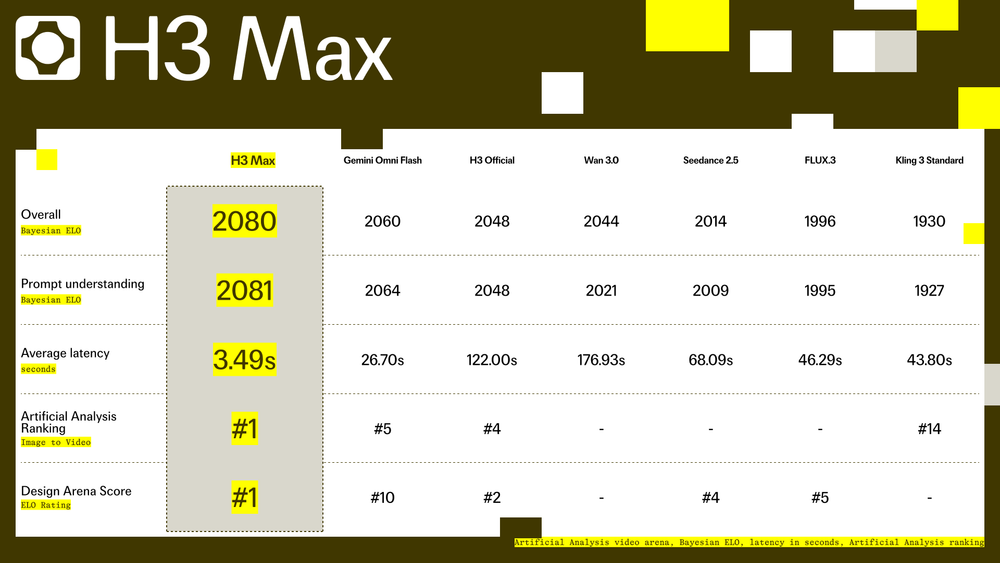
Training and serving both ran on NVIDIA GB200 NVL72 systems, which delivered up to twice the per-chip performance of the previous-generation accelerators it used for earlier models.
Where can you access MiniMax H3 and MiniMax H3 Max?
fal hosts both models, reachable from a browser playground or called straight from the API, billed by the second with nothing to provision.
MiniMax H3 Max also has a free path that MiniMax H3 does not: five 5-second generations a day from its tool page with no account required, and five more a day in the fal sandbox at up to 15 seconds each once you sign in.
One SDK, @fal-ai/client, talks to every video endpoint fal hosts.
Auth, queueing, webhook delivery and error shapes stay the same across both model IDs, which makes switching between them a one-string change.
Here is a call to MiniMax H3 Max:
javascript
import { fal } from "@fal-ai/client";

const result = await fal.subscribe("minimax/h3-max/text-to-video", {
  input: {
    prompt:
      "Slow dolly forward down a rain-slick night-market alley, steam pouring off a noodle cart under a buzzing red neon sign. 35mm anamorphic, practical lights only, wet cobblestones doubling every highlight. Sound: wok sizzle and clang, rain ticking on tin awnings, neon hum.",
    resolution: "768P",
    aspect_ratio: "16:9",
    duration: 5,
    prompt_expansion_mode: "balanced",
  },
  logs: true,
  onQueueUpdate: (update) => {
    if (update.status === "IN_PROGRESS") {
      update.logs.map((log) => log.message).forEach(console.log);
    }
  },
});

console.log(result.data.video.url);
// result.data.timings.inference is the render time on the backend:
// about 2.5s for a 5-second 768p clip.
console.log(result.data.timings);
How do MiniMax H3 and MiniMax H3 Max compare on pricing?
Output bills per second at a rate set by resolution, identical at 480p and one third higher on MiniMax H3 Max at 768p.
Reference inputs bill on top of that, on two schedules that share no common unit.
💡 Every figure below is fal's published playground rate as of the 31st of August, 2026.
Output:
| MiniMax H3 | MiniMax H3 Max | |
|---|---|---|
| Per second, 480p | $0.05 | $0.05 |
| Per second, 768p | $0.06 | $0.08 |
| Per second, 2K | $0.13 | Not offered |
| Per second, 4K | $0.16 | Not offered |
| 5 seconds at 768p | $0.30 | $0.40 |
| 15 seconds at 768p | $0.90 | $1.20 |
| 5 seconds at 2K | $0.65 | Not offered |
480p prices are the same on both, which makes it the setting for iteration passes: sub-3-second turnaround on MiniMax H3 Max at no premium.
Reference inputs:
| MiniMax H3 | MiniMax H3 Max | |
|---|---|---|
| Unit billed | Whole images | Pooled tokens across images, video and audio |
| Free allowance | First 5 images, any size | First 4,096 tokens |
| Past the allowance | $0.08 per image | $0.02 per 1,000 tokens |
| One 1024x1024 still | $0.08 | $0.02 |
| One 2048x2048 still | $0.08 | $0.08 |
| One 3072x3072 still | $0.08 | $0.18 |
| 5-second reference clip at 768p | Not stated | $0.66 |
| 15-second reference clip at 768p | Not stated | $2.16 |
The schedules cross at 2048x2048, so large counts of modest stills come out cheaper on MiniMax H3 Max and high-resolution stills cheaper on MiniMax H3.
Reference clips price off the resolution you generate at on MiniMax H3 Max, not the resolution of the clip you supply.
MiniMax H3 Max also carries five free generations a day from its tool page and five more in the fal sandbox, where MiniMax H3 bills from the first second.
Which one should you use: MiniMax H3 or MiniMax H3 Max?
For me, resolution and turnaround decide it: MiniMax H3 for anything delivered above 768p, MiniMax H3 Max when render time governs the work.
I'd pick MiniMax H3 for:
- Delivery specs above 768p, since 2K and 4K exist on that model alone
- Editing work, where swapping a product, replacing a spoken line and relighting a scene are all documented on MiniMax H3 and on neither MiniMax H3 Max endpoint
- Voice transfer, cloning a voice off a recording you supply onto a character
- Full shot lists in one request, up to a 7,000-character prompt ceiling
- Reference packs built from high-resolution stills, which bill flat at $0.08 an image past the first five
I'd pick MiniMax H3 Max for:
- Interactive tools, where somebody is watching a spinner while the render happens
- High-volume batch runs and iteration passes where you burn nine takes to keep one
- Beat-sequenced briefs and on-screen type, the areas fal's post-training targeted first
- Instrumented pipelines, since
timings.inferencereturns real backend render time per request - Reference packs built from many modest stills, which bill by pixel area and come in cheaper at that size
Recently Added








Get started with MiniMax H3 and MiniMax H3 Max on fal
MiniMax H3 and MiniMax H3 Max are both available on fal today.
A single API key reaches all six endpoints between them, with no infrastructure sitting idle on your side.
MiniMax H3 runs at minimax/h3/text-to-video, minimax/h3/image-to-video and minimax/h3/reference-to-video.
MiniMax H3 Max runs at minimax/h3-max/text-to-video, minimax/h3-max/image-to-video and minimax/h3-max/reference-to-video.
Start with the free daily generations on the MiniMax H3 Max tool page to get a feel for the latency, try MiniMax H3 in the playground when you need 2K or references, then move to the API.
MiniMax H3 vs. MiniMax H3 Max FAQs
What is the main difference between MiniMax H3 and MiniMax H3 Max?
MiniMax H3 Max is what fal Research produced by post-training MiniMax H3, with the tuning aimed at prompt adherence and aesthetics and the serving path built around it.
Its ceiling is 768p.
MiniMax H3 is the open-weight base model, reaching 2K and 4K, and carrying a third endpoint for multimodal references along with precise video editing.
Both share the unified multimodal architecture, the 5 to 15 second range at 24 FPS, audio written during the same pass as the image, and end frame control on image to video.
Which is cheaper, MiniMax H3 or MiniMax H3 Max?
MiniMax H3 is cheaper at 768p, at $0.06 per second against $0.08 per second on MiniMax H3 Max.
At 480p the two are identical at $0.05 per second.
A free daily allowance exists on MiniMax H3 Max alone, at five generations a day from its tool page and five more in the fal sandbox once signed in, which makes it cheaper for low-volume work.
Can MiniMax H3 Max generate 2K or 4K?
Not as of 1st of September, 2026.
The resolution enum on both MiniMax H3 Max endpoints holds 480P and 768P only, with 768P as the default.
MiniMax H3 covers 2K and 4K, though its schema classes both as upscales of a 768P render, leaving 480P and 768P as the only native modes on either model.
Do both MiniMax H3 and MiniMax H3 Max generate audio and lip-sync?
Yes, on both, at no extra charge.
Each model writes the soundtrack during the same generation that produces the image, so score, spoken lines, effects and ambience arrive already aligned to the picture.
MiniMax H3 goes further on the audio side, transferring or cloning a voice from a recording you supply, and swapping out a spoken line in footage that already exists.
Can I use MiniMax H3 and MiniMax H3 Max for commercial projects?
Yes.
Content generated through the fal API can be used commercially on both models, subject to fal's terms of service, which cover usage rights and licensing in full.
![Flux 2 [klein] Prompt Guide](https://refinery.fal.media/url/https%3A%2F%2Fv3b.fal.media%2Ffiles%2Fb%2F0a8a9bd5%2FQmraOvhzoPcVdid6feB2t_1768560216470.png/tr:w-1280,q-80/QmraOvhzoPcVdid6feB2t_1768560216470.webp)