This guide breaks down Ideogram v4 and Nano Banana 2: typography, layout control, the two very different editing surfaces, and what both models cost on fal.
TL;DR
Ideogram v4 is Ideogram's latest V4.0 generation, running on fal at the ideogram/v4 endpoint with open weights available on GitHub.
Billing is per output megapixel across three rendering speeds: $0.0075 per megapixel in Turbo, $0.015 in Balanced, and $0.025 in Quality.
The text-to-image endpoint takes 6 aspect presets or any custom {width, height} pair, with native 2K generation and native background transparency.
Nano Banana 2 runs on Gemini 3.1 Flash Image and is an amazing AI image generator for creating high-quality images quickly.
Each image costs a flat rate set by its resolution tier: $0.06 at 0.5K, $0.08 at 1K, $0.12 at 2K, and $0.16 at 4K.
Switching on web search grounding costs an extra $0.015 per generation, and high thinking an extra $0.002.
Aspect ratio options run from a 1:1 square out to 8:1 and 1:8 extremes, 14 presets in total plus an auto setting.
Google's spec puts character consistency at up to 5 people in a single generation.
Commercial use is enabled for both models on fal, and each one puts typography near the center of its pitch.
The real gaps between Ideogram v4 and Nano Banana 2 are structural: pixels versus images on the meter, one reference versus fourteen on the edit side, bounding boxes versus reasoning for layout, and only one of the two can check the live web before rendering.
How do Ideogram v4 and Nano Banana 2 compare?
Here's the full spec-for-spec view:
| Ideogram v4 | Nano Banana 2 | |
|---|---|---|
| Architecture | Ideogram V4.0q, open weights (Ideogram) | Gemini 3.1 Flash Image (Google) |
| Best for | Typography-first design work, positional layout control, megapixel-billed custom sizes, open-weights customization | Multi-image editing, web-grounded factual visuals, character consistency, fixed per-image budgeting |
| Price (1024x1024) | About $0.008 Turbo, $0.016 Balanced, $0.026 Quality | $0.08 at 1K |
| Price (2K square) | $0.03 Turbo, $0.06 Balanced, $0.10 Quality at 2048x2048 | $0.12 at 2K |
| Billing structure | Per output megapixel, rate set by rendering speed | Fixed per image, resolution multiplier |
| Extra fees | No. | $0.015 for web search, $0.002 for high thinking, both opt-in |
| Quality control | rendering_speed: TURBO, BALANCED, QUALITY (denoising step count) | thinking_level: minimal, high (optional) |
| Text rendering | Dense multi-font layouts and long-form text, per Ideogram's documentation | Per-character typography validation in multiple languages, per Google's documentation |
| Layout control | Bounding-box trained; positional prompting for element placement, per Ideogram | Reasoning-guided spatial composition, per Google |
| Character consistency | Not exposed as a parameter | Up to 5 people per generation, per Google's spec |
| Web search grounding | Not available | Optional, $0.015 per generation |
| Editing endpoints | image-to-image (single input, strength dial) and tiling | Edit endpoint with up to 14 reference images, plus video, audio, and PDF context inputs |
| Editing price | Image-to-image at the same per-MP rates; tiling at $0.03 to $0.10/MP by mode | Same per-image rates as generation |
| Resolution rules | 6 presets or custom {width, height}; native 2K per Ideogram; image-to-image auto matches input up to about 25MP and 8192px per side | 0.5K, 1K (default), 2K, 4K |
| Custom dimensions | Yes | No, fixed tiers only |
| Aspect ratios | Any ratio the custom dimensions allow | 14 presets plus auto, including 4:1, 1:4, 8:1, 1:8 |
| Batch generation | num_images parameter | 1 to 4 per request |
| Streaming | Yes, all three endpoints | Not exposed |
| Watermarking | None listed | SynthID on every output |
| Output formats | JPEG, PNG (JPEG default) | PNG, JPEG, WebP (PNG default) |
| Safety controls | enable_safety_checker, disable via API only | safety_tolerance 1 to 6, API only |
| Commercial use | Yes | Yes |
Where can you access Ideogram v4 and Nano Banana 2?
Both Ideogram v4 and Nano Banana 2 run on fal, in a browser playground and through the API, with no subscription and no minimum commitment.
Ideogram v4 bills per megapixel of output and Nano Banana 2 bills per image, so you pay for what actually renders and nothing else.
One @fal-ai/client integration covers both, and the call shape you learn here carries to the over 1,000 other AI models on the platform.
Authentication, queueing, error handling, and billing all work identically whether the endpoint string says Ideogram, Nano Banana, or anything else.
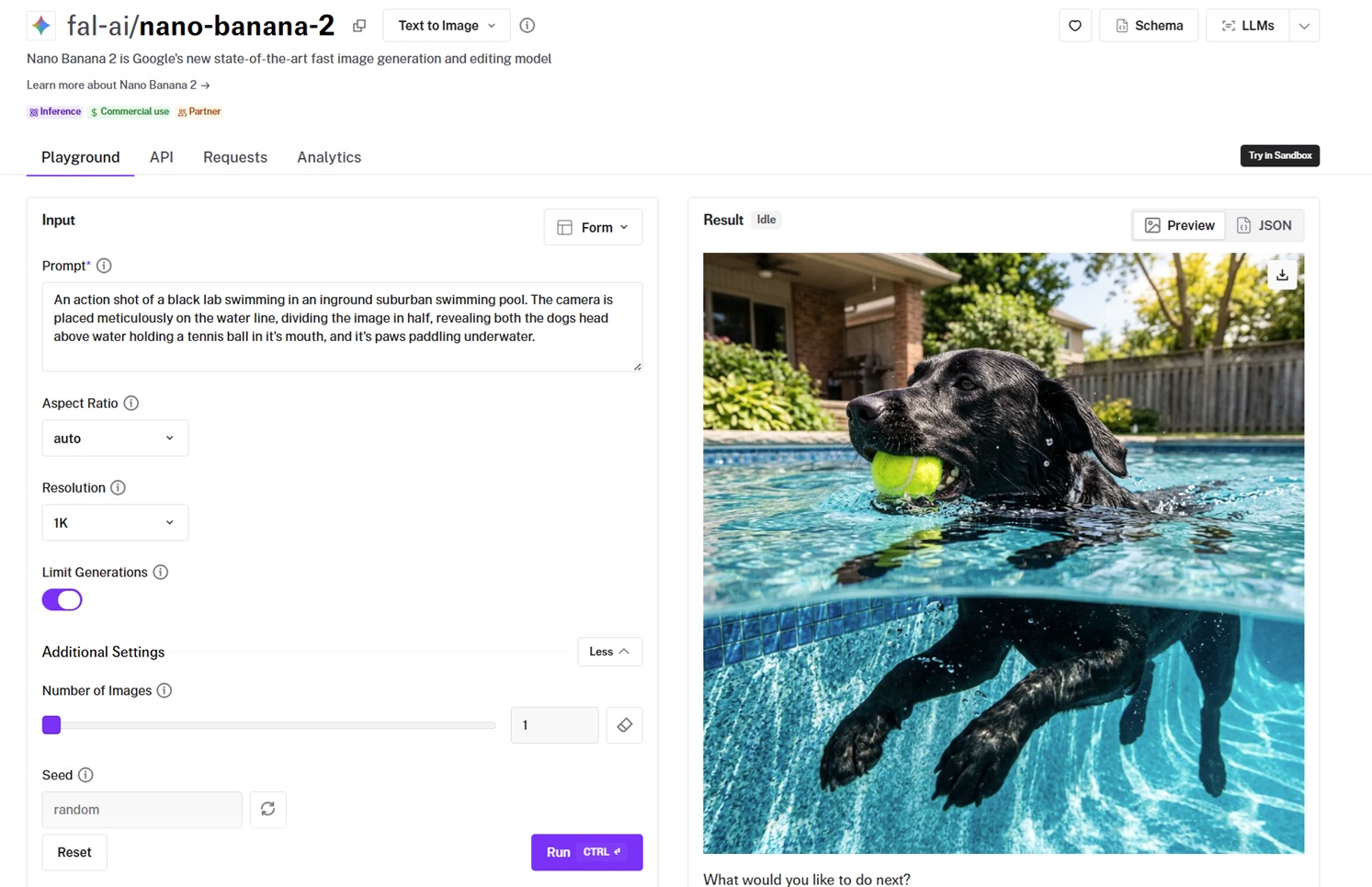
Getting the first render back takes a few lines:
javascript
import { fal } from "@fal-ai/client";

const result = await fal.subscribe("fal-ai/nano-banana-2", {
  input: {
    prompt:
      "An action shot of a black lab swimming in an inground suburban swimming pool. The camera is placed meticulously on the water line, dividing the image in half, revealing both the dogs head above water holding a tennis ball in it's mouth, and it's paws paddling underwater.",
  },
  logs: true,
  onQueueUpdate: (update) => {
    if (update.status === "IN_PROGRESS") {
      update.logs.map((log) => log.message).forEach(console.log);
    }
  },
});

console.log(result.data);
console.log(result.requestId);
What's the difference between Ideogram v4 and Nano Banana 2?
Both models chase the same two prizes: high-quality photography and text you can actually read.
And both put a language stage in front of the pixels, though they've built that stage in completely different ways.
Ideogram v4 is an open-weights image model, and its speed tiers map directly onto how the image gets made.
The rendering_speed parameter controls the denoising step count: Turbo spends the fewest steps, while Quality spends the most.
You're choosing how much refinement each render gets, and the per-megapixel rate scales with that choice.
The language stage is a separate, optional pass called prompt expansion.
You can set expansion_model to Medium for a fast rewrite or Large for Ideogram's Magic Prompt, which reworks your input into a richer prompt before generation starts.
The layout story is unusual: Ideogram v4 was trained with bounding boxes tied to region descriptions, teaching the model where every object, text region, and layout element belongs.
Nano Banana 2 builds the language stage into the model itself.
It runs on Google's Gemini 3.1 Flash Image foundation, which operates by analysing a scene's composition and spatial logic before rendering anything.
There's no separate expansion pass to toggle because the reasoning is native to the architecture.
The thinking_level parameter sets how deep that reasoning goes, with minimal and high as the two settings.
A second toggle, enable_web_search, lets the model pull real-time web information into the generation for $0.015 per call.
Here's how the practical split looks:
Ideogram v4 hands you an open-weights model where the step count and the canvas dimensions answer to you, with expansion as a separate decision.
Nano Banana 2 is a reasoning model where depth and grounding are switches on a fixed-price meter.
How do Ideogram v4 and Nano Banana 2 look side-by-side?
I built six identical-prompt tests, each aimed at a specific claim from the two product pages.
Every prompt follows the practices that get the most out of current image models: exact quoted strings for any text, named lenses and lighting setups, countable objects to check adherence, and positional instructions for layout.
Let's see how both models compare head-to-head:
Test 1: Multi-font poster typography
Prompt: A printed poster for a jazz festival, photographed straight-on under even gallery lighting. The top line reads 'MIDNIGHT BRASS' in tall Art Deco capitals with gold inline detailing across the top third. Beneath it, the line 'Three Nights of Live Jazz' in a flowing brush script. A centered date block reads 'OCTOBER 9, 10 AND 11' in a condensed grotesque sans. Below that, 'The Aurora Ballroom, 42 Canal Street' in letterspaced small caps. At the bottom edge, 'Doors at 8 PM. Tickets from $35' in a small monospaced face. Two-color risograph print in deep teal and warm orange on cream paper, visible ink grain, slight registration offset. No people and no instruments pictured, the typography carries the composition. Every word spelled exactly as written.
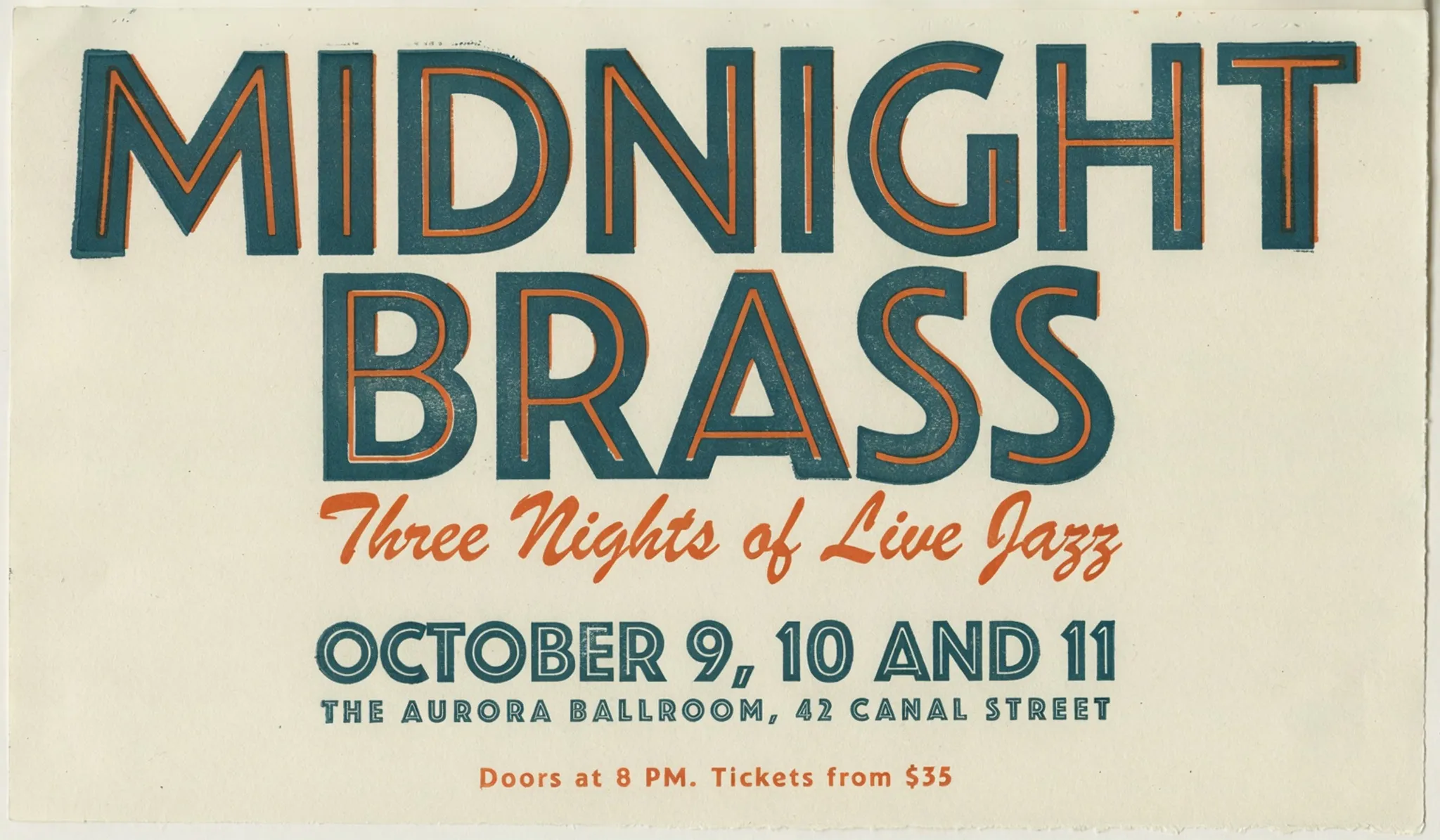
Generated using Ideogram v4 on fal, an AI model from Ideogram.
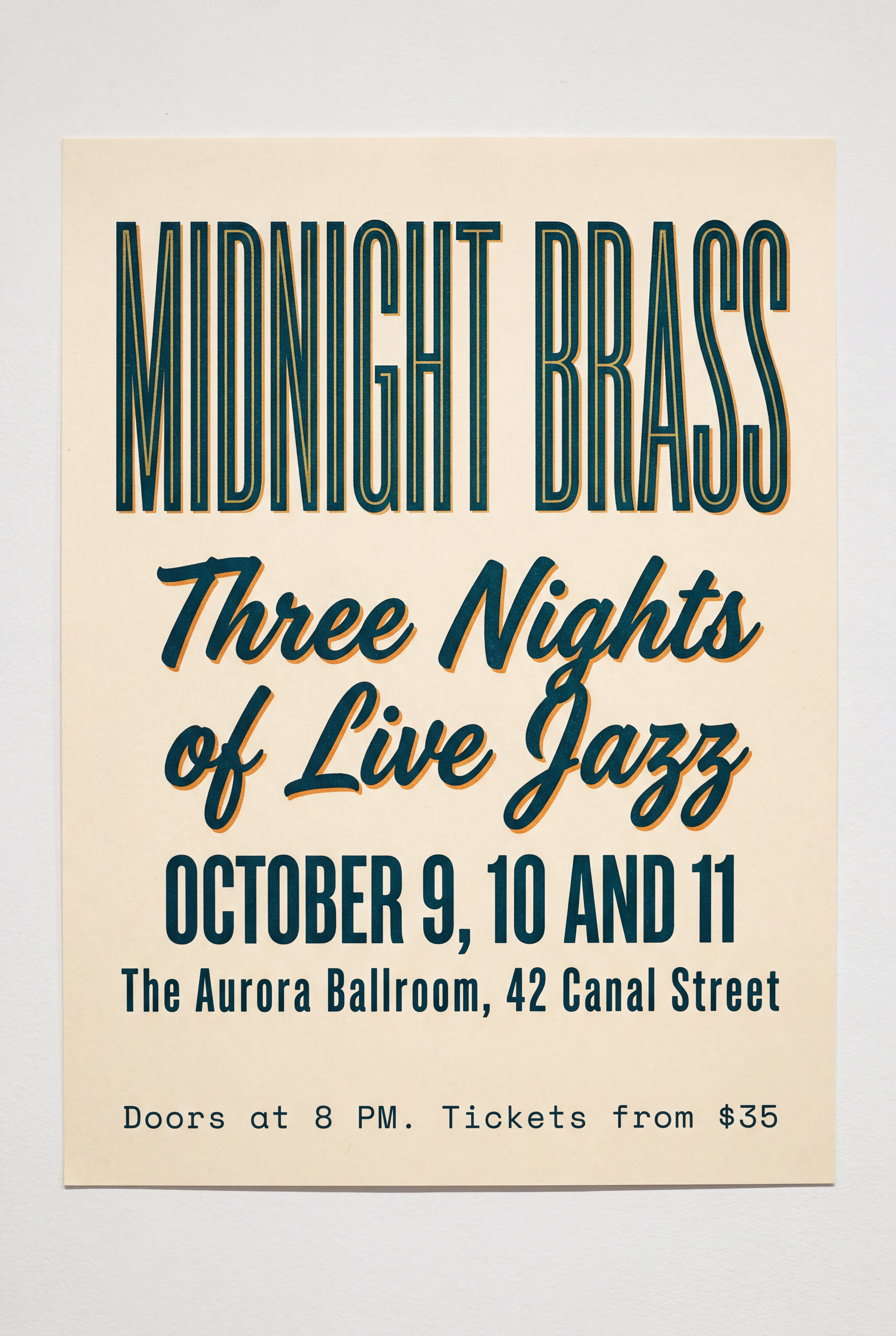
Generated using Nano Banana 2 on fal, an AI model from Google.
Notes: Good execution from both image generators.
You can see how both models handled resolution differently when being left with ''auto'' and ''default'', although I'm a bigger fan of how Nano Banana 2 handled it, as it reasoned about how a poster should look like.
You can check our guide on how you can use Nano Banana 2, and also what makes Nano Banana 2 different from Nano Banana Pro.
Test 2: Product packaging with dense small text
Prompt: A studio product photograph of a flat rectangular tin of smoked trout standing on its narrow edge against a light gray paper sweep, softbox key light from the upper left, gentle shadow falling to the right. The lid artwork reads 'BRISTLECONE SMOKEHOUSE' in a bold slab serif across the top. Beneath it, 'Alder Smoked Trout' in a lighter weight. A smaller italic line reads 'Hand packed on the Oregon coast'. Near the base, 'Net Weight 114 g' and under it in fine print 'Best before March 2028'. A circular stamp in the lower right corner reads 'LOT NO. 27'. Crisp print edges, subtle metallic sheen on the tin, shallow depth of field with the lid plane in sharp focus, 85mm lens at f4.
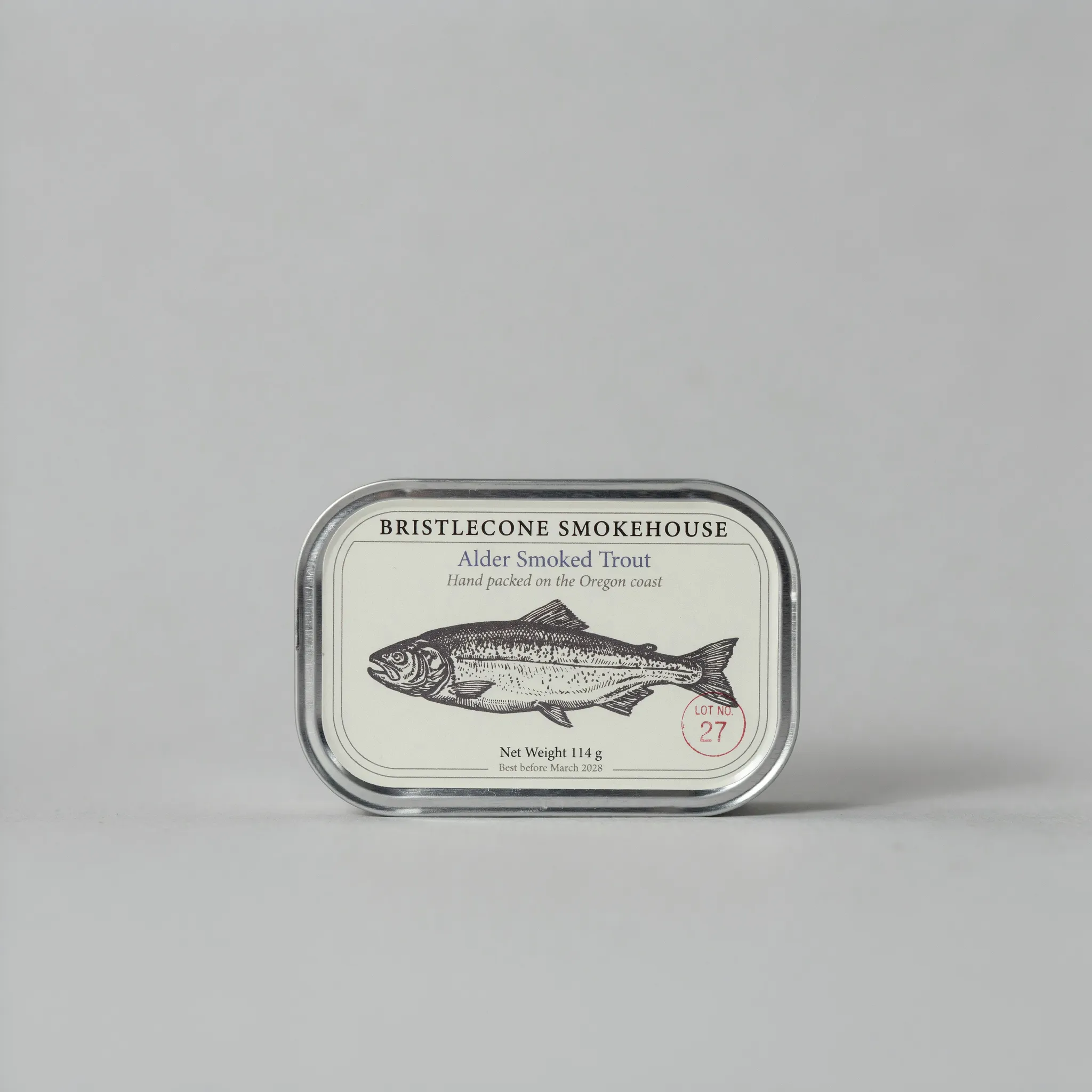
Generated using Ideogram v4 on fal, an AI model from Ideogram.
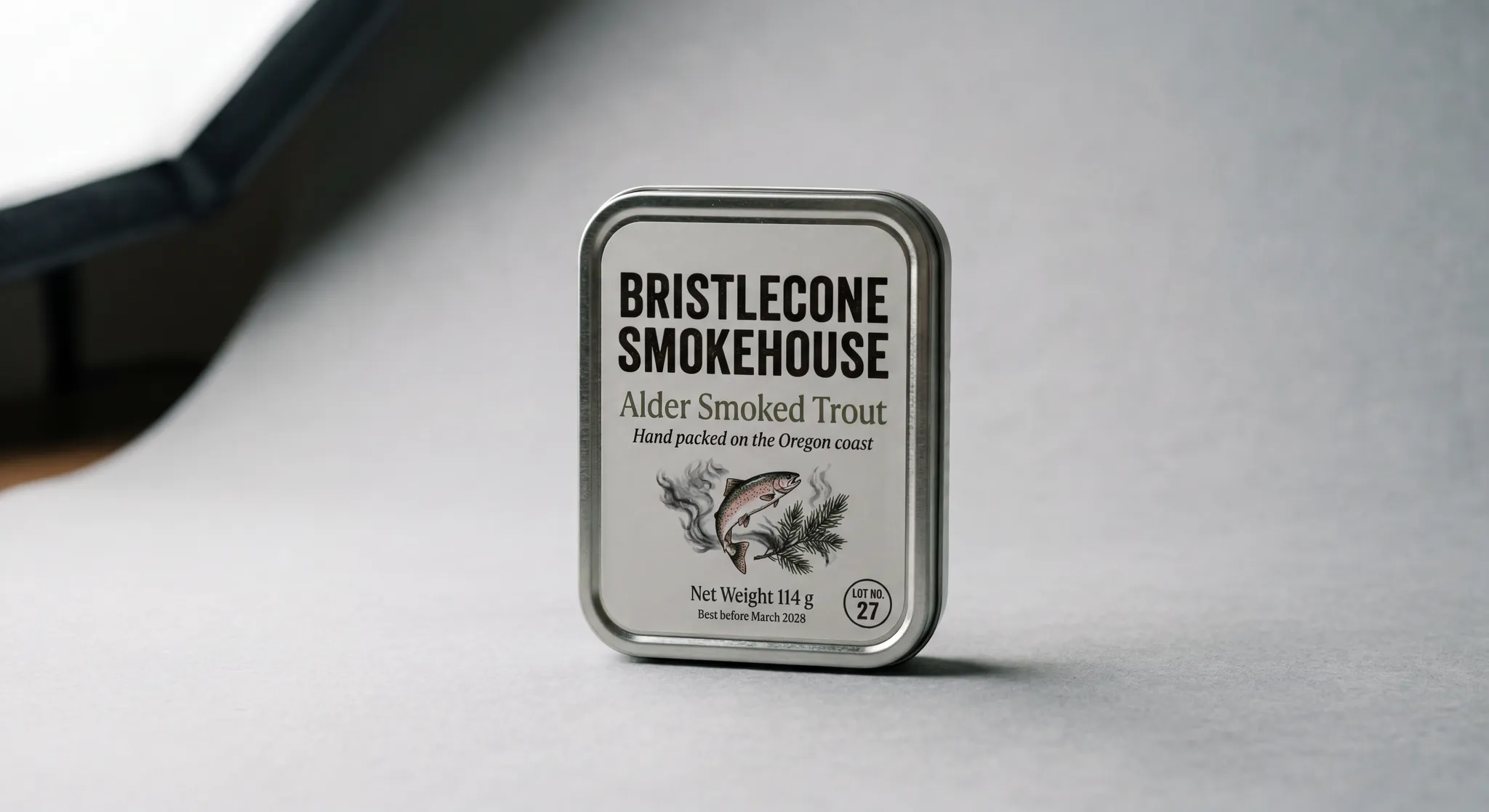
Generated using Nano Banana 2 on fal, an AI model from Google.
Notes: During the testing, I can confirm that Nano Banana 2 has consistently outperformed Ideogram V4 in terms of speed when comparing 4K vs. 4K resolution, although I do run Ideogram V4 on ''Large'' expansion model and also ''Quality'' rendering speed.
falMODEL APIs
The fastest, cheapest and most reliable way to run genAI models. 1 API, 100s of models
Test 3: Photorealistic portrait with unretouched skin
Prompt: A waist-up portrait of a woman in her early sixties with silver-streaked dark hair pulled loosely back, photographed against a neutral warm-gray studio backdrop. Natural window light from camera left with soft falloff across the face. Unretouched skin with visible pores, faint freckles across the nose, fine lines at the corners of the eyes, and a few flyaway hairs catching the light. She wears a rust-colored wool sweater and a single silver hoop earring in the visible ear. Calm, direct gaze, the beginning of a smile. 85mm lens at f2, sharp focus on the eyes, background softly defocused. No skin smoothing and no beauty filter look.
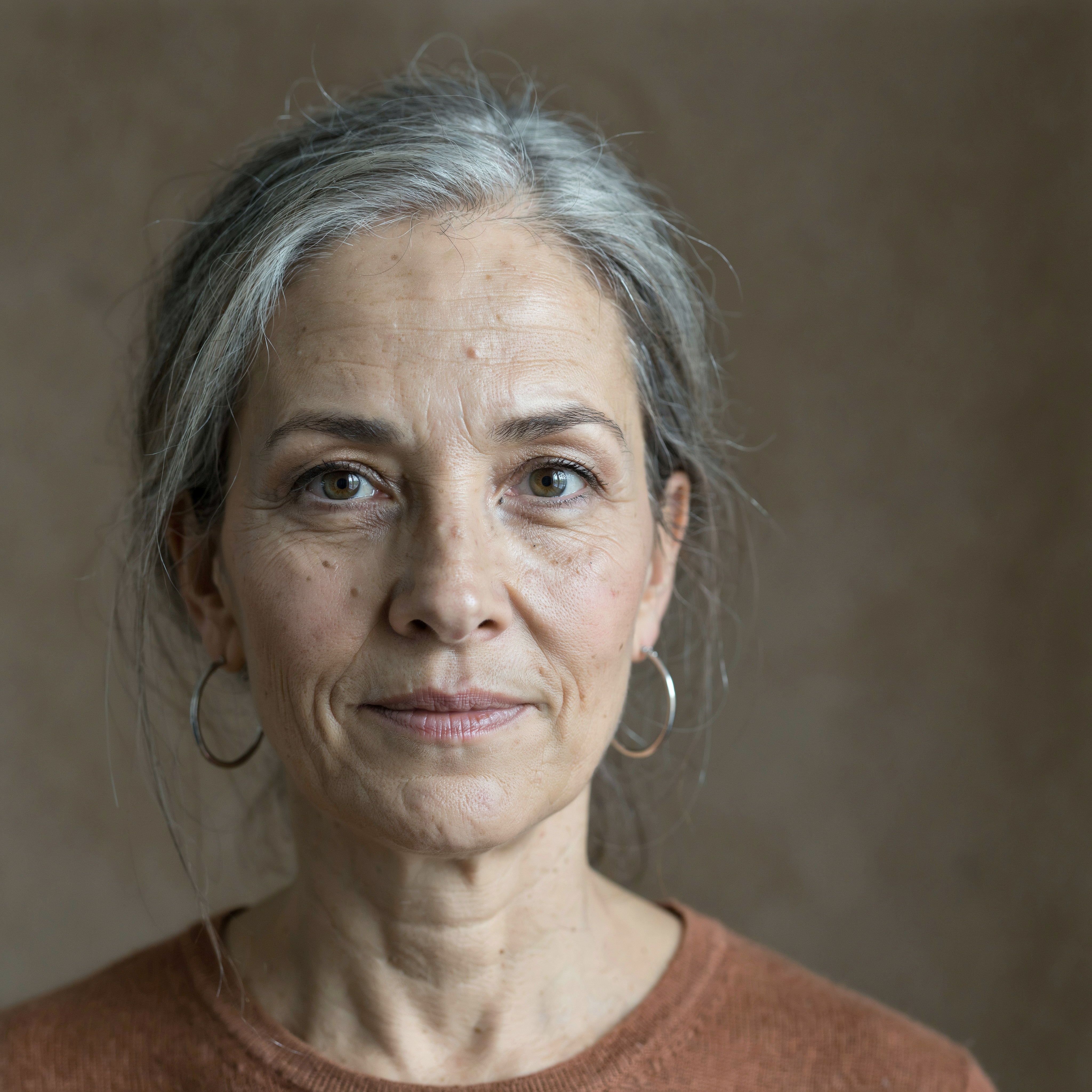
Generated using Ideogram v4 on fal, an AI model from Ideogram.

Generated using Nano Banana 2 on fal, an AI model from Google.
Note: Both image generators understood 'A waist-up portrait' differently, with Ideogram V4 creating a more close-up portrait of the woman in question.
I'd say that Nano Banana 2 did a better job here at adhering to the prompt.
Test 4: Positional layout control
Prompt: A flat design promotional graphic on an off-white background, 16:9 composition, built from precisely placed regions. Top-left corner: the wordmark 'ORBITA' in a geometric sans. Top-right corner: a small circular badge reading 'BETA'. Centered in the upper half: an isometric illustration of a weather satellite with two solar panels. Lower-left quadrant: a text block of four short lines reading 'Track every launch.' 'Follow every orbit.' 'Set alerts in seconds.' 'Built for mission teams.' Lower-right quadrant: a rounded rectangular button in deep blue reading 'START TRACKING'. A thin horizontal rule separates the upper and lower halves. Consistent margins, nothing overlapping, every element inside its stated region.
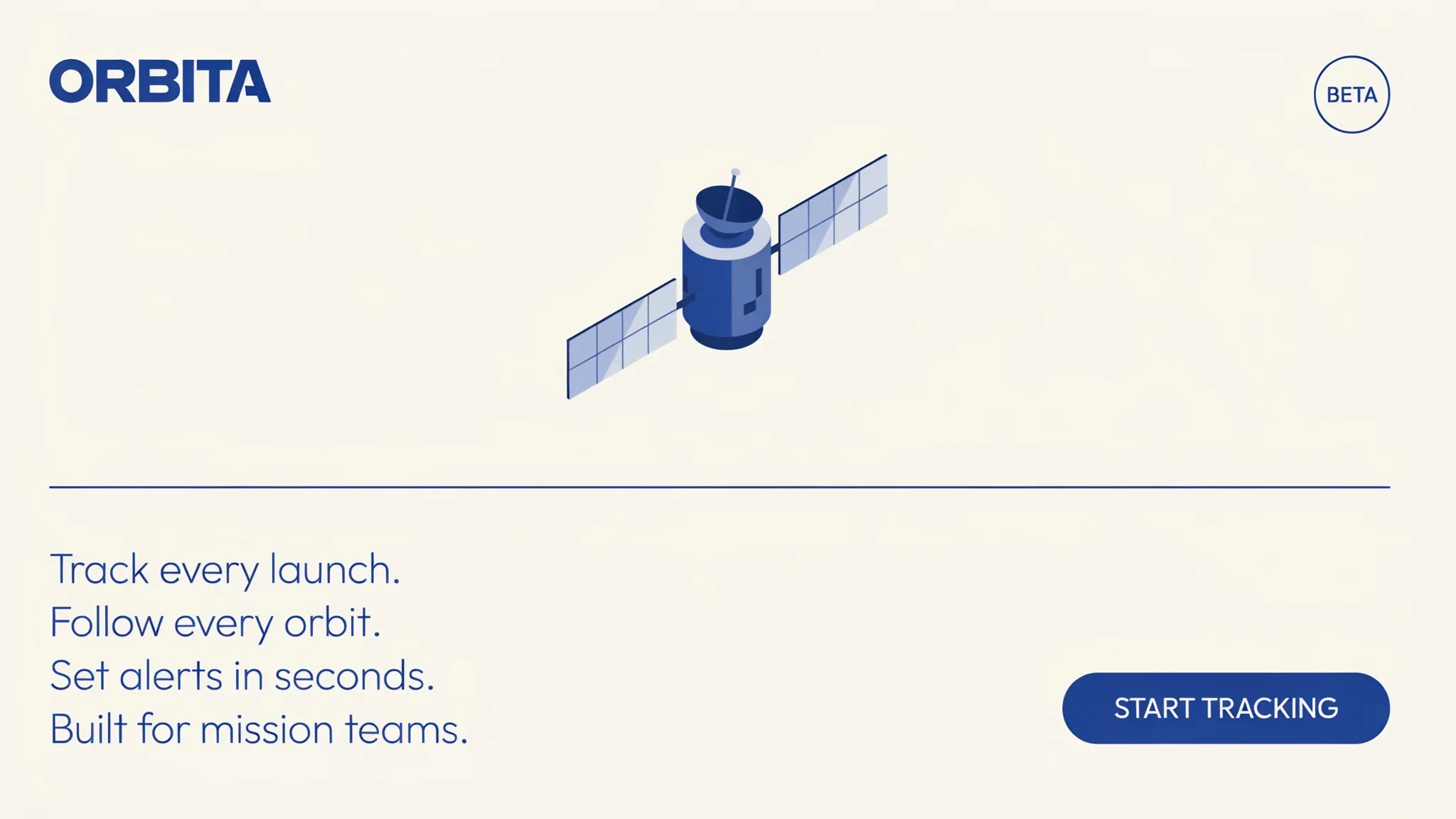
Generated using Ideogram v4 on fal, an AI model from Ideogram.
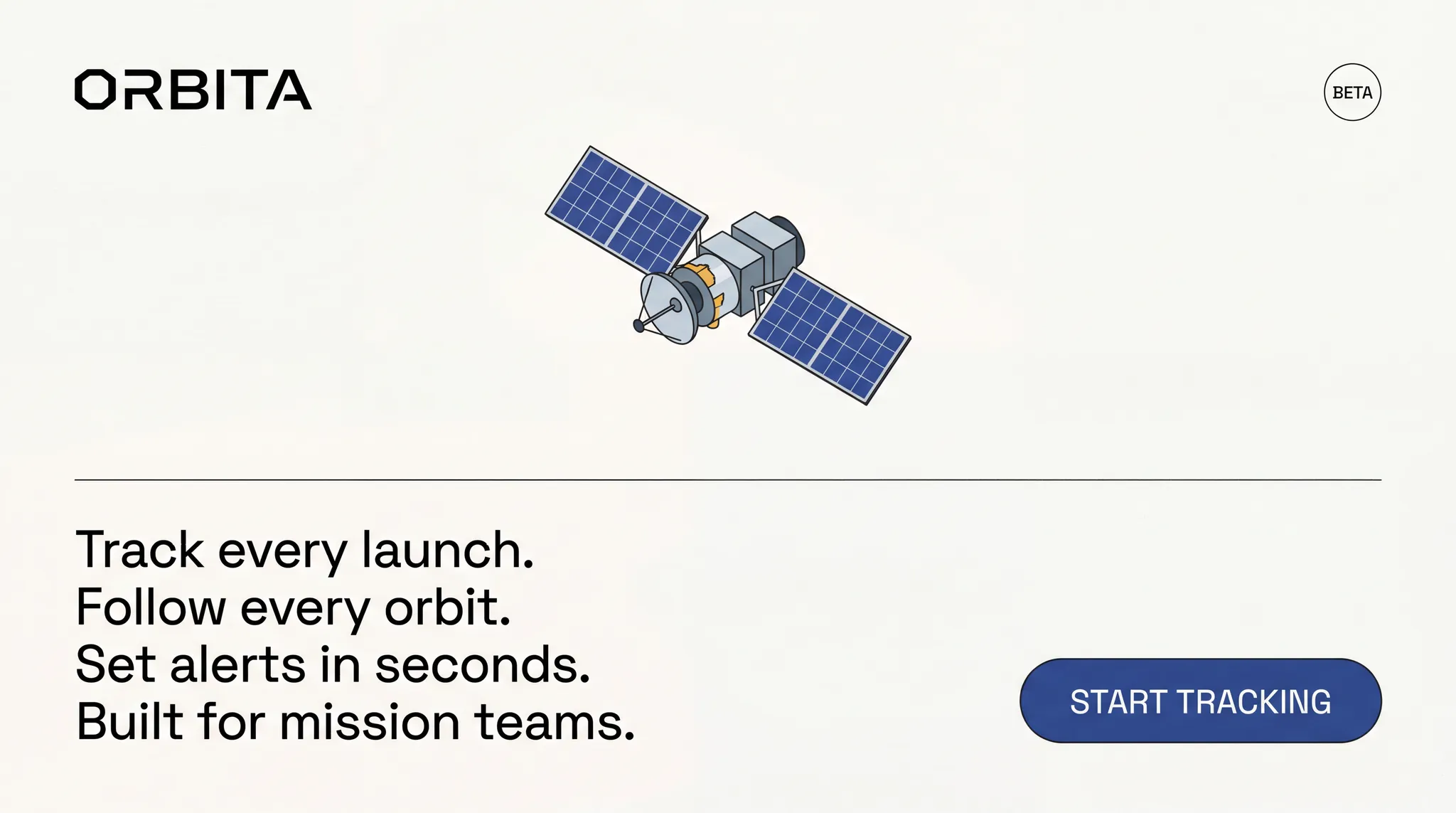
Generated using Nano Banana 2 on fal, an AI model from Google.
Test 5: Real-world landmark accuracy
For this one, Nano Banana 2 ran with enable_web_search turned on, while Ideogram v4 worked from its training data.
Prompt: A photorealistic architectural photograph of the Guggenheim Museum Bilbao, taken from across the Nervión river in late afternoon light in early October. The curved titanium panels catch warm reflections on the west-facing surfaces while the shaded curves read cool gray-blue. The glass atrium and limestone volumes appear in their correct positions within the building. Calm water in the foreground with a soft reflection of the structure. Overcast sky breaking into golden light at the horizon. 35mm lens at f8, sharp focus throughout. No people, no boats, no signage in the frame.
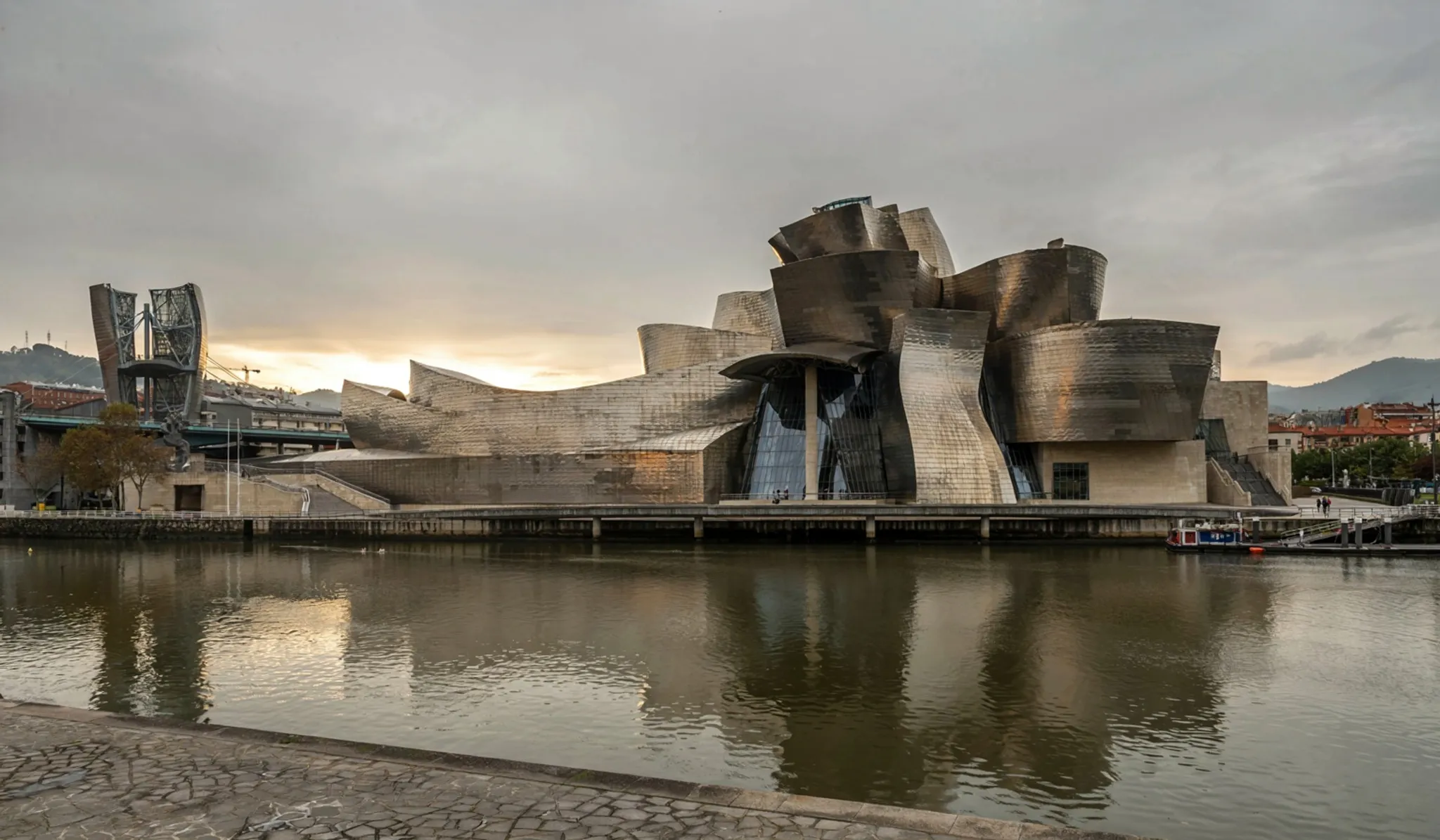
Generated using Ideogram v4 on fal, an AI model from Ideogram.
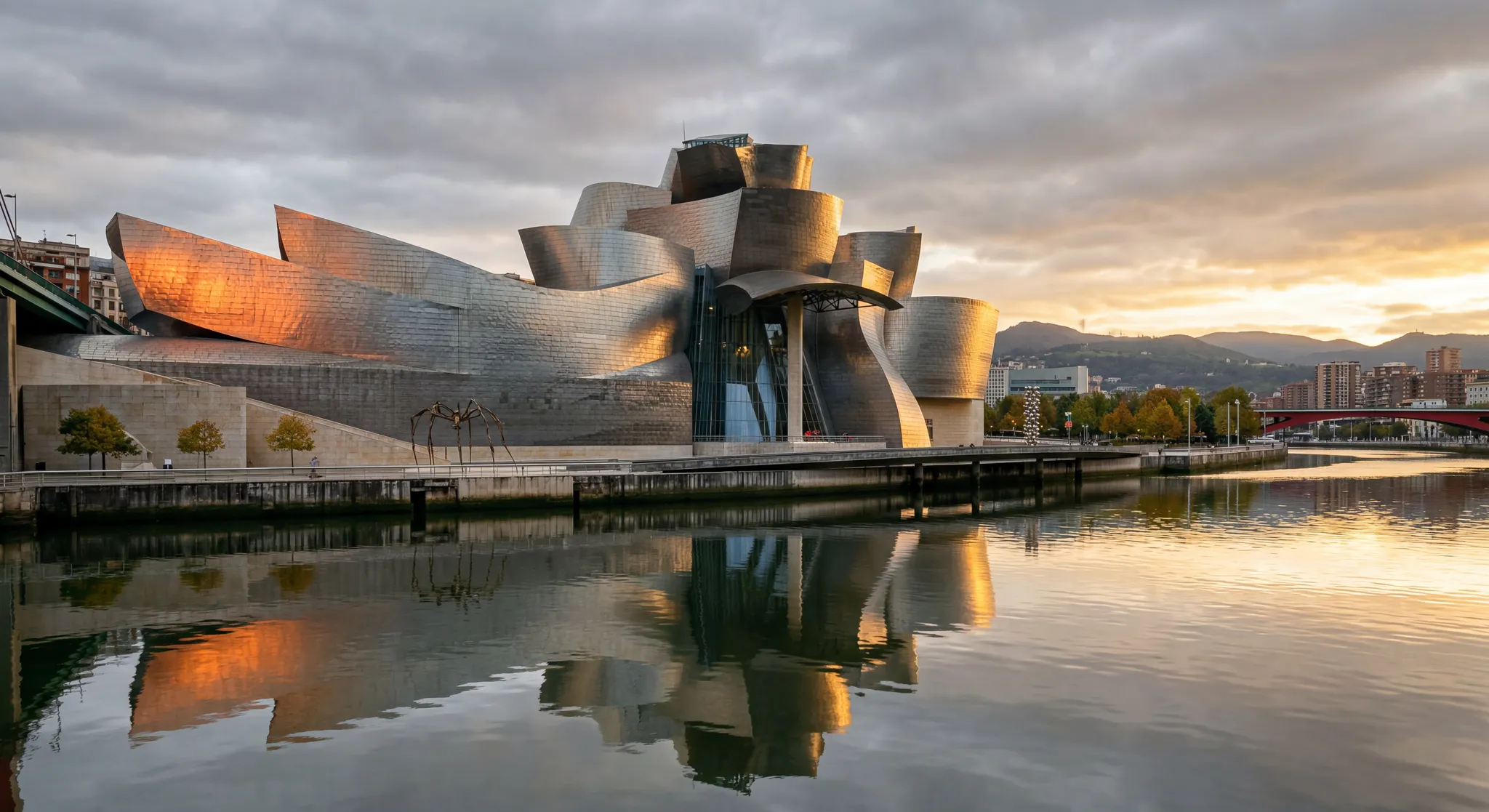
Generated using Nano Banana 2 on fal, an AI model from Google.
Note: I'd say that Ideogram V4's training data is quite good, considering that both AI models did a good job of the Guggenheim Museum Bilbao.
Test 6: Hard light, refraction, and metallic reflection
Prompt: A photorealistic still life on a dark slate surface, shot from a low three-quarter angle. A single glass prism stands upright at the left, splitting a hard beam of light from the right into a visible spectrum band across the slate. Beside it, an open jar of honey with a wooden dipper resting across its rim, the beam passing through the jar and throwing a warm caustic pattern onto the surface. Five clear glass marbles rest in a loose row in the foreground, each one bending the scene behind it. A brass pocket watch lies face-up at the right edge, its polished case throwing a small bright reflection. Deep shadows, high contrast, a thin haze making the light beam visible. 90mm macro lens at f8, focus on the prism.

Generated using Ideogram v4 on fal, an AI model from Ideogram.
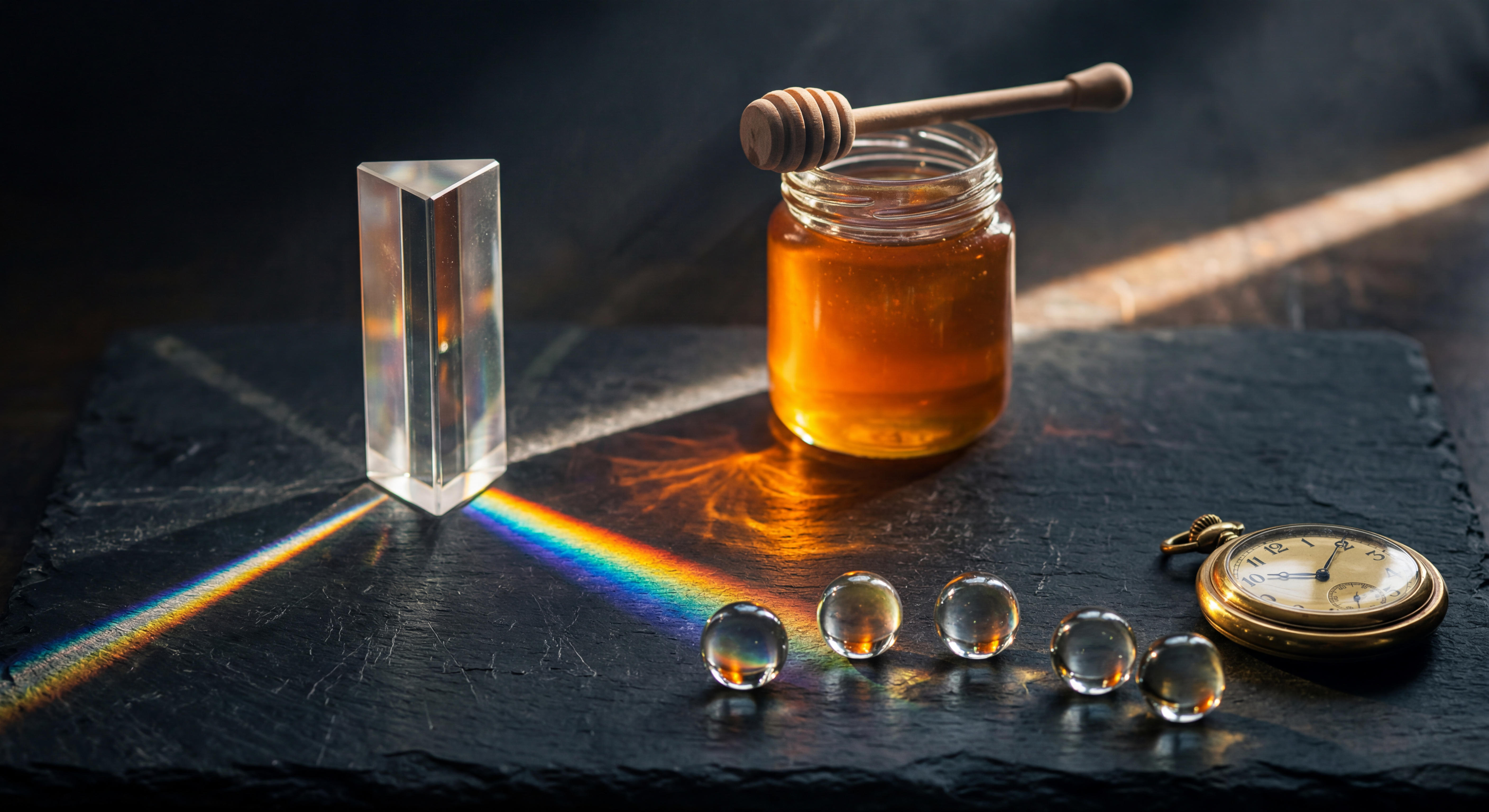
Generated using Nano Banana 2 on fal, an AI model from Google.
Notes: In this example, I'd make the argument that Ideogram V4 did a better job at what I was expecting in terms of 'deep shadows' and also high contrast.
What does it cost to run Ideogram v4 vs. Nano Banana 2 on fal?
Both models produce a predictable bill, but they base their pricing differently.
Ideogram v4 bills by output megapixel, with the rate set by rendering speed: $0.0075 per megapixel in TURBO mode, $0.015 per megapixel in BALANCED mode, or $0.025 per megapixel in QUALITY mode.
For example, a 2048 x 2048 image will cost $0.03, $0.06 or $0.10 based on the mode.
Teams that write their own detailed prompts can set expansion_model to None and pay for pixels alone.
Two more Ideogram v4 rate notes round out the picture:
The image-to-image endpoint bills at the same per-megapixel rates as text-to-image, per its playground note.
The tiling endpoint runs higher: $0.03 per megapixel in Turbo, $0.06 in Balanced, and $0.10 in Quality, which puts a 1024x1024 tile at roughly $0.031, $0.063, or $0.105 depending on the mode.
Nano Banana 2 bills per image, with resolution as the multiplier:
| Tier | Resolution | Multiplier | Per image |
|---|---|---|---|
| 0.5K | 512x512 | 0.75x | $0.06 |
| 1K | default | 1x | $0.08 |
| 2K | 1.5x | $0.12 | |
| 4K | 2x | $0.16 |
Web search grounding adds $0.015 per generation and high thinking adds $0.002, only when switched on.
Flip both on for a 1K render and the total is $0.097, whatever the prompt looks like.
The difference shows up in how output shape moves the bill:
On Ideogram v4, a wide banner and a square image at the same pixel count cost the same, and shrinking the canvas shrinks the price in direct proportion.
On Nano Banana 2, every image at a given tier costs the same regardless of aspect ratio, so an 8:1 banner at 1K bills exactly like a square at 1K.
Neither pricing is affected by prompt length, which makes both models easy to budget compared to token-billed alternatives on fal.
When should you use Ideogram v4 vs. Nano Banana 2?
Here's how I'd separate Ideogram v4 and Nano Banana 2 workflows based on their strengths:
When you're working with Ideogram v4
Poster, logo, packaging, and signage work where the typography is the deliverable plays to the model's strongest documented capability.
Layout-heavy compositions benefit from the bounding-box training: when a brief specifies where each element goes, positional prompting on Ideogram v4 is built for exactly that.
Custom pixel dimensions and megapixel billing pair well: a brief calling for 1536x896 gets rendered and billed at 1536x896, and small drafts cost fractions of a cent in Turbo.
Open weights matter for teams with customization or data privacy requirements, since Ideogram publishes the model for inspection and adaptation outside a managed API.
The tiling endpoint covers a job most image models skip entirely: textures that repeat cleanly in any direction, for game surfaces or wallpaper patterns.
Native background transparency, an Ideogram product-page claim worth testing early, drops outputs straight into design tools with no cutout step.
When you're working with Nano Banana 2
The edit endpoint was built for compositing, with 14 reference slots and the option to pull context from a video, an audio file, or a PDF when the source material goes past still images.
Web search grounding pays off whenever the output has to depict something that actually exists, current packaging on a real product, say, or a building the model would otherwise guess at.
Storyboard and campaign work gets easier when the same faces persist between calls, and Google's spec covers consistency for up to 5 people at once.
The extreme aspect presets, from 4:1 banners to 1:8 vertical scrolls, cover formats without any dimension math.
Fixed per-image rates make monthly spend a multiplication problem, with web search and thinking as visible line items.
Recently Added




Run Ideogram v4 and Nano Banana 2 on fal
Ideogram v4 handles typography-first design, positional layout, custom sizes, edge-matching tiling, and open-weights workflows, billed by the megapixel.
Nano Banana 2 handles reasoning-guided generation, multi-image editing, web-grounded accuracy, and character consistency, billed by the image.
In practice, the choice repeats per request, not per quarter: the job decides the endpoint.
fal hosts both models, next to over 1,000 others, on pay-per-use pricing with no infrastructure to run.
Integration is a few lines of @fal-ai/client.
Ideogram v4 vs. Nano Banana 2 FAQs
What is the main difference between Ideogram v4 and Nano Banana 2?
Ideogram v4 is an open-weights model billed per output megapixel, with rendering speed tiers that control denoising steps, positional layout control from bounding-box training.
Nano Banana 2 is a Gemini 3.1 Flash Image model billed per image by resolution tier, with native reasoning before rendering, optional web search grounding, and character consistency for up to 5 people.
Both produce strong in-image typography, and both are commercial-use on fal.
What's the resolution ceiling on Ideogram v4 and Nano Banana 2?
Ideogram v4 generates natively at 2K, and the text-to-image endpoint accepts custom {width, height} dimensions alongside its 6 presets.
The image-to-image endpoint's auto setting matches the input image size, capped at roughly 25 megapixels and up to 8192px per side.
Nano Banana 2 works in four fixed tiers, 0.5K through 4K, paired with 14 aspect ratio presets plus auto that stretch to 4:1 and 1:8 at the extremes.
How does image editing work on Ideogram v4 and Nano Banana 2?
Ideogram v4 uses a dedicated image-to-image endpoint that takes one input image, a prompt, and a strength value controlling how far the output departs from the input.
A separate tiling endpoint generates repeating textures that match at every edge, and supports inpainting with an optional mask.
Nano Banana 2's edit endpoint takes up to 14 reference images with a natural-language prompt, and can also draw context from a video, audio, or PDF file in the same request.
Can both Ideogram v4 and Nano Banana 2 be used in commercial projects?
Yes, both models can be used commercially.
Commercial use is enabled for Ideogram v4 and Nano Banana 2 outputs generated through fal.
Nano Banana 2 outputs additionally carry SynthID digital watermarking.