This guide breaks down Nano Banana Pro vs. Nano Banana 2, including architecture, speed, image quality, pricing, and the specific workflows each model handles best, so you can pick the right one without burning credits on trial and error.
TL;DR
Nano Banana 2 is the better default for most developers. It generates at roughly half the cost of Nano Banana Pro ($0.08 vs. $0.15 per image at standard resolution), runs 2-3x faster on Flash-optimized inference, and reaches near-Pro image quality in typical scenarios.
Nano Banana Pro earns its premium when you need maximum reasoning depth for complex multi-element compositions, fine typography for packaging and print, or the highest compositional ceiling Google's image generation can offer.
Here's how they stack up:
| Nano Banana Pro | Nano Banana 2 | |
|---|---|---|
| Architecture | Gemini 3 Pro Image | Gemini 3.1 Flash Image |
| Best for | Studio-quality hero images, complex compositions, fine typography | Fast iteration, batch production, budget-sensitive workflows |
| Price (1K) | $0.15/image | $0.08/image |
| Price (4K) | $0.30/image | $0.16/image |
| Speed | ~10-20 seconds | ~4-8 seconds |
| Text rendering | Industry-leading fine typography | Strong text rendering with better spacing for infographics |
| Character consistency | Maintains consistency and resemblance for up to 5 people across generations. | Maintains identity for up to 5 people across generations for storyboarding and campaign work. |
| Web search grounding | Yes (+$0.015) | Yes (+$0.015) |
| Thinking Mode | Not available | Minimal, High, Dynamic |
| 512x512 tier | Not available | $0.06/image |
| Output formats | PNG, JPEG, WebP | PNG, JPEG, WebP |
| Aspect ratios | 11 options (21:9 through 9:16) | 11 options (21:9 through 9:16) |
| Reference images | Up to 14 | Up to 14 |
| Batch generation | Multiple images supported | 1-4 images per request |
| Watermarking | SynthID | SynthID |
The Architecture Split: Pro vs. Flash
Both Nano Banana Pro and Nano Banana 2 are built on Google's Gemini foundation. They're not diffusion models. That's the first thing worth understanding, because it changes how you think about prompting them.
Traditional image generators like FLUX treat your prompt as a bag of weighted tokens. They match keywords to visual concepts and blend them together. The Gemini architecture does something different: it processes your prompt through the same multimodal reasoning pipeline that powers conversational AI.
This means both models understand creative intent, not just keywords. Tell either one "1960s aesthetic", and it'll make choices about film grain, desaturated color palettes, and period-appropriate composition without you specifying those details.
The difference is in how deep that reasoning goes.
Nano Banana Pro runs on Gemini 3 Pro Image, the larger model that allocates more compute to understanding relationships between elements in your scene. It spends more time thinking before it renders. When your prompt involves eight objects with specific spatial relationships, layered lighting, and a particular mood, Pro's extra reasoning depth shows up as more accurate placement and coherent interactions between elements.
Nano Banana 2 runs on Gemini 3.1 Flash Image, which distills that same multimodal reasoning into a faster architecture. It reasons about your prompt, but it does so at Flash-tier speed. The result is 2-3x faster generation with good compositional accuracy in most real-world scenarios.
The practical difference? Pro thinks harder about complex scenes. Nano Banana 2 thinks fast enough for almost everything.
Speed: Where the Gap Actually Matters
Nano Banana Pro typically generates an image in 10-20 seconds, depending on prompt complexity and resolution. Google hasn't published official benchmarks since Pro is optimized for quality rather than speed metrics.
Nano Banana 2 generates in 4-8 seconds for standard prompts. Community benchmarks have measured throughput as high as 355 images per minute on high-end hardware with parallel jobs.
That speed gap sounds incremental on paper. In practice, it changes how you work.
When you're iterating on a prompt, trying to dial in a specific look for a marketing campaign, the difference between 5-second and 15-second feedback loops compounds fast. Over 50 iterations, that's roughly 4 minutes with Nano Banana 2 versus 12 minutes with Pro.
For production pipelines generating hundreds or thousands of images, the math is even more decisive. Nano Banana 2 can process a 500-image batch in the time Pro handles 150-200.
If your workflow involves real-time features like live previews, interactive editors, or streaming generation, Nano Banana 2 can be the better option between the two.
falMODEL APIs
The fastest, cheapest and most reliable way to run genAI models. 1 API, 100s of models
Side-by-Side: Image Comparison Tests
To see how these differences play out visually, here are head-to-head generations from both models using identical prompts:
Test 1: Text Rendering (4K Resolution)
Prompt: "A vintage movie poster for a film called 'The Last Garden' starring Elena Voss, with tagline 'Some things grow back stronger' in serif typography, 1970s Saul Bass-inspired design"
Nano Banana Pro:
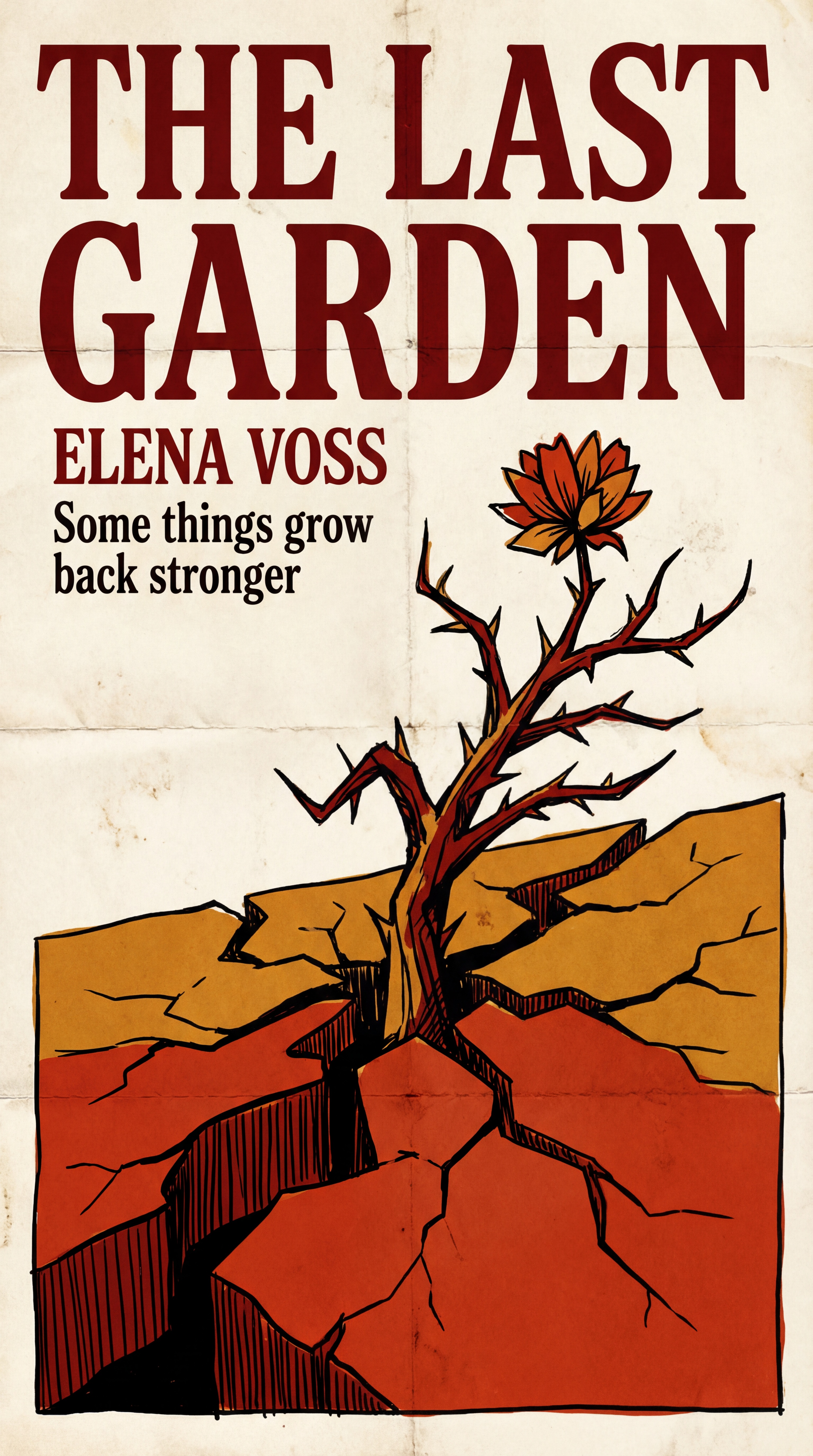
Generated using Nano Banana Pro on fal.
Nano Banana 2:
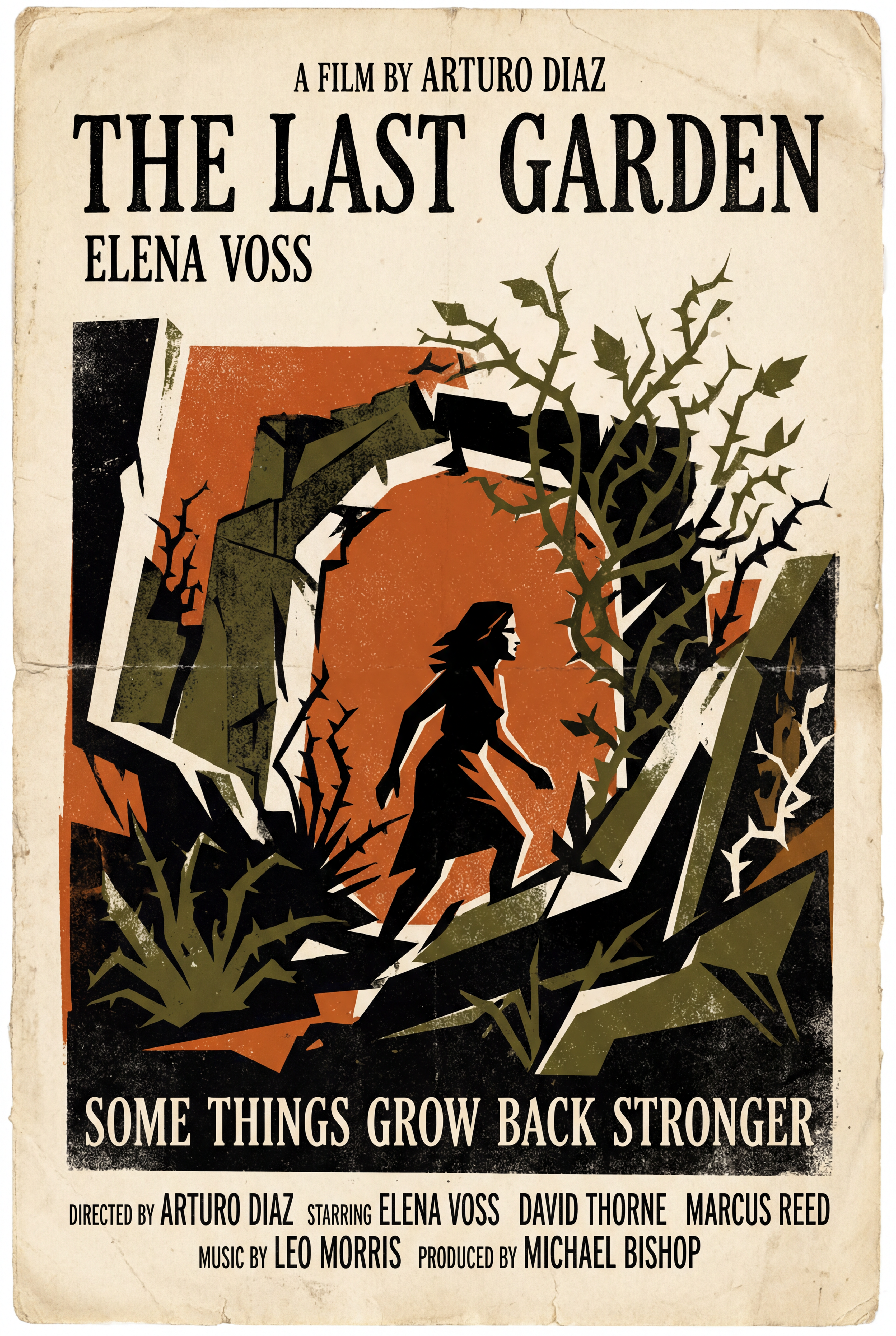
Generated using Nano Banana 2 on fal.
Notes: I wouldn't say there's a clear winner here, as I like both of the designs. However, Nano Banana 2's movie poster seems to be more of a movie poster than Nano Banana Pro's, which rather looks like a book cover.
Overall, I'm happy with how both Nano Banana Pro and Nano Banana 2 generate legible, accurate typography directly in images. Nano Banana 2 seems to produce strong text rendering with better spacing and readability for infographics and data visualizations.
The gap between them is narrow enough that for most marketing workflows, either model will get the job done. The distinction only becomes meaningful in print-production contexts where type rendering needs to be near-perfect at high magnification.
Test 2: Photorealism and Character Consistency
Prompt: "Portrait of a middle-aged Japanese chef in a white coat, standing in a busy ramen kitchen with steam rising from pots, warm tungsten lighting, shallow depth of field, shot on 85mm lens"
Nano Banana Pro:
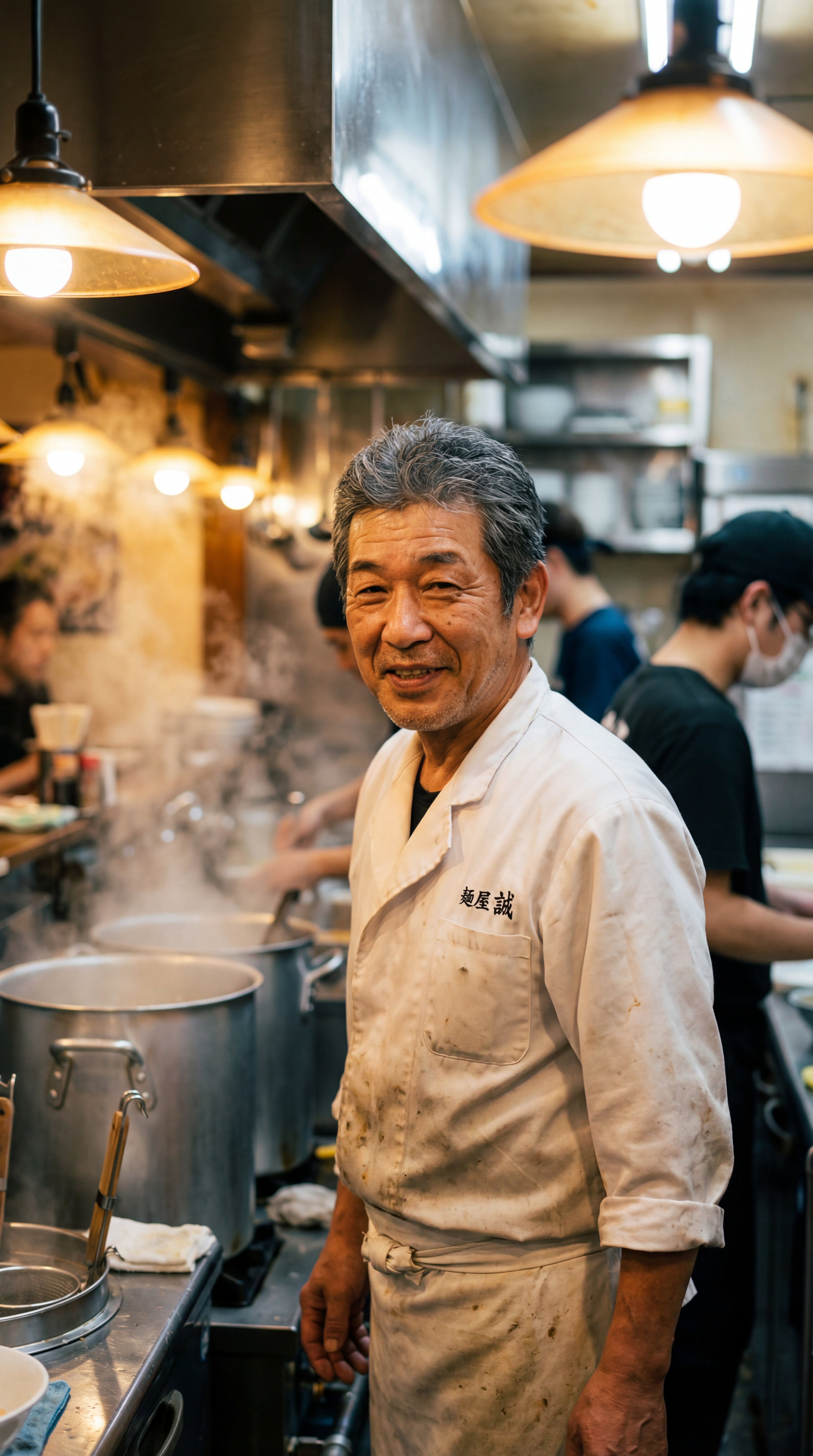
Generated using Nano Banana Pro on fal.
Nano Banana 2:
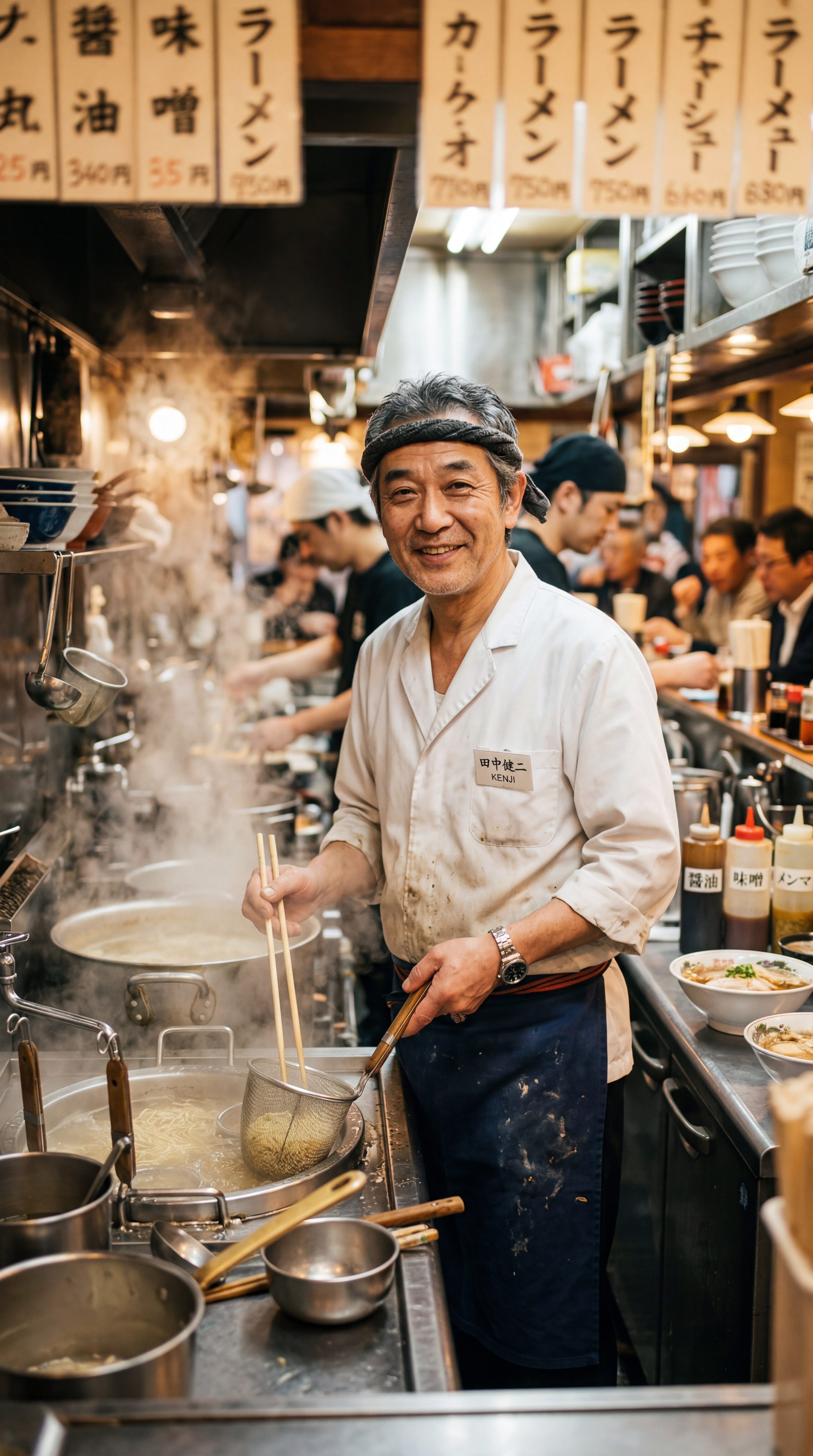
Generated using Nano Banana 2 on fal.
Notes: Nano Banana 2 is the winner for me here because of the attention to detail and how the name of the chef was written, but both images seem to be of high-quality.
Test 3: Product Photography
Prompt: "A matte black ceramic coffee mug on a sunlit marble countertop, morning light streaming through linen curtains, a small succulent in the background slightly out of focus, editorial product photography style"
Nano Banana Pro:

Generated using Nano Banana Pro on fal.
Nano Banana 2:

Generated using Nano Banana 2 on fal.
Notes: I'm a bigger fan of Nano Banana Pro here because it didn't assume that there's coffee inside, as I just asked it to provide me with a coffee mug. Nano Banana 2 assumed a coffee mug would have coffee inside.
Test 4: Complex Multi-Element Scene
Prompt: "A busy Parisian cafe terrace at golden hour, four people at separate tables each engaged in different activities, reading, sketching, talking on phone, and eating a croissant, with a waiter carrying a tray of espressos in the middle ground and the Eiffel Tower visible in the distance"
Nano Banana Pro:
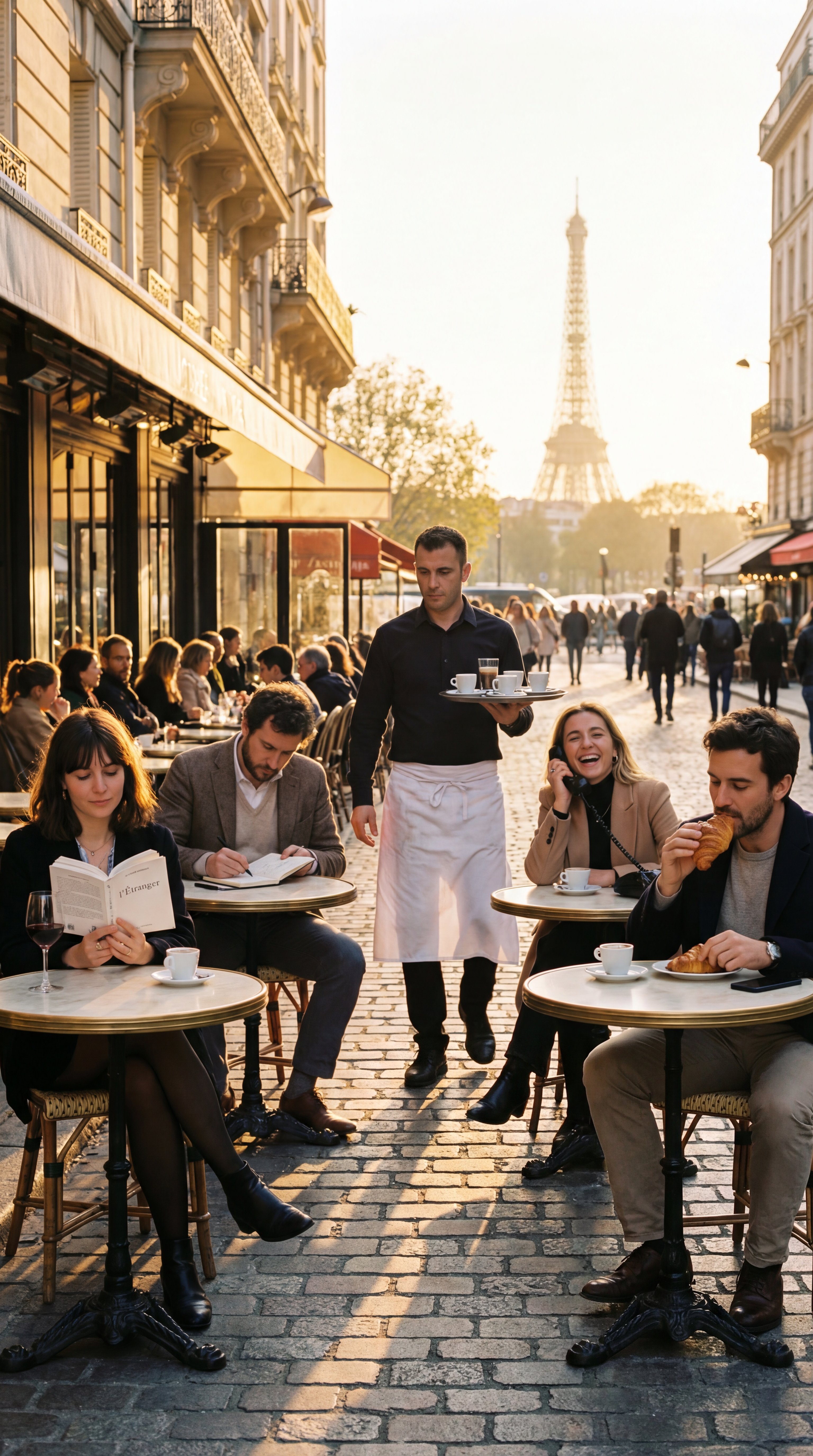
Generated using Nano Banana Pro on fal.
Nano Banana 2:
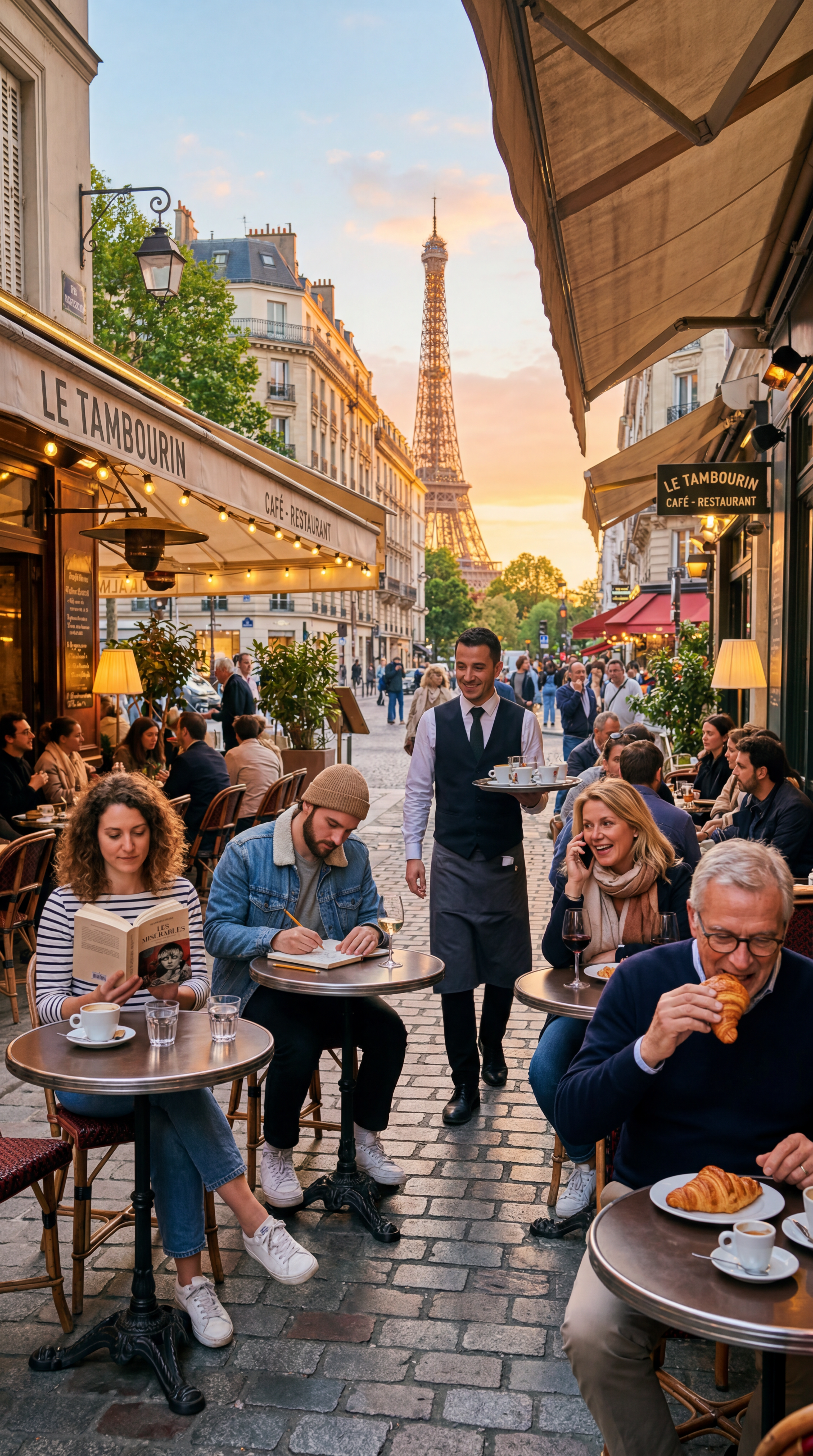
Generated using Nano Banana 2 on fal.
Notes: Nano Banana 2 seems to be more comfortable with words on the images and also with colors in this instance. The Eiffel Tower also seems better defined to me.
Pricing: The Math That Matters
The cost difference between these models becomes significant at scale. Here's what each costs on fal, broken down by resolution.
Nano Banana Pro pricing on fal:
- $0.15 per image at standard resolution (1K, 2K).
- $0.30 per image at 4K (2x rate).
- Web search grounding adds $0.015 per generation if enabled.
Nano Banana 2 pricing on fal:
- $0.06 per image at 512x512 (0.75x rate).
- $0.08 per image at 1K resolution (standard).
- $0.12 per image at 2K resolution (1.5x rate).
- $0.16 per image at 4K resolution (2x rate).
- Web search grounding adds $0.015 per generation if enabled.
At 1K resolution, Nano Banana 2 costs roughly half of what Pro charges. At 4K, the gap is even wider: $0.16 versus $0.30.
For a team generating 1,000 images per month at 1K resolution, that's $80 with Nano Banana 2 versus $150 with Pro. At 10,000 images per month, the difference grows to $800 versus $1,500.
Nano Banana 2 also offers a 512x512 tier at $0.06 per image that Pro doesn't have. For thumbnails, previews, and rapid prototyping, that sub-$0.10 tier is useful for keeping iteration costs low before committing to a full-resolution render.
A practical approach: You can use Nano Banana 2 at 512x512 with fal for rapid prompt iteration ($0.06/image), generate your final selects at 1K or 2K ($0.08-$0.12/image), and only route to Pro for hero assets that justify the $0.15-$0.30 premium.
How is Nano Banana 2 different from Nano Banana Pro?
Nano Banana 2 introduces several capabilities that aren't available on Pro.
Thinking Mode
Nano Banana 2 offers three levels:
- Minimal (fast, the default)
- High (deeper quality reasoning)
- Dynamic (automatically adjusts based on prompt complexity)
This gives you a dial between speed and quality within the same model. Need something quick for internal review? Minimal. Need to push output quality closer to Pro for a client deliverable? High. Don't want to think about it? Dynamic handles the trade-off for you.
Image Search Grounding
Web Search Grounding (also called Image Search Grounding) retrieves real-world reference images and information from Google Search during generation for improved factual accuracy and current visual references.
If you're generating a visual that needs to reflect what a specific building or product actually looks like, this feature adds accuracy that purely generative models can't match.
The 512x512 ultra-low-cost tier
The 512x512 ultra-low-cost tier at $0.06 per image is unique to Nano Banana 2. Pro's minimum resolution is 1K.
How to Run Both Models on fal
You can run Nano Banana Pro and Nano Banana 2 through fal's API or test them in the playground.
Same integration pattern as every other model on fal. If you've already integrated FLUX or Seedream, switching to either Nano Banana model is a one-line endpoint change. All outputs include SynthID digital watermarking, and commercial use is enabled through fal.
Here's what the code looks like:
javascript
import { fal } from "@fal-ai/client";

// Nano Banana 2
const nb2Result = await fal.subscribe("fal-ai/nano-banana-2", {
  input: {
    prompt: "A ceramic coffee mug on a marble countertop, morning light",
    aspect_ratio: "4:3",
    output_format: "png",
  },
});

// Nano Banana Pro --- same code, different endpoint
const proResult = await fal.subscribe("fal-ai/nano-banana-pro", {
  input: {
    prompt: "A ceramic coffee mug on a marble countertop, morning light",
    aspect_ratio: "4:3",
    output_format: "png",
  },
});
Both models share the same input schema. That's not a minor convenience. It means you can build a quality-routing system where high-value requests go to Pro and volume work goes to Nano Banana 2 with nothing but a string swap. No schema translation, no parameter mapping, no separate error handling.
Both models also have edit endpoints (fal-ai/nano-banana-pro/edit and fal-ai/nano-banana-2/edit) that accept up to 14 reference images for multi-image compositing, scene building, and natural-language editing.
Optional web search grounding is available on both models through the enable_web_search parameter, adding $0.015 per generation for factually current visuals.
Recently Added






When to Use Which: A Decision Framework
Rather than declaring a winner, here's how I'd think about routing between the two.
Choose Nano Banana 2 when
- You're iterating on creative direction and need fast feedback loops.
- You're generating at scale (hundreds or thousands of images per month), and cost matters.
- You need vibrant, punchy output for social media, marketing campaigns, or web content.
- You want to use Thinking Mode to dynamically balance speed and quality.
- You're building real-time features like live previews or interactive editors.
- Your text rendering needs are standard (titles, labels, social media copy).
Choose Nano Banana Pro when
- You're producing hero images for print campaigns or high-value brand assets.
- Your prompt involves complex multi-element compositions with strict spatial relationships.
- You need camera-ready fine typography for packaging, magazine layouts, or detailed signage.
- Absolute quality ceiling matters more than speed or cost.
- You're working on a project with a small number of high-stakes deliverables rather than high-volume output.
Use both
Use both when you want to route rapid prototyping and volume work through Nano Banana 2 at $0.08/image, then selectively escalate final hero assets to Pro at $0.15/image. Since both models share the same API schema on fal, this routing logic takes minutes to implement.
Run Nano Banana Pro and Nano Banana 2 on fal
The AI image generation space has more capable models now than at any point in the past two years. And that's actually the challenge: picking the right one for each use case requires testing, which costs time and credits.
If you want access to both Nano Banana Pro and Nano Banana 2 through a single API with pay-per-use pricing and no GPU management, fal is the fastest way to get started. Test either model in the playground or plug into the API in minutes.
![How To Use Grok Imagine: Prompts & Workflows [2026]](https://refinery.fal.media/url/https%3A%2F%2Fv3b.fal.media%2Ffiles%2Fb%2F0aa3f6f2%2FeqWDXFmZkKpp4cIZtsH-V.jpg/tr:w-1280,q-80/eqWDXFmZkKpp4cIZtsH-V.webp)