Reference-driven image editing starts with a clear division of work: the images supply the visual details, and the prompt explains what to change and what to preserve. You can restage a product, combine a model with several wardrobe references, continue a fashion sequence, replace architectural materials, finish a 3D blockout, or expand an illustration.
This guide brings together the original examples from Krea's reference-driven image-editing collection, with the actual outputs, exact source prompts, and input references shown in upload order. The source sheets identify the product and fashion examples as Krea 3; model and settings are listed where they were recorded.
falMODEL APIs
The fastest, cheapest and most reliable way to run genAI models. 1 API, 100s of models
Prompting Examples
Start with the reference images shown beneath each prompt. Preserve their order when the prompt uses image numbers. For a follow-up shot, upload the selected previous result first, followed by the original references named in that shot's prompt sheet.
Product Photography
Yellow Enamel Kettle
prompt
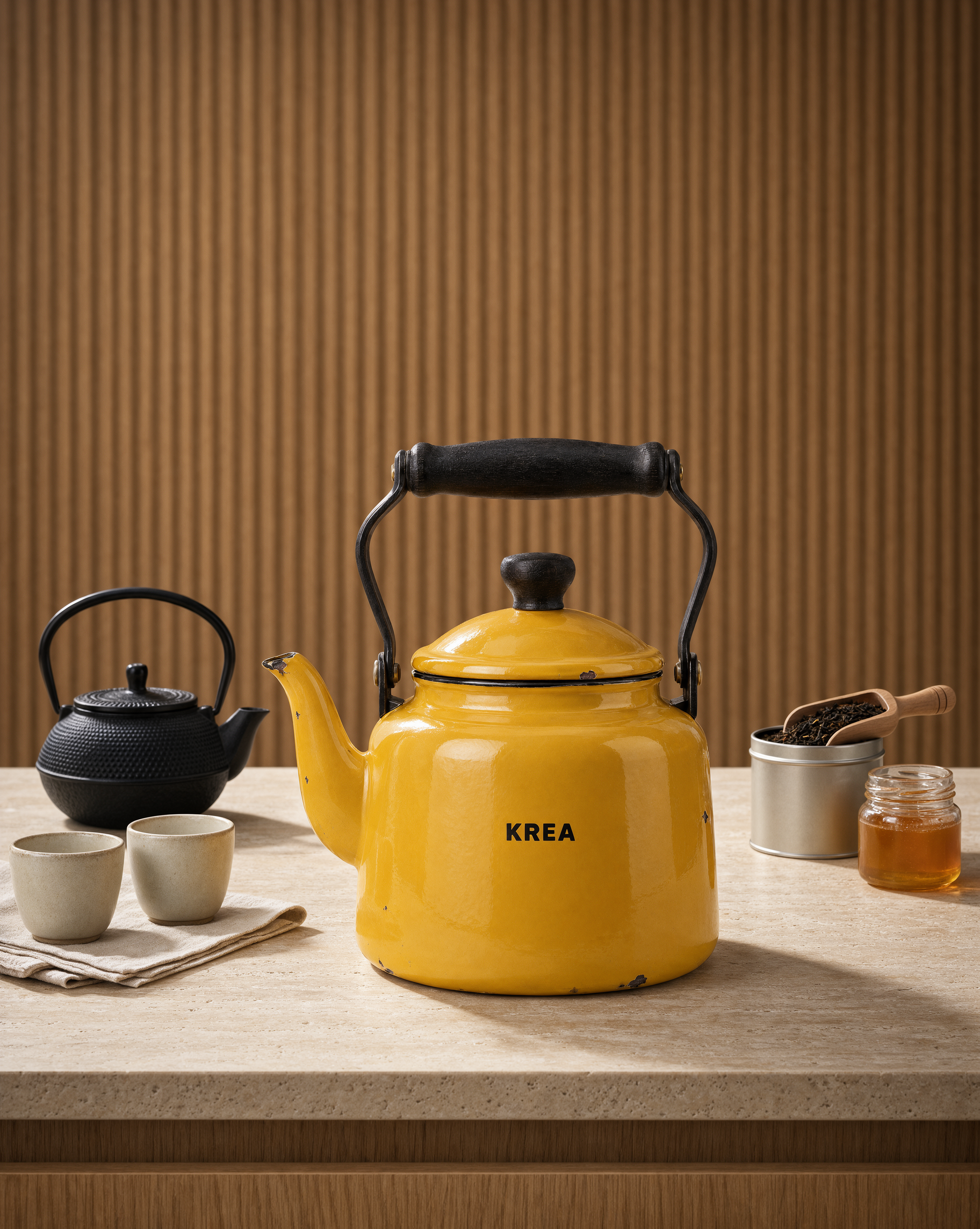
Beautiful high-end product photograph of the exact yellow enamel kettle from the reference image, product unchanged (yellow enamel with small chips, black wooden handle and knob, black KREA print). It rests on a travertine counter in front of a sleek modern kitchen with fluted wood panels, styled with related tea items: a black cast-iron teapot, small handleless tea cups, a tin of loose-leaf tea with a wooden scoop, a jar of honey and a linen napkin. Warm diffused light, elegant, minimal, premium editorial photography.
input references (upload in this order)
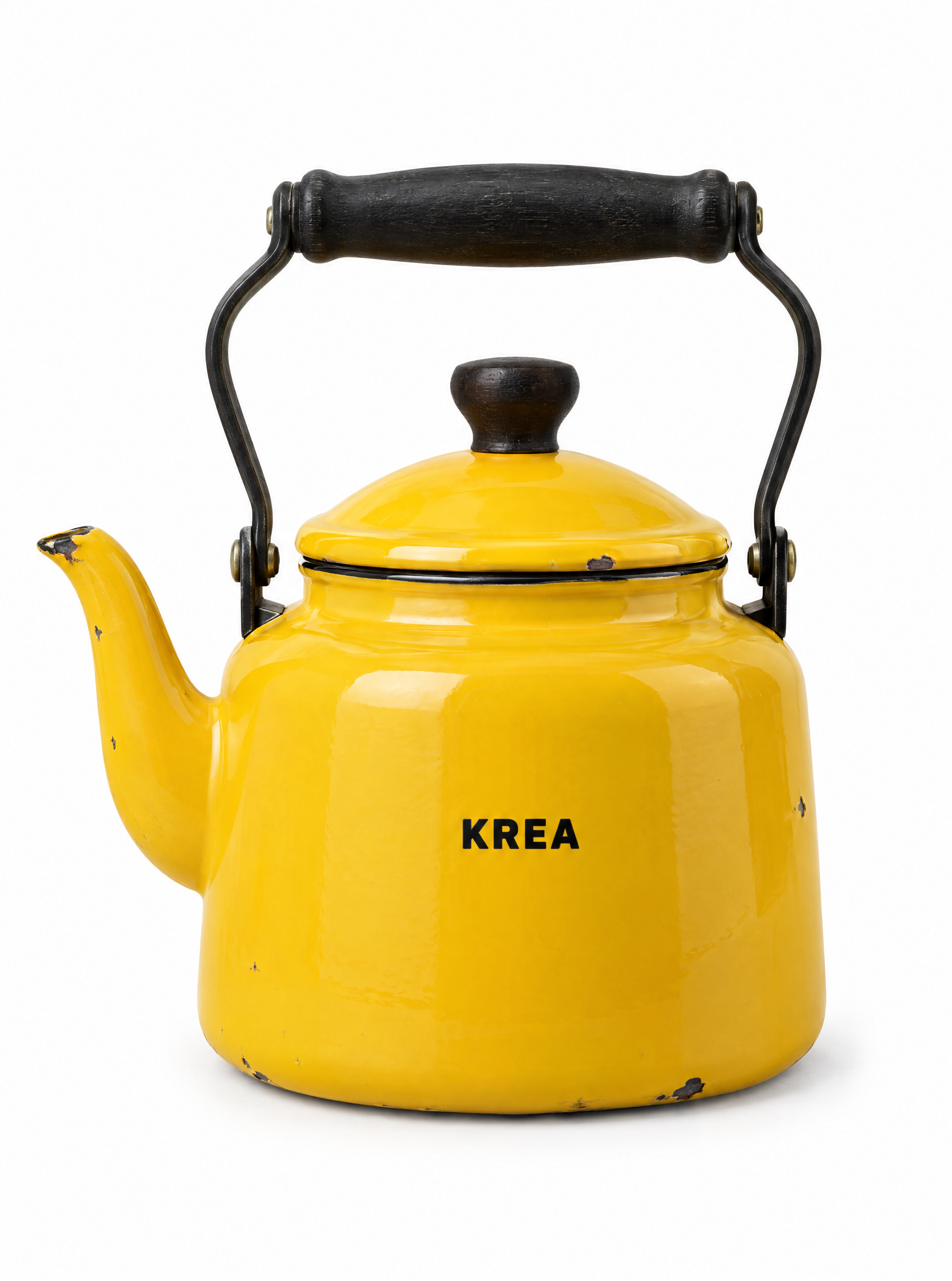 1. Yellow enamel kettle
model
Krea 3 — K3 Edit
settings
2K · 4:5 · medium thinking · random seed
Lighting and Composition
Soda Can in Ice
prompt
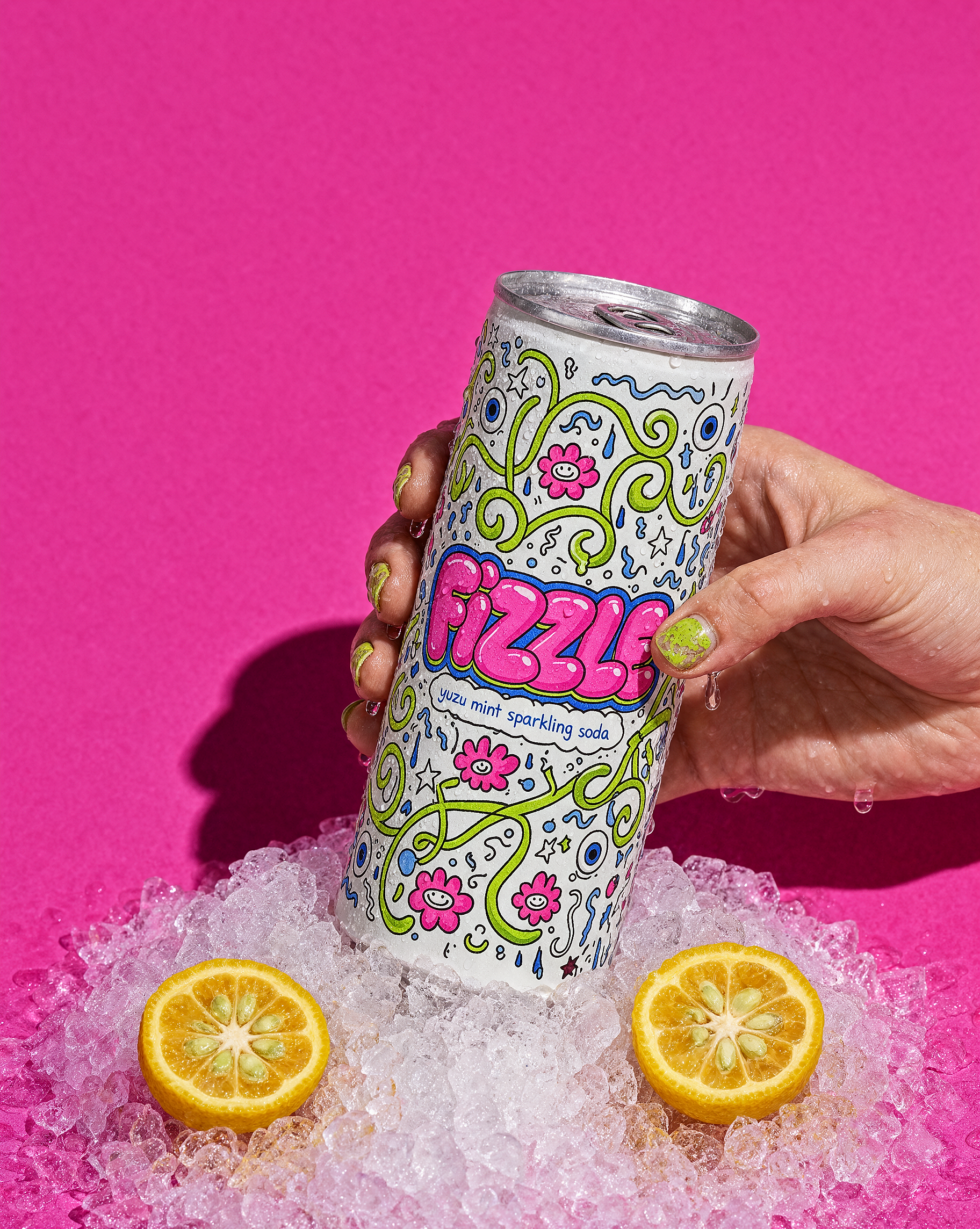
Keep the soda can exactly as in the reference image: same white can with the maximal doodle illustration in lime green, hot pink and cobalt, the bubbly FIZZLE lettering and the small yuzu mint sparkling soda line, same silver rim and tab. Restage it as an ice-cold beverage campaign shot: vertical frame of a hand with chipped lime-green nail polish gripping the can, the can's surface covered in fine condensation and running droplets, pushed down into a bed of crushed ice, two halved yuzu fruits half-buried in the ice, against a flat saturated magenta-pink seamless paper backdrop, one hard unmodified flash 25 degrees to camera right throwing a crisp dark magenta shadow of the can and hand onto the backdrop, bright specular pops on the wet aluminium, palette of magenta-pink field then white can then lime green then yuzu yellow then ice white, 6:1 contrast, can at 46% across tilted 8 degrees, hand entering from the right cropped at the wrist, upper left of the pink field left empty, 85mm, 4:5, deep focus, clean digital finish, playful beverage advertising photograph, no gradient, no added text.
input references (upload in this order)
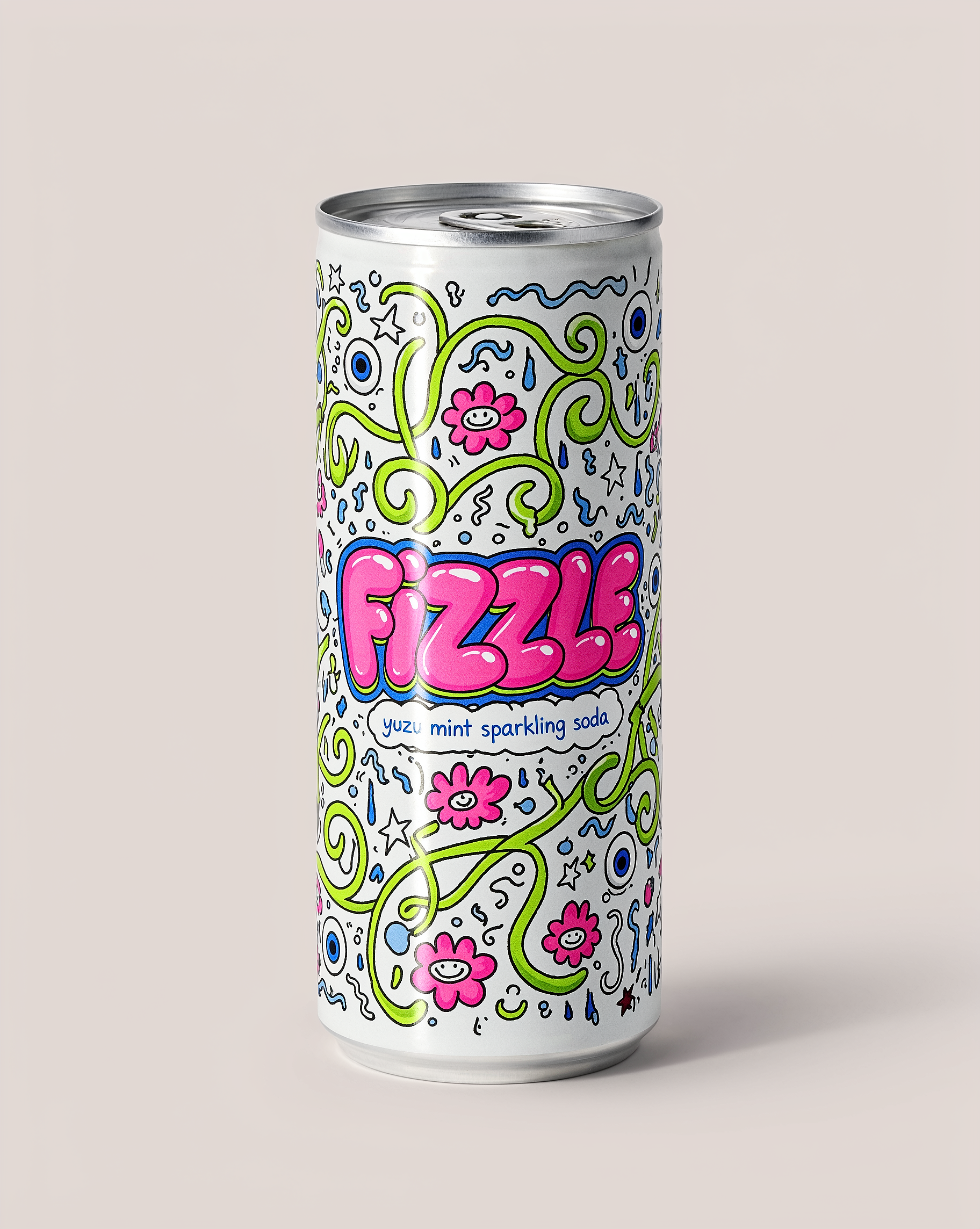 1. Soda can
settings
4:5 composition specified in the prompt; generation settings were not recorded in the source file.
Combining References
The five inputs supply the gown and gloves, headpiece, earrings, backdrop, and model. Each of these three outputs uses the same reference order.
Couture Side Profile
prompt
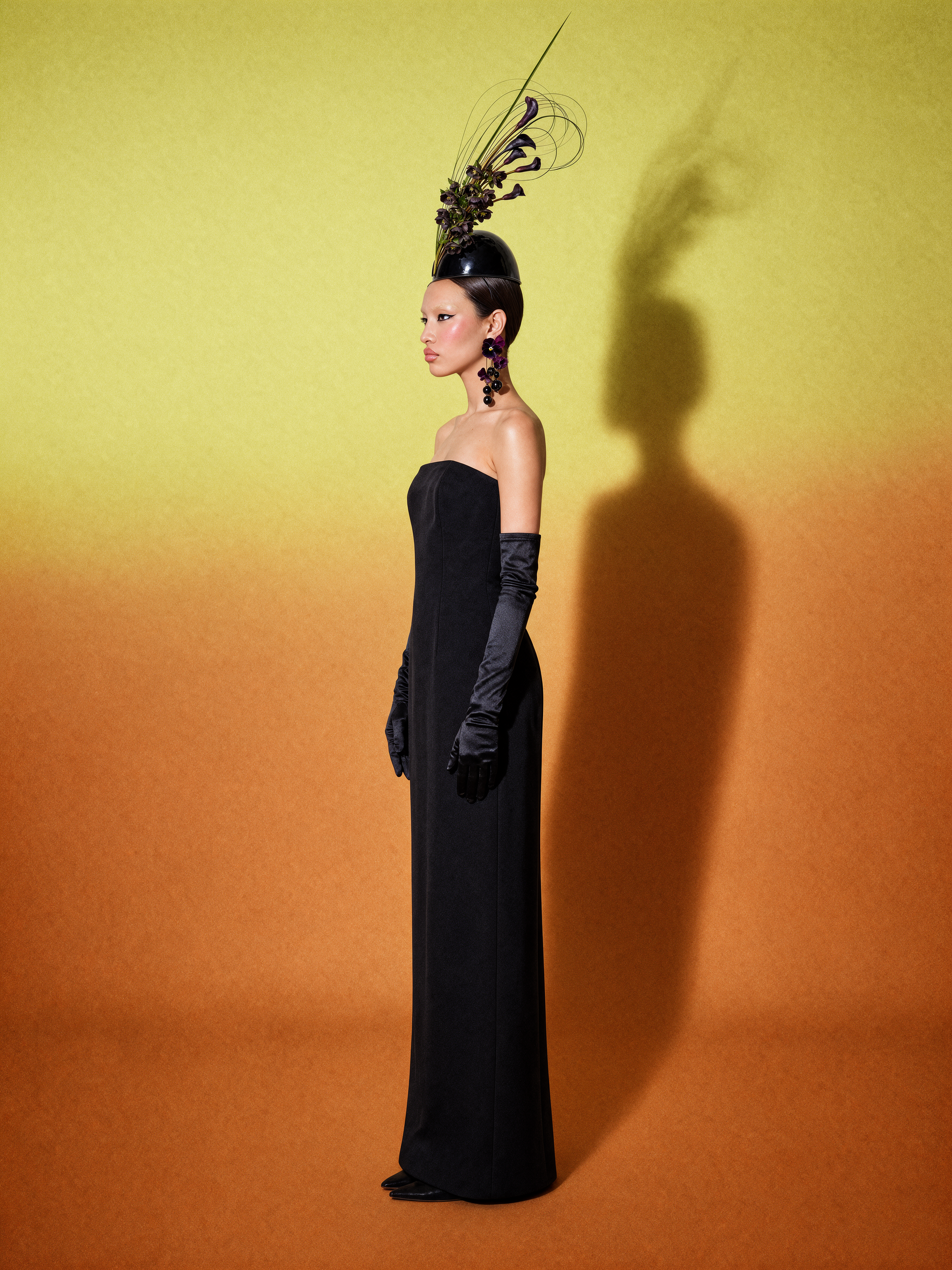
Refined, tasteful high-fashion editorial photograph, restrained and elegant. The woman from image 5 (exact face, slick center-part dark hair, bleached brows, sharp black winged liner, rosy cheeks, glossy nude lips) wears the exact black strapless column gown and long black satin opera gloves from image 1, the exact headpiece from image 2 and the exact pansy and black bead chandelier earrings from image 3. Backdrop is the chartreuse-to-amber gradient paper from image 4. Pure side profile, standing perfectly still, full-length, gloved hands relaxed at her sides, posture long and poised. One soft-edged directional light casts a clean elongated shadow of her profile and the headpiece onto the backdrop beside her. Generous negative space, calm, quiet and graceful, classic couture portraiture, fine film grain.
input references (upload in this order)
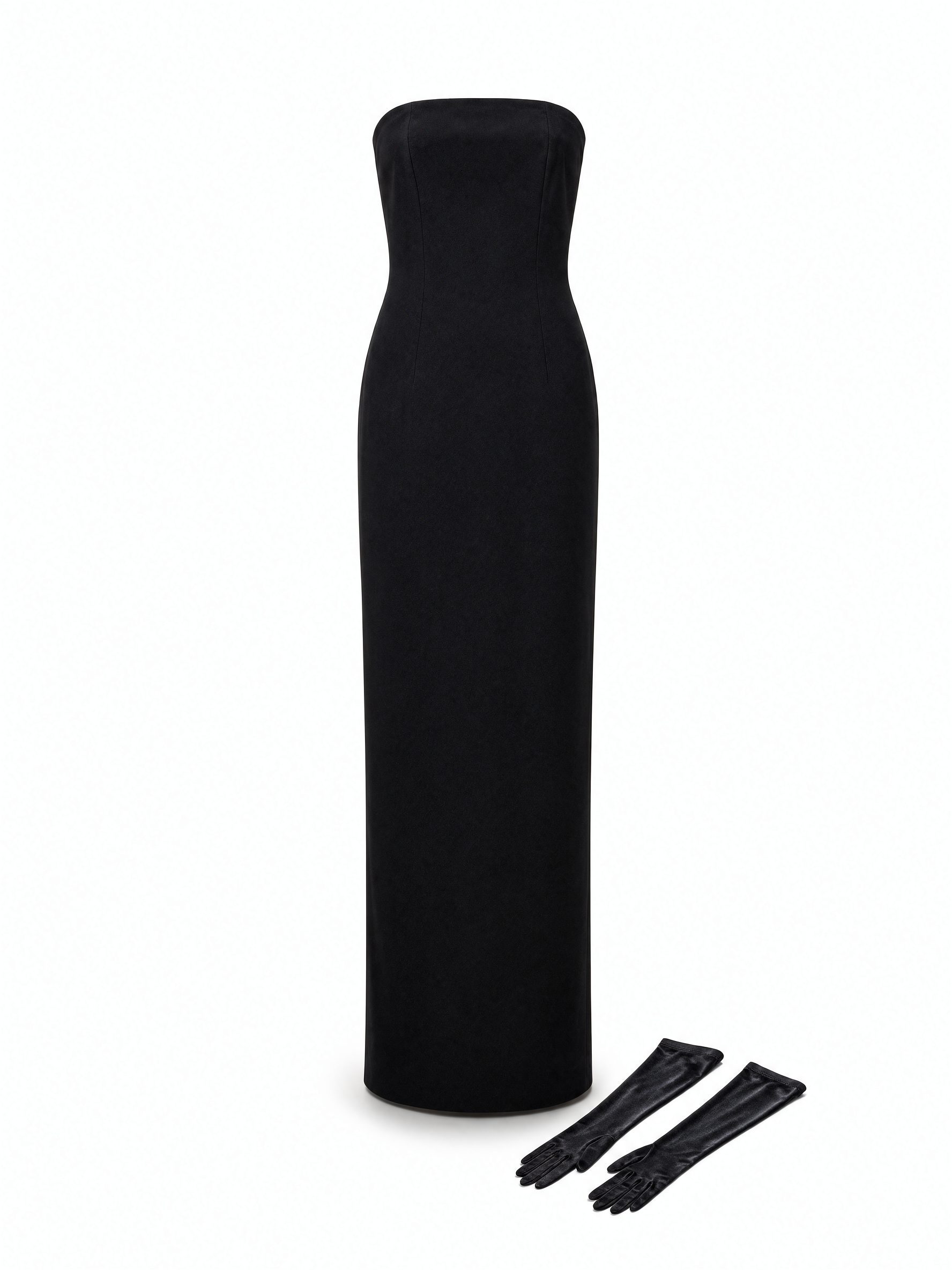 1. Gown and gloves
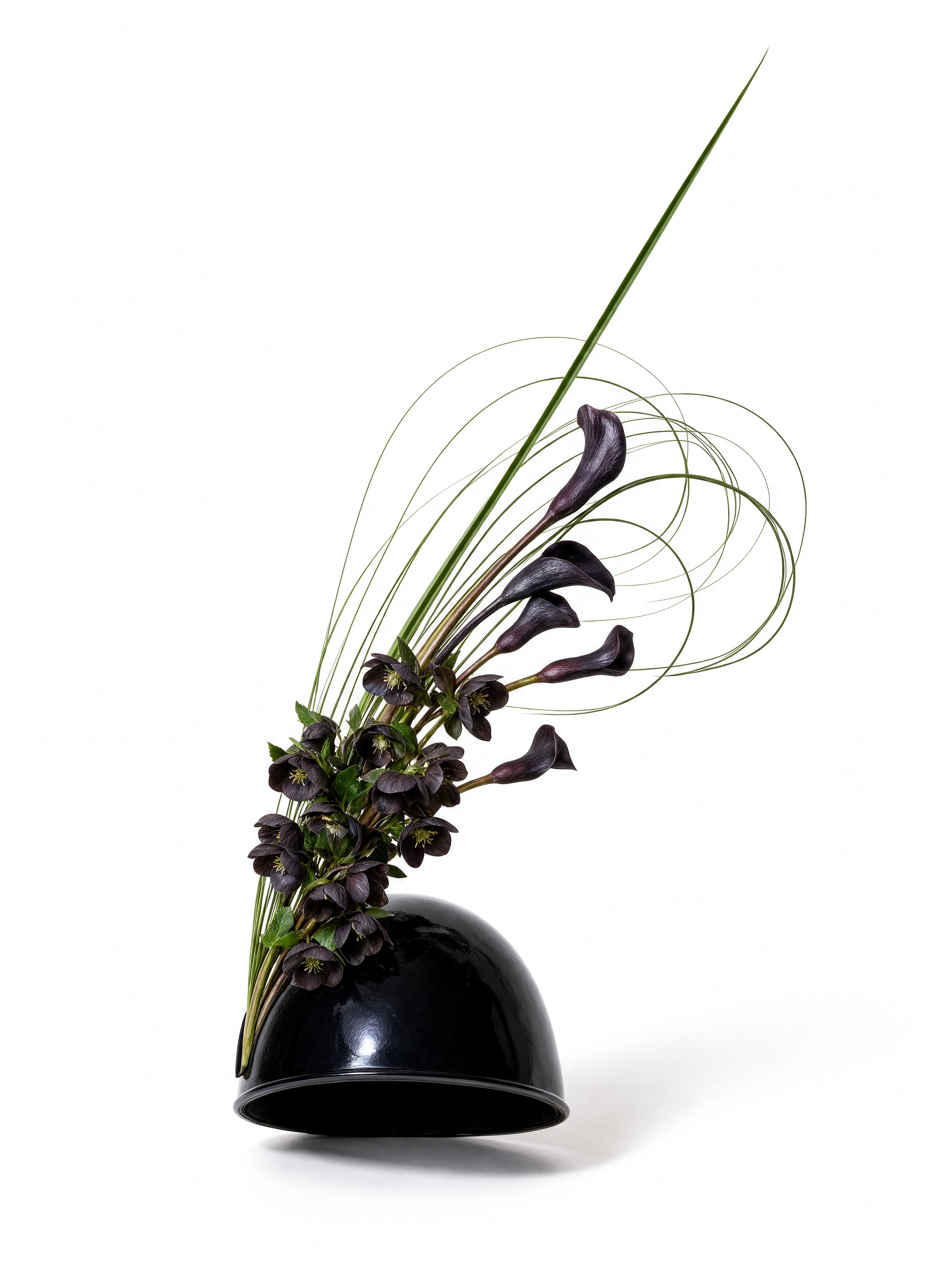 2. Headpiece
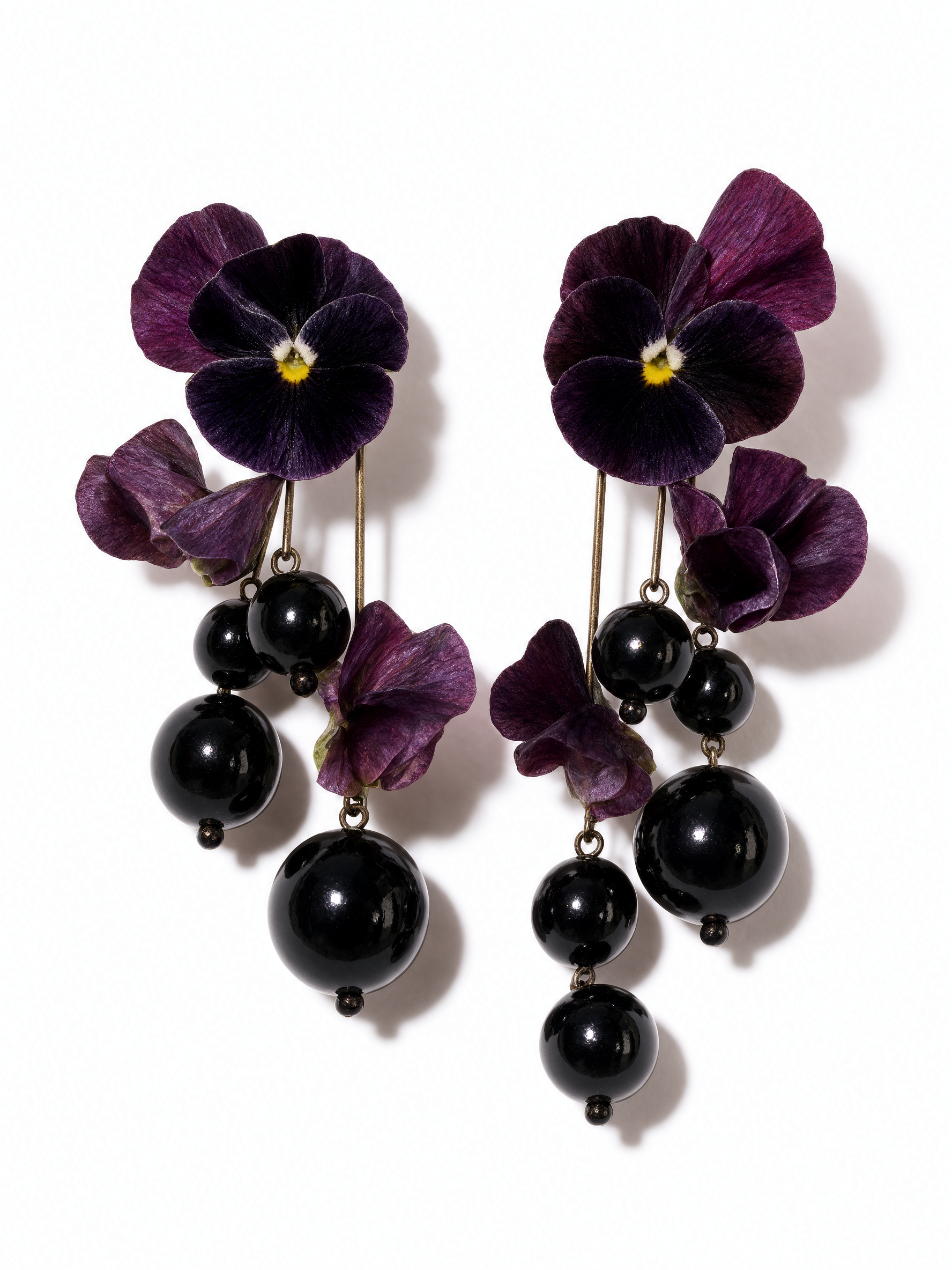 3. Earrings
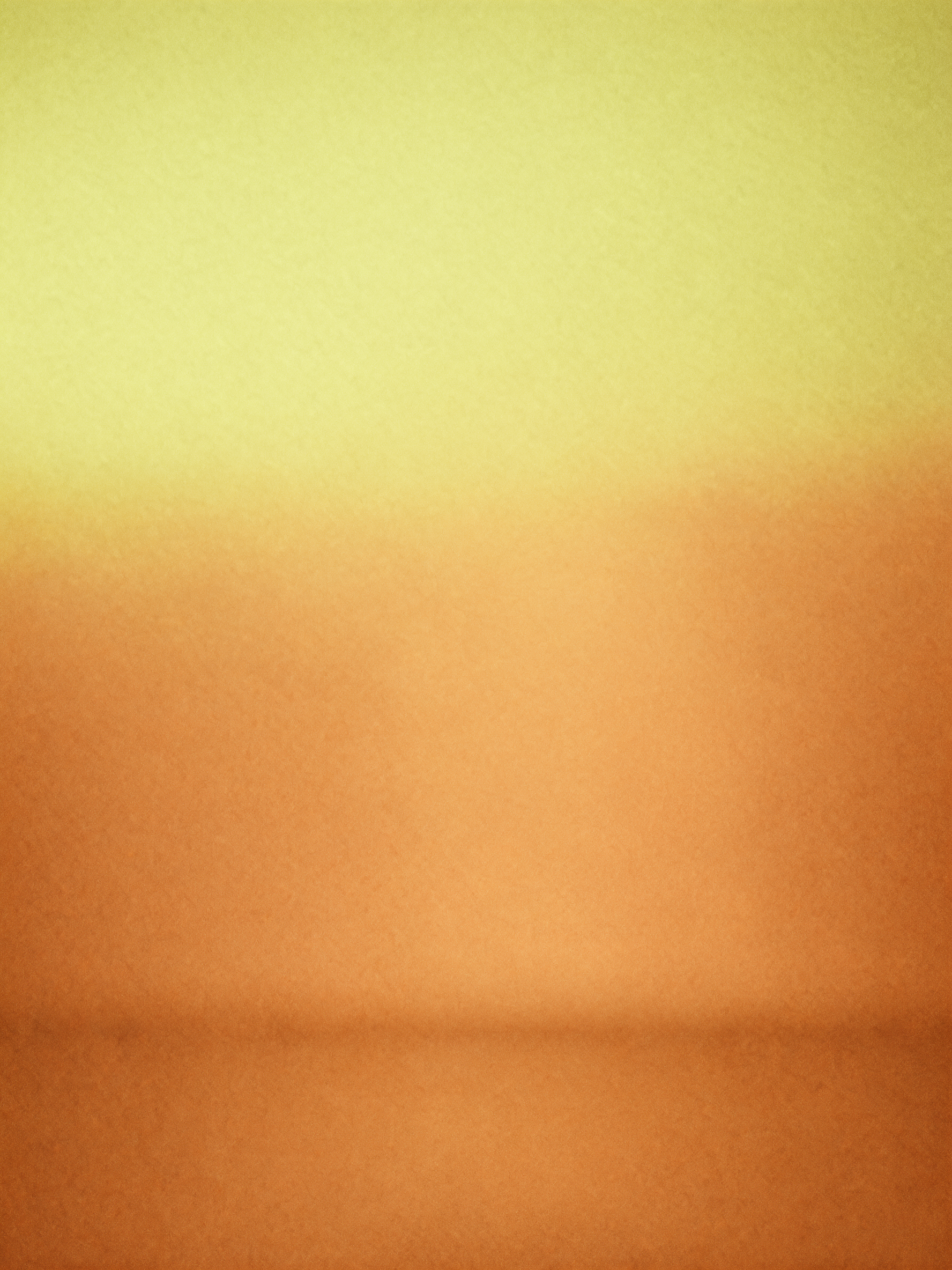 4. Backdrop
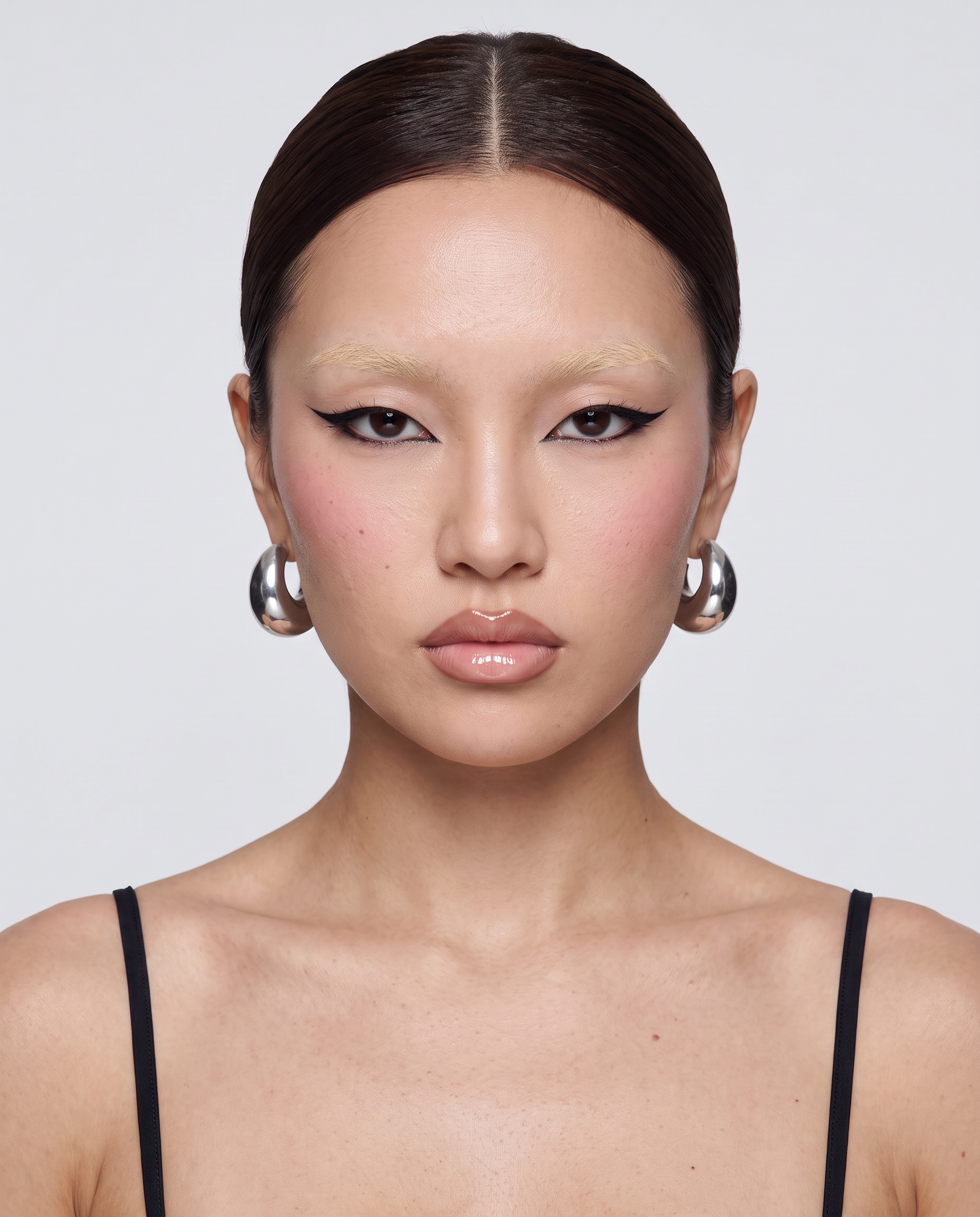 5. Model
model
Krea 3
settings
2K · 3:4 · medium thinking
Over-the-Shoulder Couture Portrait
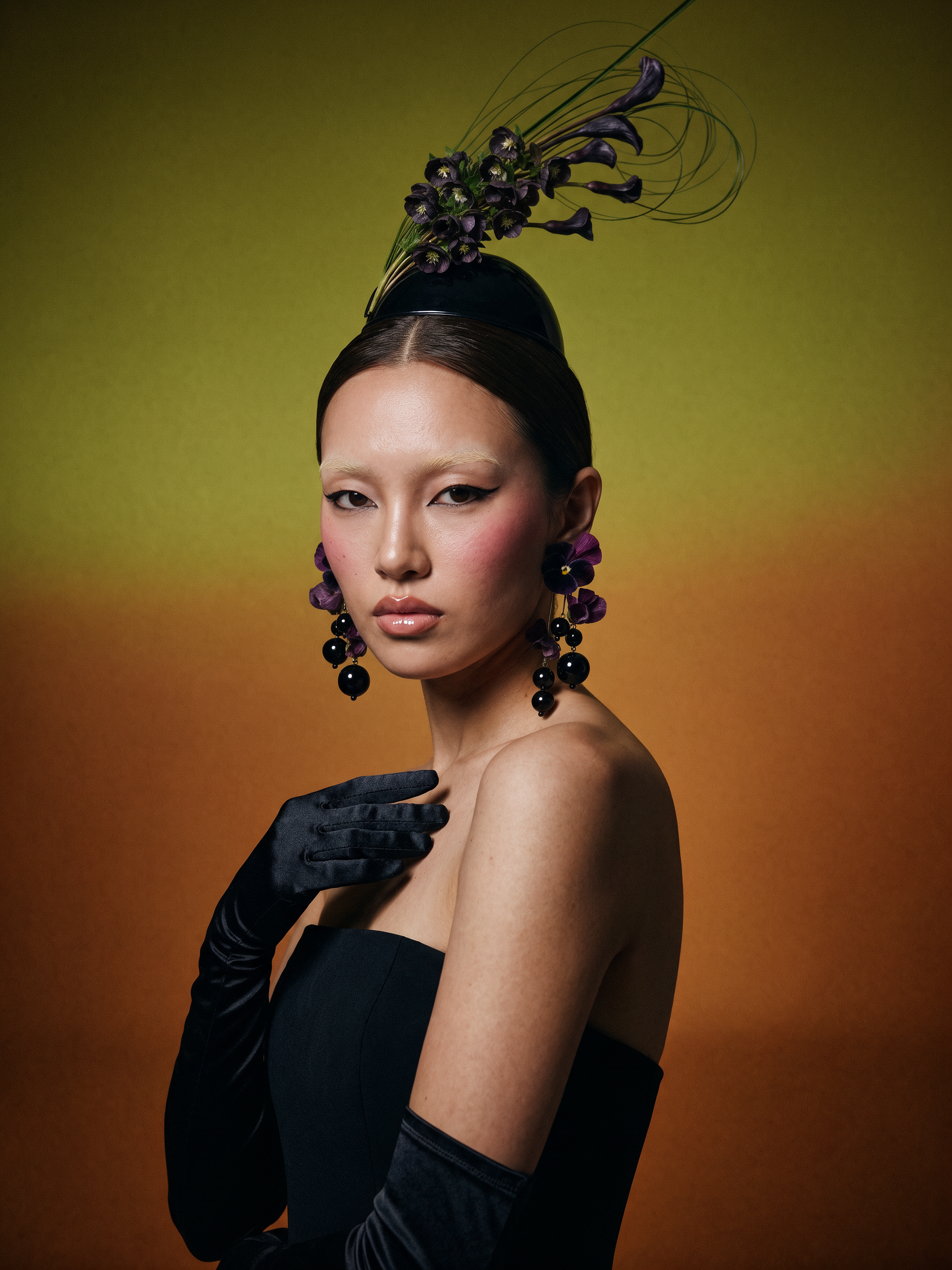
prompt
Refined, tasteful high-fashion editorial photograph, restrained and elegant. The woman from image 5 (exact face, slick center-part dark hair, bleached brows, sharp black winged liner, rosy cheeks, glossy nude lips) wears the exact black strapless gown and long black satin opera gloves from image 1, the exact headpiece from image 2 and the exact pansy and black bead chandelier earrings from image 3. Backdrop is the chartreuse-to-amber gradient paper from image 4. Waist-up portrait, body turned three-quarters away, she glances back over her bare shoulder toward camera with a composed, serene expression, one gloved hand resting lightly at her collarbone. Soft chiaroscuro lighting, gentle falloff into shadow on one side, earrings catching the light. Calm, poised, painterly, fine film grain.
input references (upload in this order)
1. Gown and gloves2. Headpiece3. Earrings4. Backdrop5. Modelmodel
Krea 3
settings
2K · 3:4 · medium thinking
Couture Editorial Against the Wall
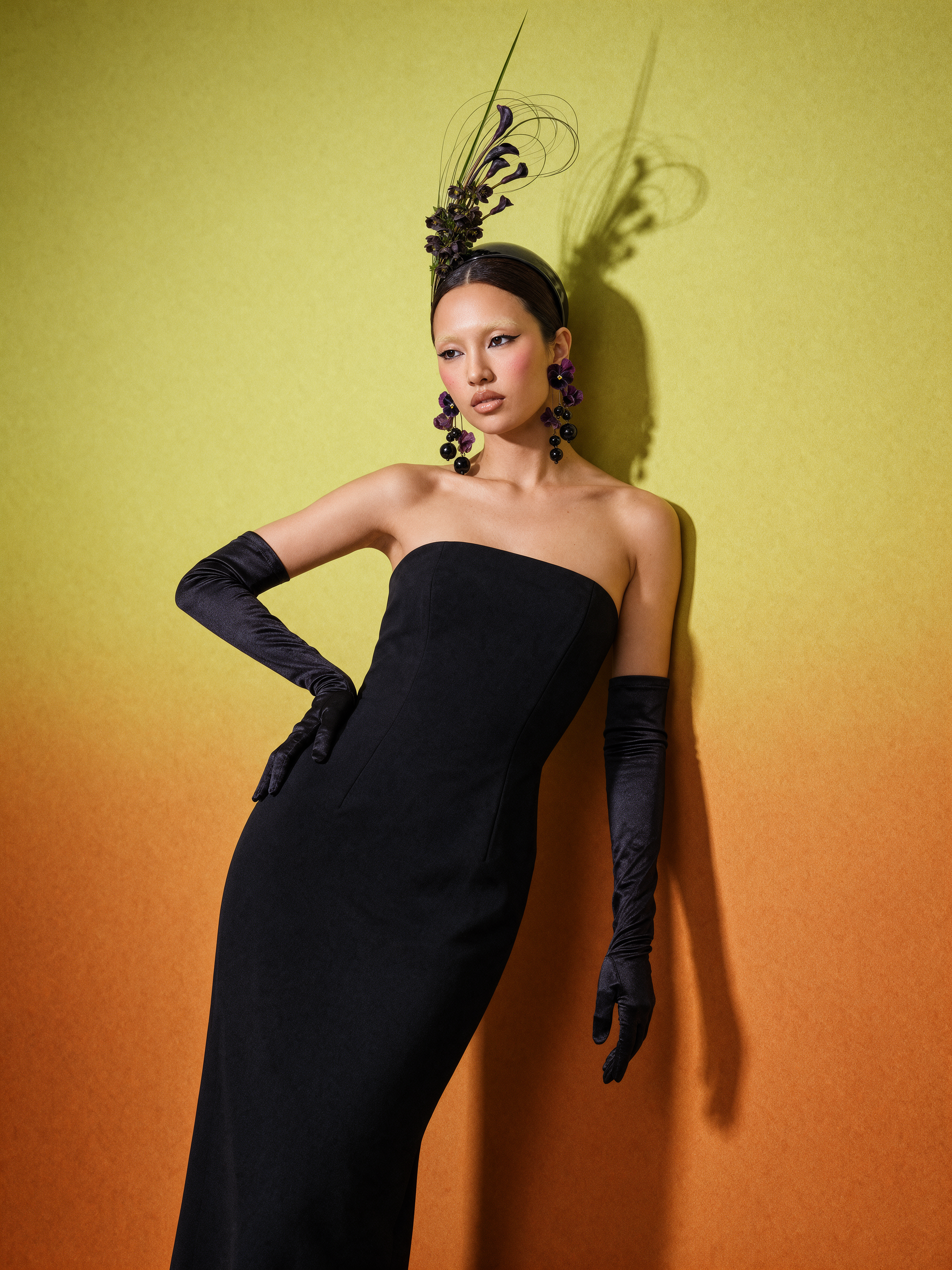
prompt
Vogue fashion editorial photograph. The woman from image 5 (exact face, slick center-part dark hair, bleached brows, sharp black winged liner, rosy cheeks, glossy nude lips) wears the exact black strapless column gown and long black satin opera gloves from image 1, the exact headpiece from image 2 and the exact pansy and black bead chandelier earrings from image 3. Backdrop is the chartreuse-to-amber gradient paper from image 4. Three-quarter length, she leans one bare shoulder casually against the backdrop wall, body angled, one gloved hand at her hip, the other arm long at her side, relaxed sophisticated attitude, looking slightly off camera. Single hard key light from the side casting a crisp graphic shadow of her silhouette and the headpiece on the wall beside her. Elegant, modern, fine film grain, magazine print quality.
input references (upload in this order)
1. Gown and gloves2. Headpiece3. Earrings4. Backdrop5. Modelmodel
Krea 3
settings
2K · 3:4 · medium thinking
Editing the Next Shot
Begin with the full-body office editorial, then use that output as the first reference for the close-up and side view. The input set changes between shots; the thumbnails below follow each original prompt sheet.
Full-Body Office Editorial
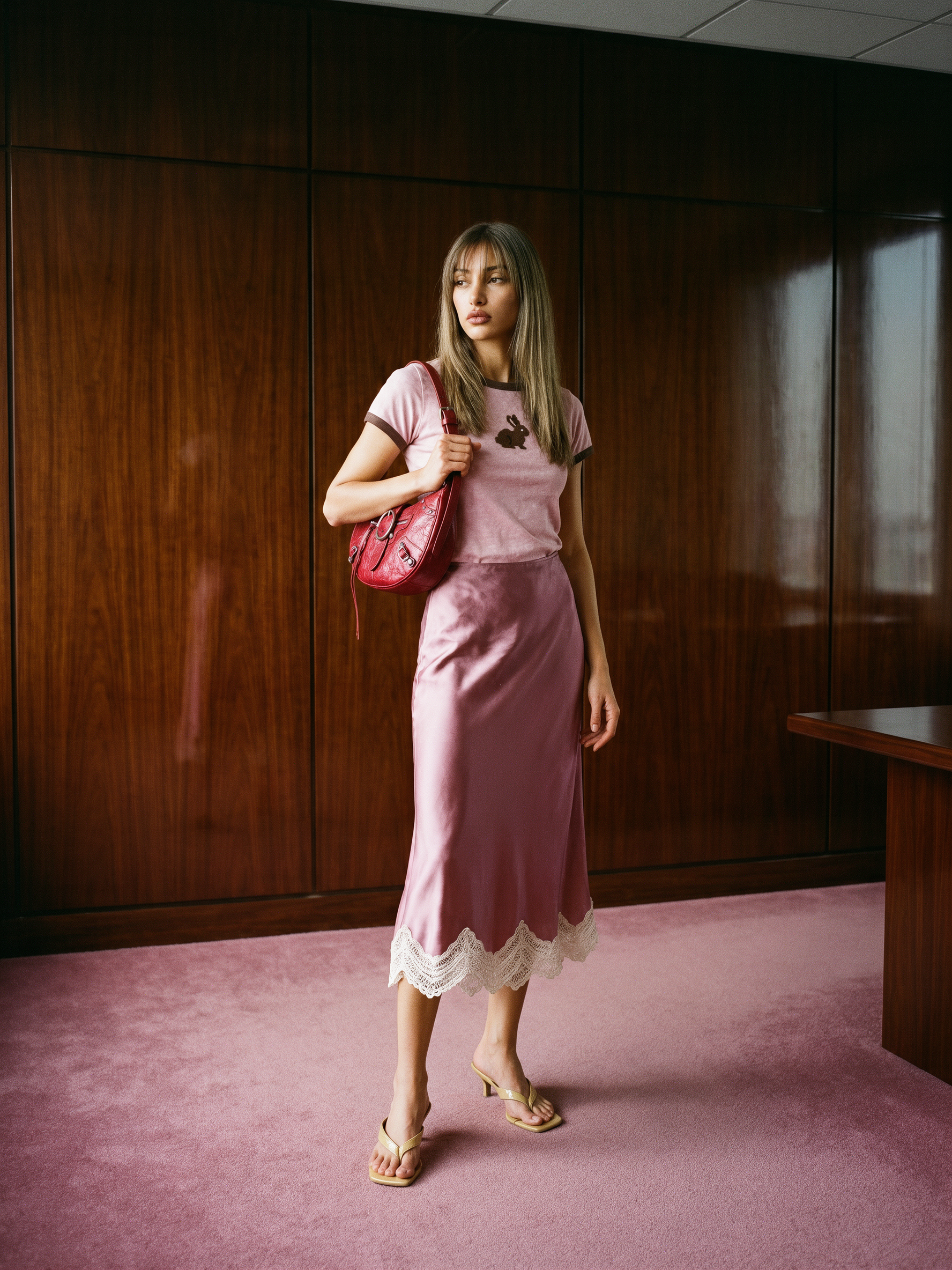
prompt
Editorial fashion photograph, full-body shot of the woman from the reference portrait (same face, brown eyes, long straight ash-brown hair with wispy curtain bangs, mauve lips) wearing the exact outfit from the references: the fitted washed pink baby ringer t-shirt with brown neck and sleeve trims and small brown pixel bunny on the chest, tucked into the pink satin bias-cut midi slip skirt with scalloped cream crochet lace hem, the red crinkled leather crescent shoulder bag with silver buckles and studs worn on her shoulder, and the butter-yellow patent square-toe thong heeled sandals. Setting: an empty 1990s executive office, floor-to-ceiling dark polished mahogany wood panelled walls, wall-to-wall dusty pink carpet, sparse and minimal, nothing else in the room except perhaps one low mahogany desk edge. She stands directly centered in frame, body turned slightly sideways in a three-quarter stance, candid unposed moment, glancing off to the side, one hand loosely on the bag strap. Straight-on eye-level camera, 35mm film editorial look, soft but directional light, warm tones, fine film grain, minimalism, lots of negative space.
input references (upload in this order)
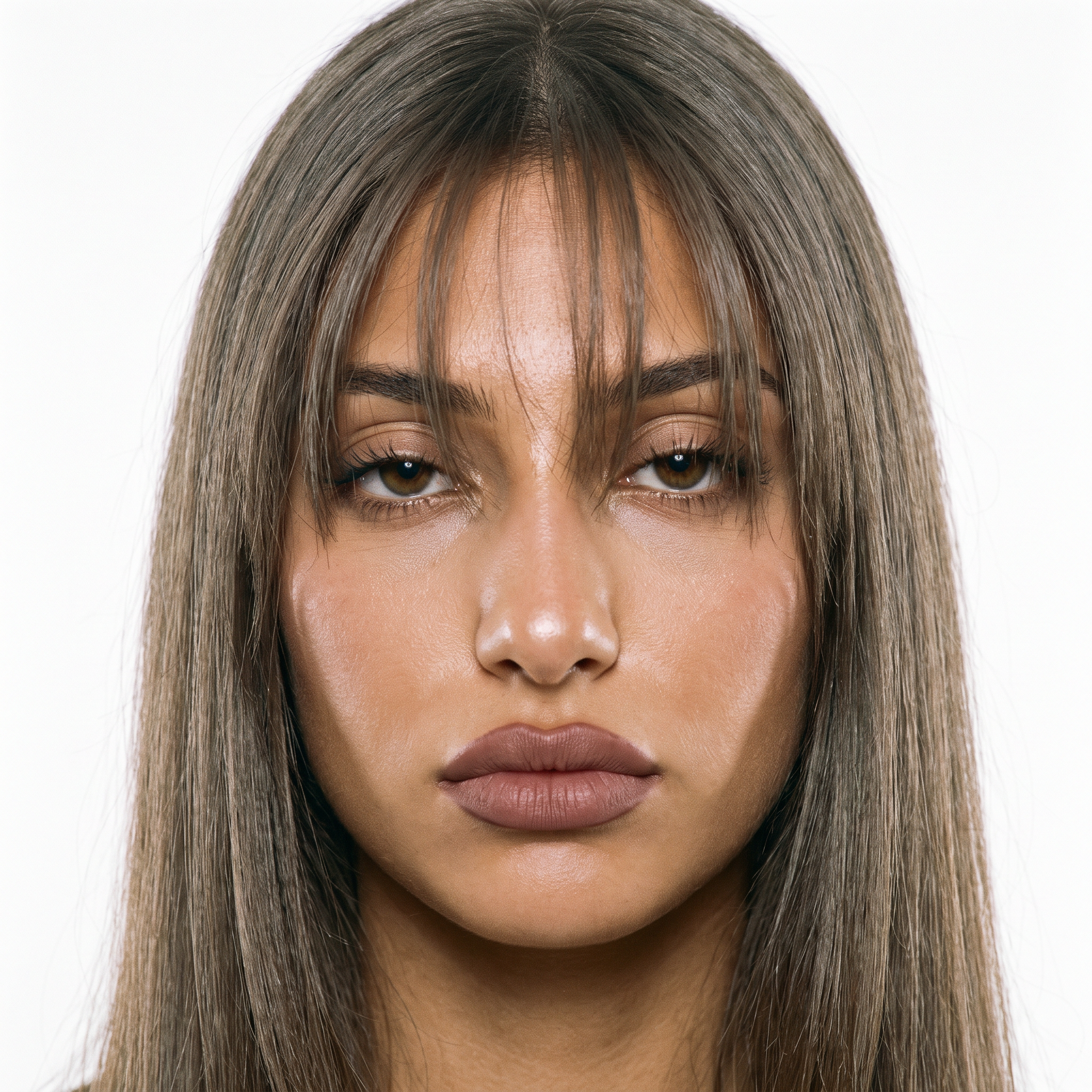 1. Model portrait
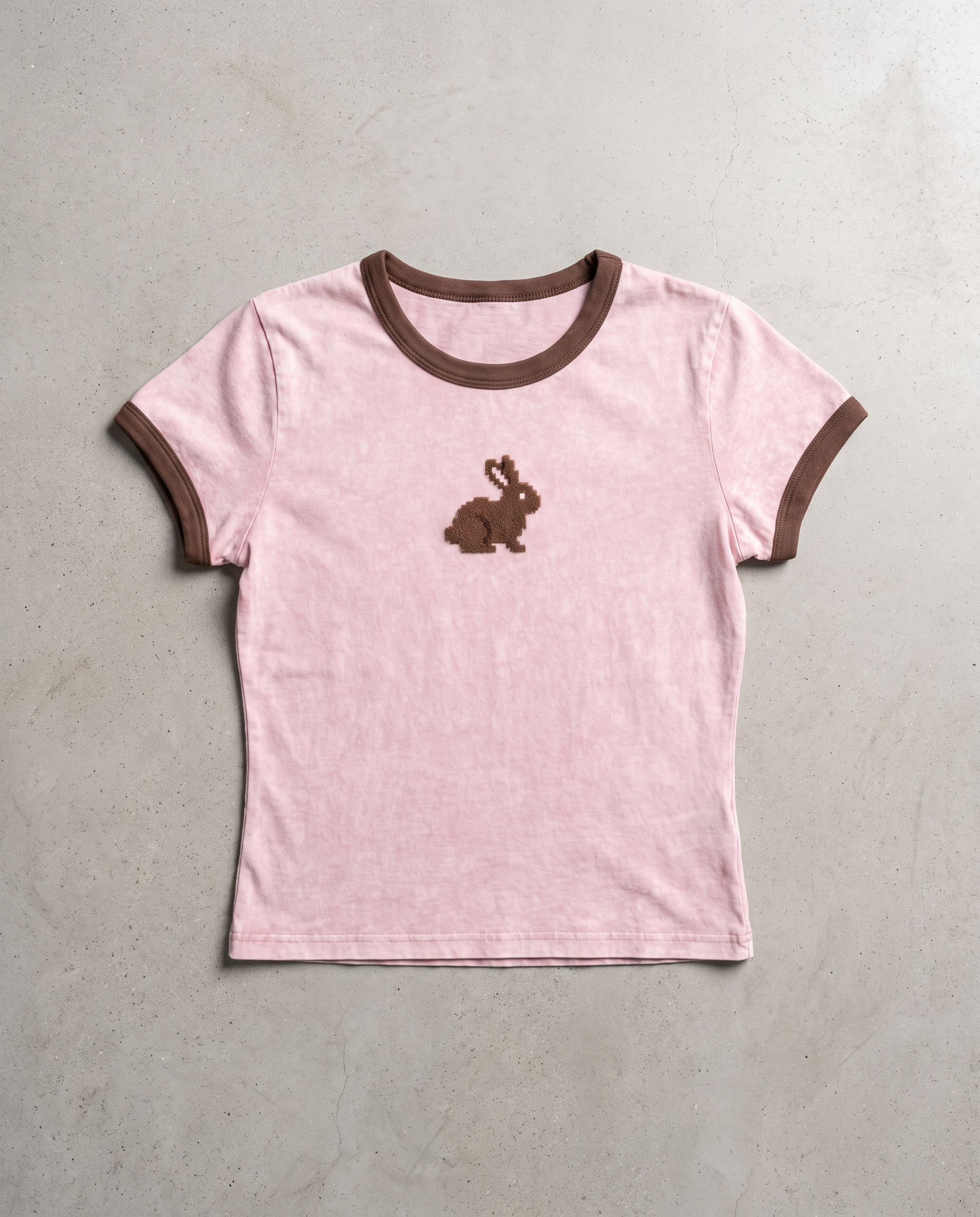 2. T-shirt
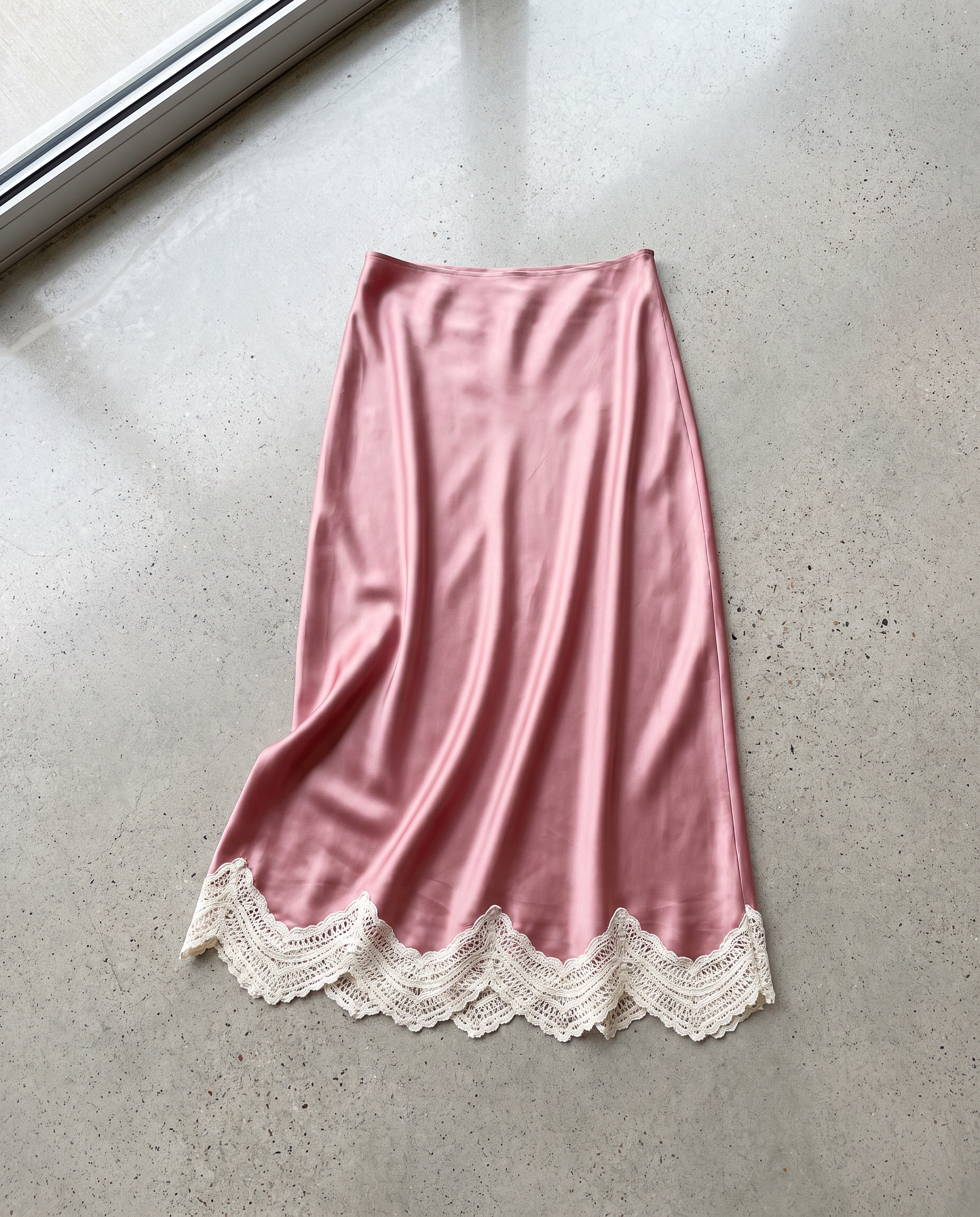 3. Skirt
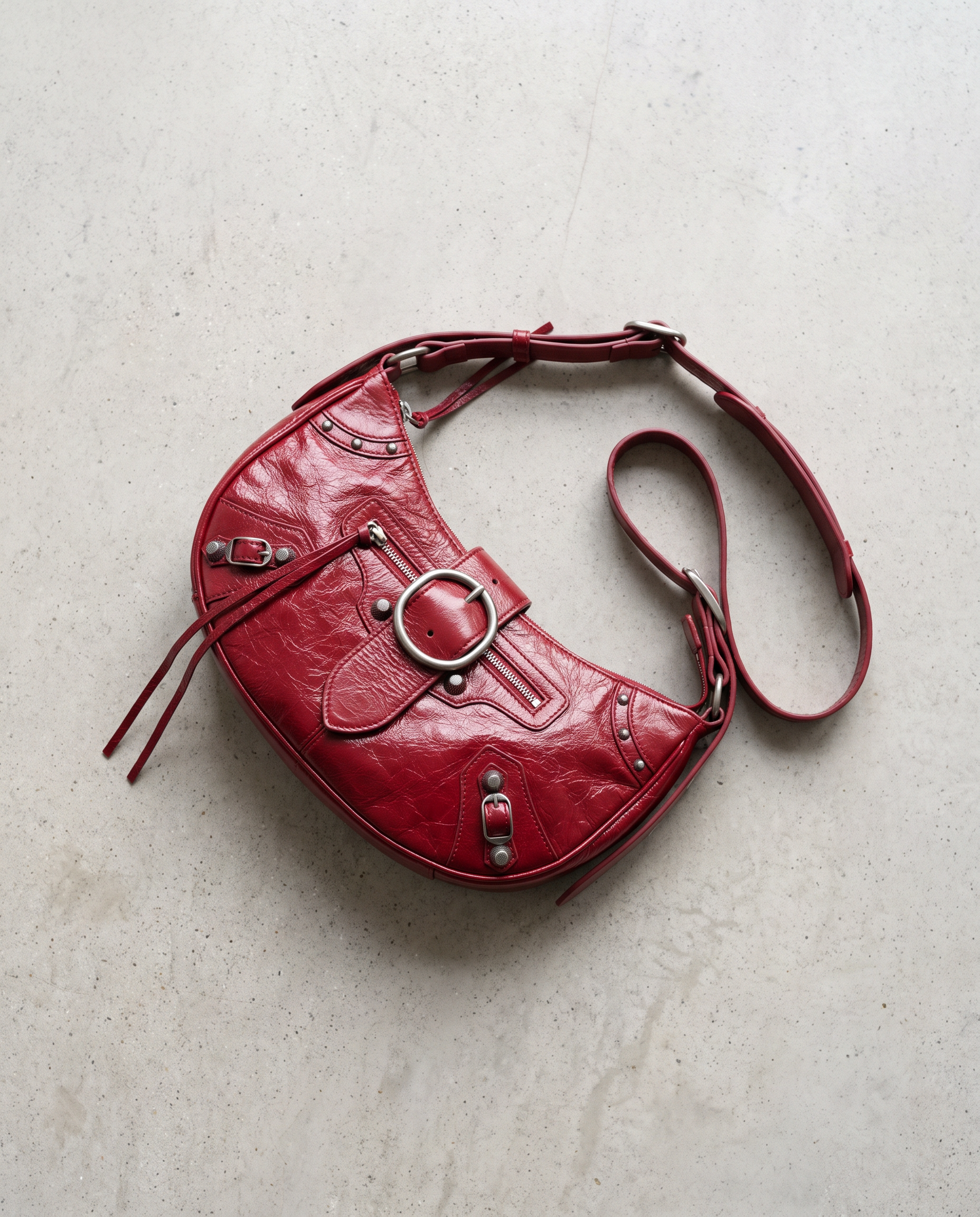 4. Bag
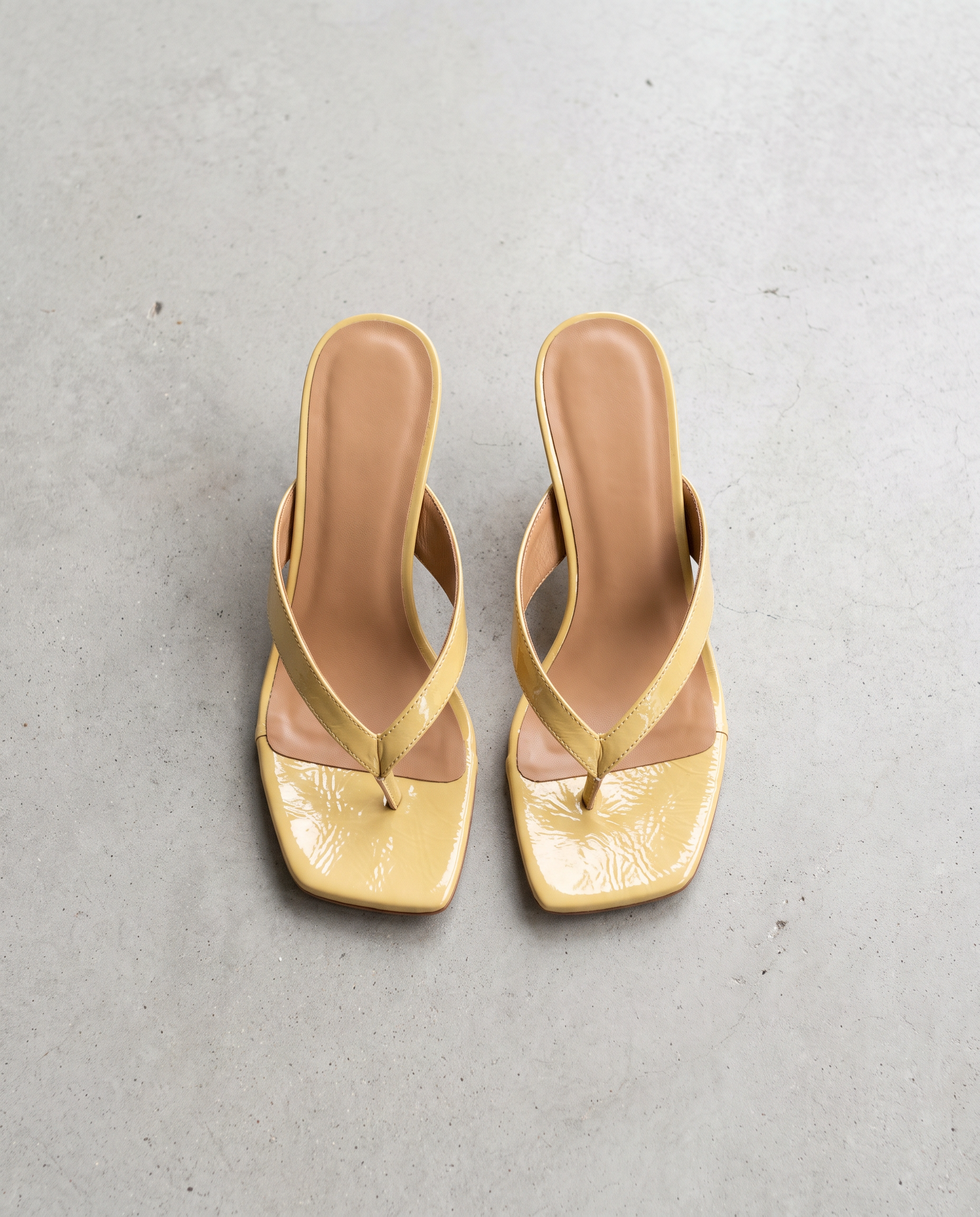 5. Sandals
model
Krea 3
settings
2K · 3:4 · medium thinking · seed 4101
Front-Facing Close-Up
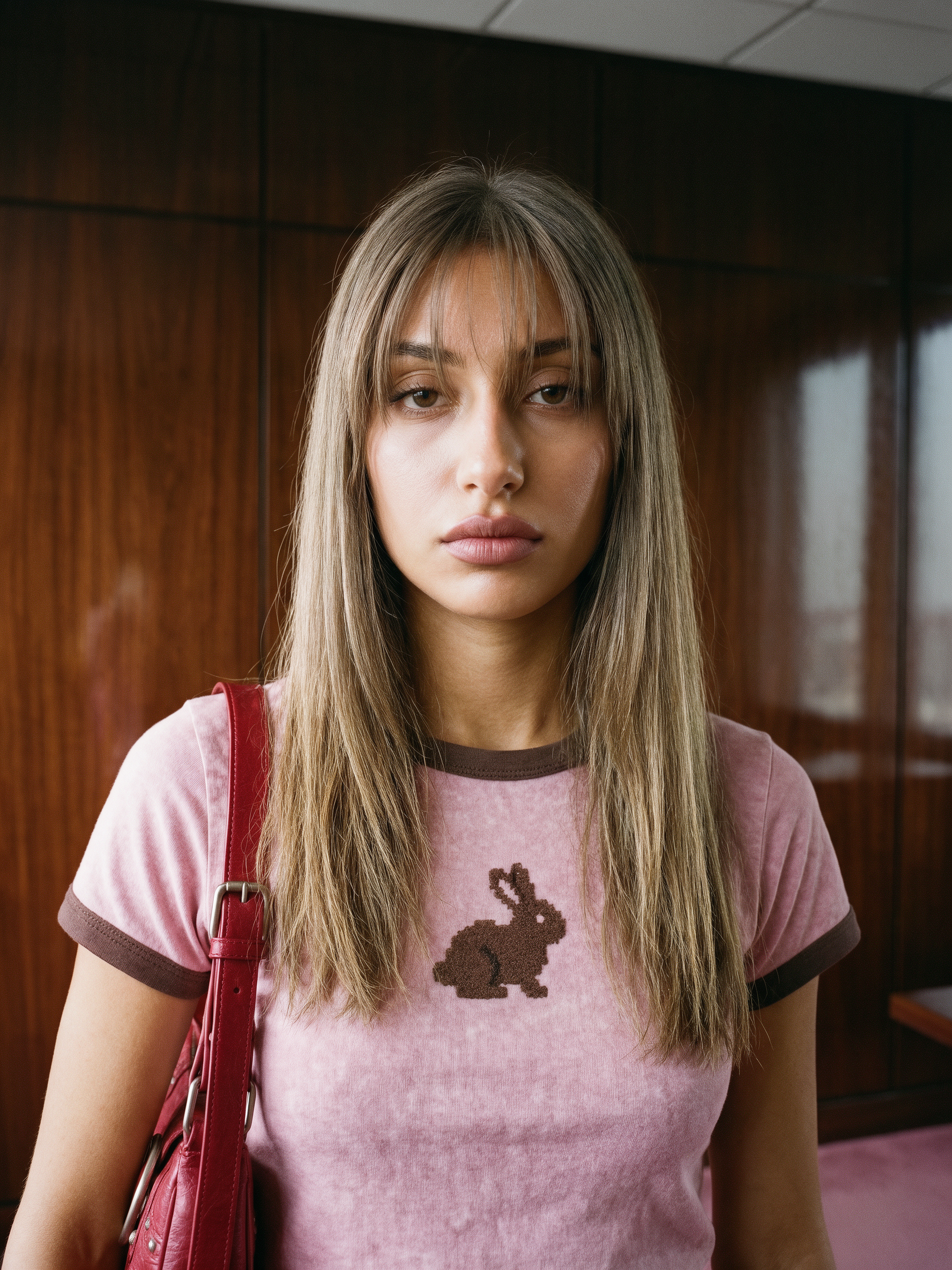
prompt
Same scene, same woman and same outfit as the first reference image, now photographed from a different angle: front-facing close-up, chest-up framing, she faces the camera directly, face and shoulders square to the lens, candid neutral expression. Keep her identical (face from the portrait reference: brown eyes, ash-brown straight hair with wispy curtain bangs, mauve lips), the washed pink ringer tee with brown trims and small brown pixel-stitched bunny on the chest, the red crinkled leather shoulder bag strap over her shoulder with the bag partly visible. Background: the same dark polished mahogany panelled wall of the 1990s office, softly out of focus. Same warm soft directional light, 35mm film editorial look, fine grain, minimal.
input references (upload in this order)
1. Previous full-body output2. Model portrait3. T-shirt4. Bagmodel
Krea 3
settings
2K · 3:4 · medium thinking · seed 5301
Side View with the Shoulder Bag
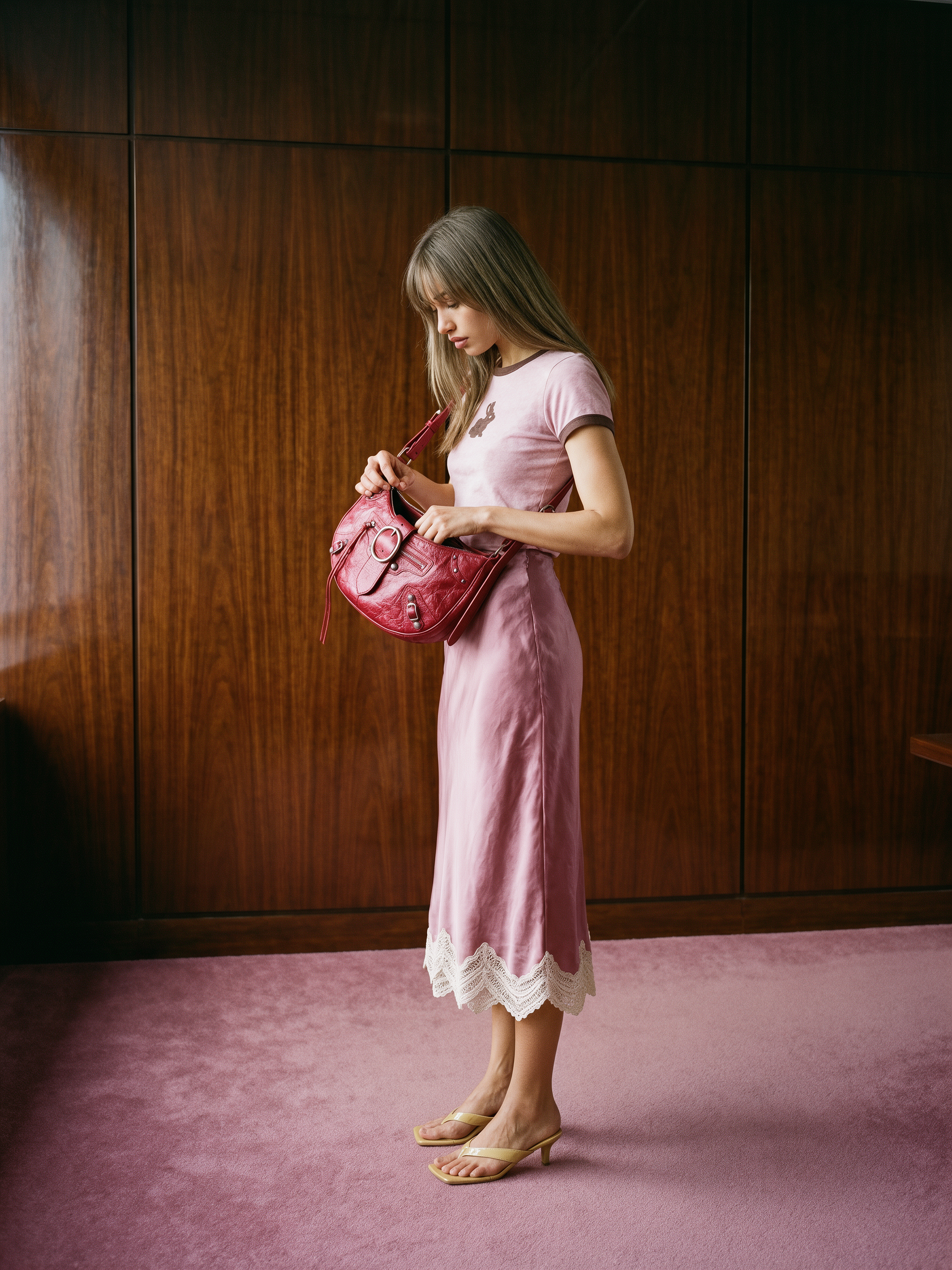
prompt
Same scene, same woman and same outfit as the first reference image, now photographed from a side view: full-body profile shot, she stands in profile facing left of frame in the empty 1990s mahogany-panelled office on the pink carpet, head tilted down, candidly looking into her open red crinkled leather crescent shoulder bag, one hand rummaging inside it while the bag hangs from her shoulder, pulled forward at her hip. Keep her identical (face from the portrait reference, ash-brown straight hair with wispy bangs falling forward), the washed pink ringer tee with brown trims, tucked into the pink satin bias-cut midi skirt with scalloped cream crochet lace hem, butter-yellow patent square-toe thong heeled sandals. Dark polished mahogany wood panel walls, dusty pink carpet, sparse and minimal, subject centered in frame. Same warm soft directional light, 35mm film editorial look, fine grain.
input references (upload in this order)
1. Previous full-body output2. Model portrait3. Bag4. Skirt5. Sandalsmodel
Krea 3
settings
2K · 3:4 · medium thinking · seed 6611
Changing a Material
Travertine Atrium Wall
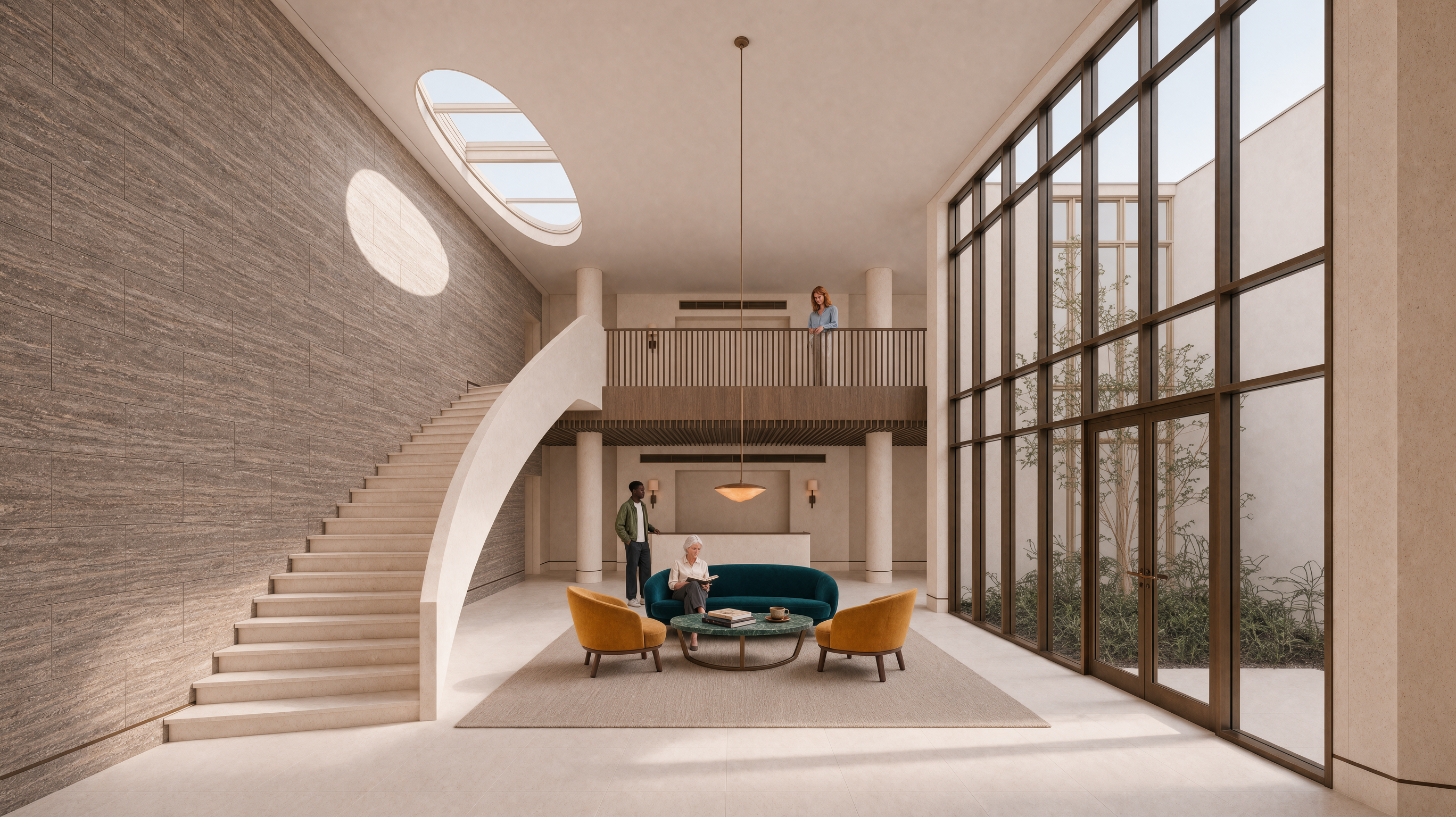
prompt
Refine this approved hotel atrium photograph with a richer, more believable material on the enormous LEFT-HAND WALL behind the staircase. Replace that wall's nearly white finish, from floor to ceiling, with medium-toned warm walnut-grey vein-cut travertine: large horizontally coursed slabs with restrained natural strata, occasional fine pores, subtly varied stone tones and precise recessed joints. It must read as actual substantial stone, noticeably darker and more tactile than the white stair, not a printed texture or dirty plaster. Retain the existing oval sunlight patch on this new wall and the same daylight/exposure. Keep the sculptural stair and balustrade pale to stand distinctly against the stone; preserve its exact silhouette. Add only two casually stacked art books and a small used ceramic cup with saucer on the existing green coffee table, plus gentle natural compression in the existing sofa upholstery, for understated daily use without clutter. Keep the existing petrol sofa and saffron chairs, all three people, oak mezzanine soffit, glazing, ceiling and floor. Otherwise preserve the image exactly, including camera, framing, geometry, lighting, furniture locations and occupants. Full-frame editorial photograph, not a board.
input references (upload in this order)
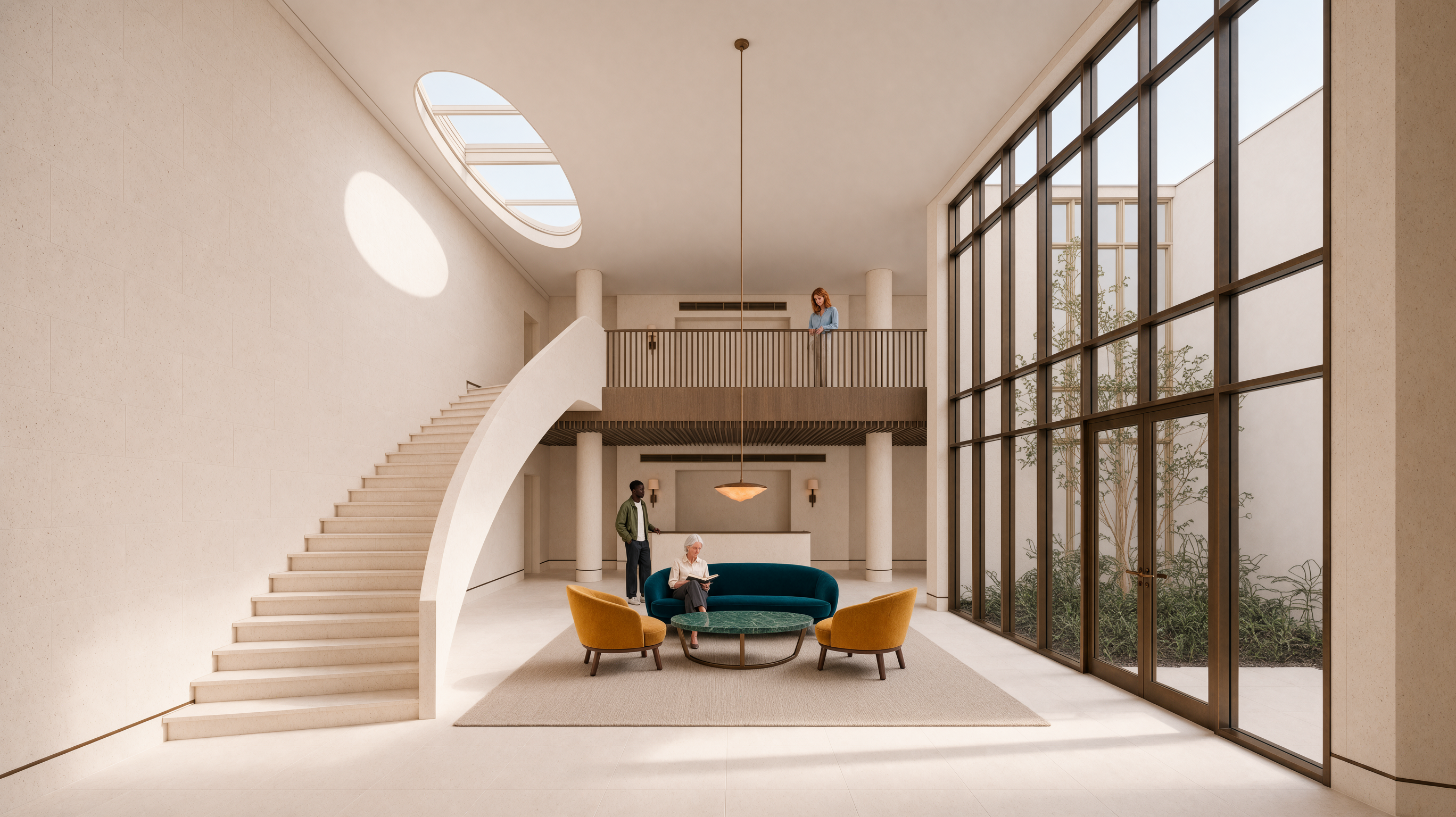 1. Original atrium photograph
3D Blockout to Product Image
Watch and Stone Shard
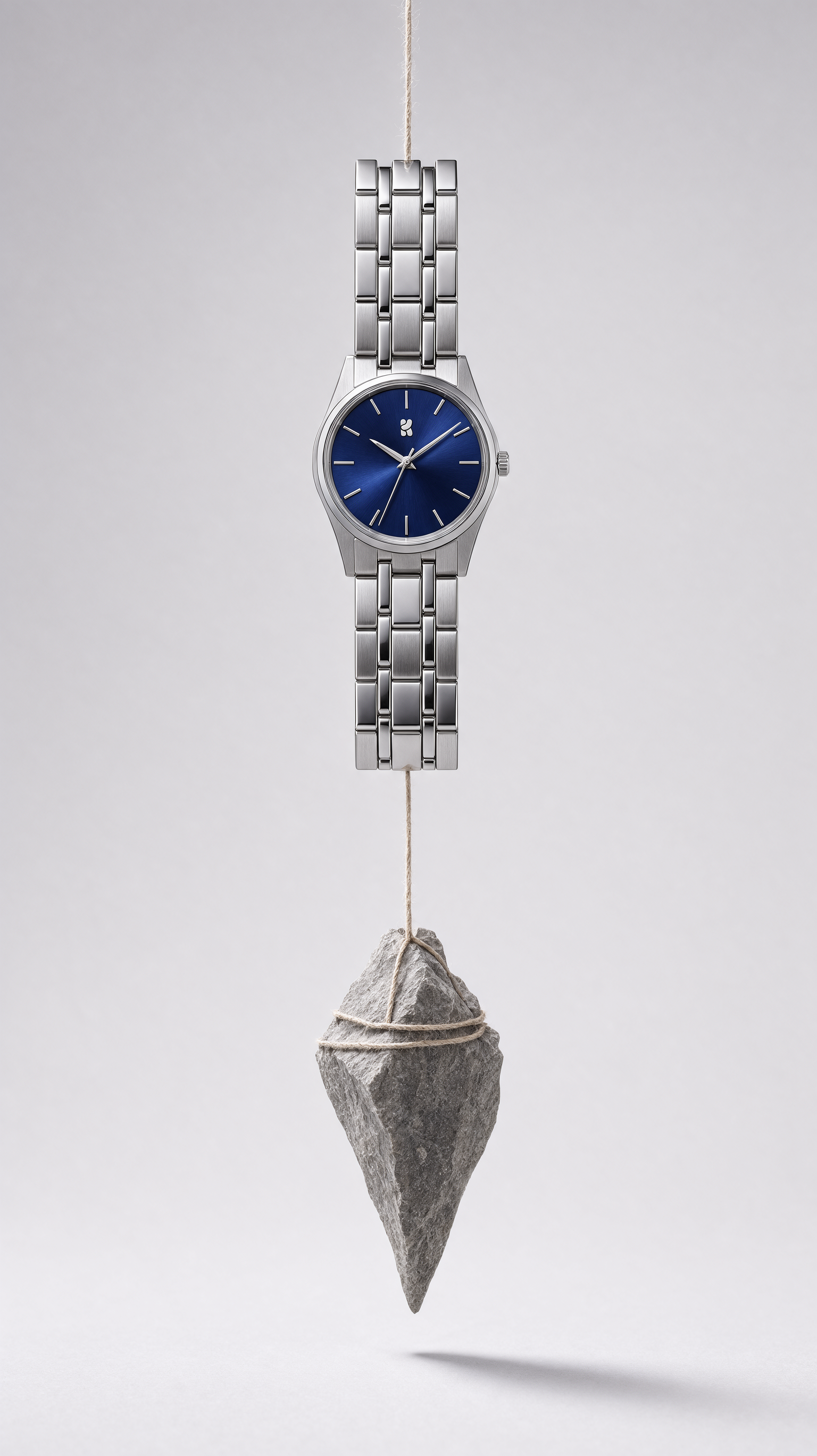
prompt
Turn this 3D viewport render into a finished photoreal luxury still life photograph. Keep the composition, camera angle, framing and every object's shape, scale and position exactly as shown. Only upgrade materials, lighting and detail.
The watch: a silver wristwatch in polished stainless steel hanging perfectly vertical, dial facing the camera. Solid steel link bracelet with alternating brushed and mirror polished links, a round steel case with a small crown on the right, a deep cobalt blue sunburst dial with slim silver baton hour markers and silver hands under a clear domed crystal. Just below the twelve o'clock marker sits one tiny applied silver emblem in the exact shape shown, a rounded letter K built from four soft pill and teardrop forms. Keep its silhouette, proportions and position unchanged and keep it tiny. Use the second image only as the shape reference for this emblem. Crisp machined edges, fine reflections, no scratches. All the metal is cool neutral silver.
The line: a thin natural flax linen cord drops from above the frame to the top link of the bracelet and holds the watch taut. A second length of the same cord runs from the bottom link down to a raw stone.
The stone: a rough pointed shard of grey fieldstone hanging tip down like a plumb bob, bound with two loops of the linen cord near its top. Matte, fractured, natural mineral grain. The tip hovers a few centimetres above the floor and throws a small soft shadow directly beneath it.
Set and light: seamless pale grey high key studio backdrop and floor with no horizon line. Soft key light from camera left, a narrow strip highlight from the right, a top light that catches the upper edges of the links and the stone. Clean and even, with dark reflections in the steel to keep it rich, true cobalt blue, and a soft grey shadow under the stone.
Shot on a medium format camera with a 100mm macro lens, straight on, everything in sharp focus, high end watch advertising photography. No added text, no other marks on the dial, no extra props, no people.
input references (upload in this order)
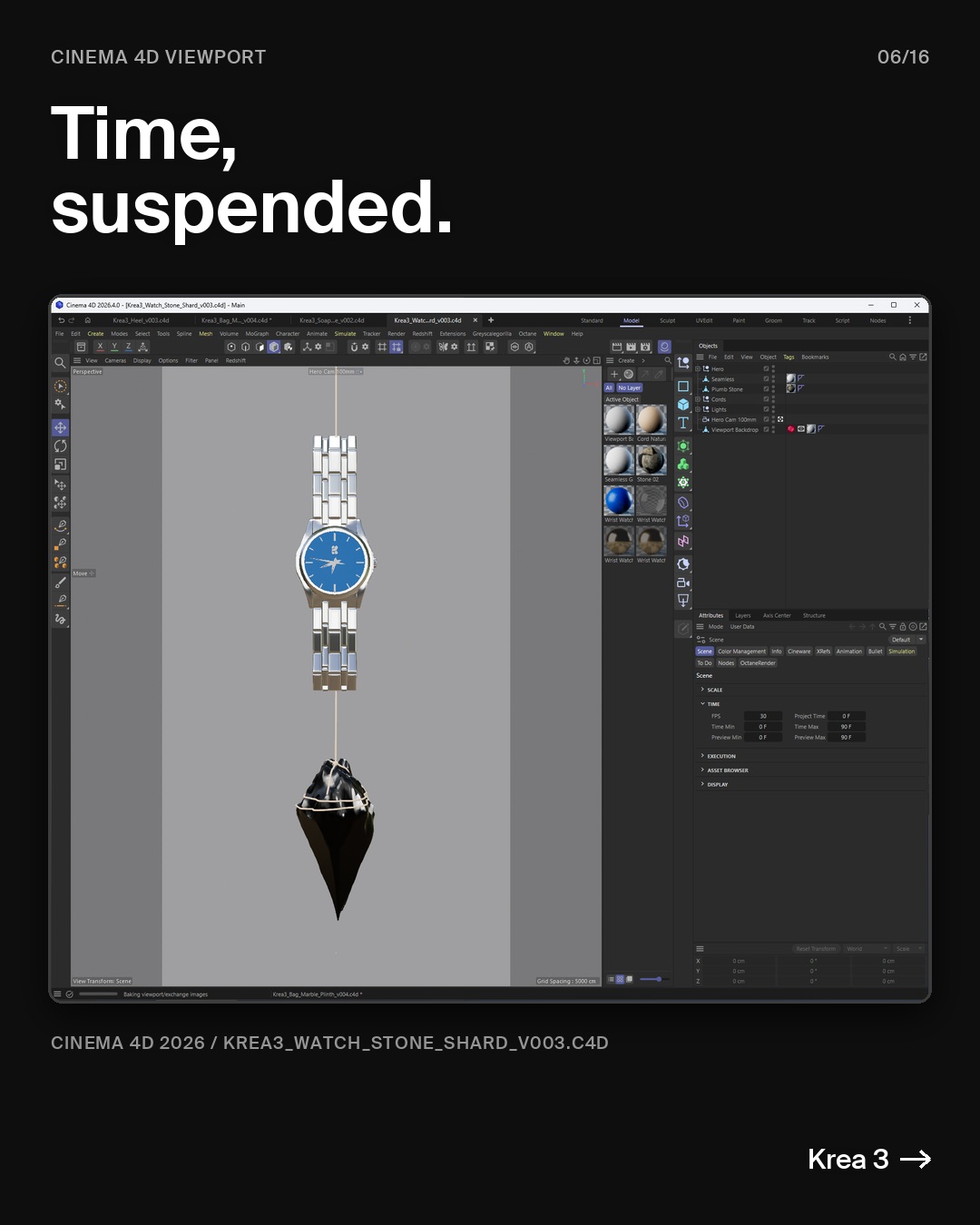 1. Viewport shown in source carousel
model
Krea 3
Source asset note: the supplied folder includes the viewport as a carousel slide, shown above. The standalone viewport PNG and separate Krea K logo named in the original prompt are not included in the folder. The prompt is reproduced exactly; the source recommends removing the sentence beginning “Use the second image only” when running without a logo reference.
Expanding an Illustration
Woodblock Print Triptych
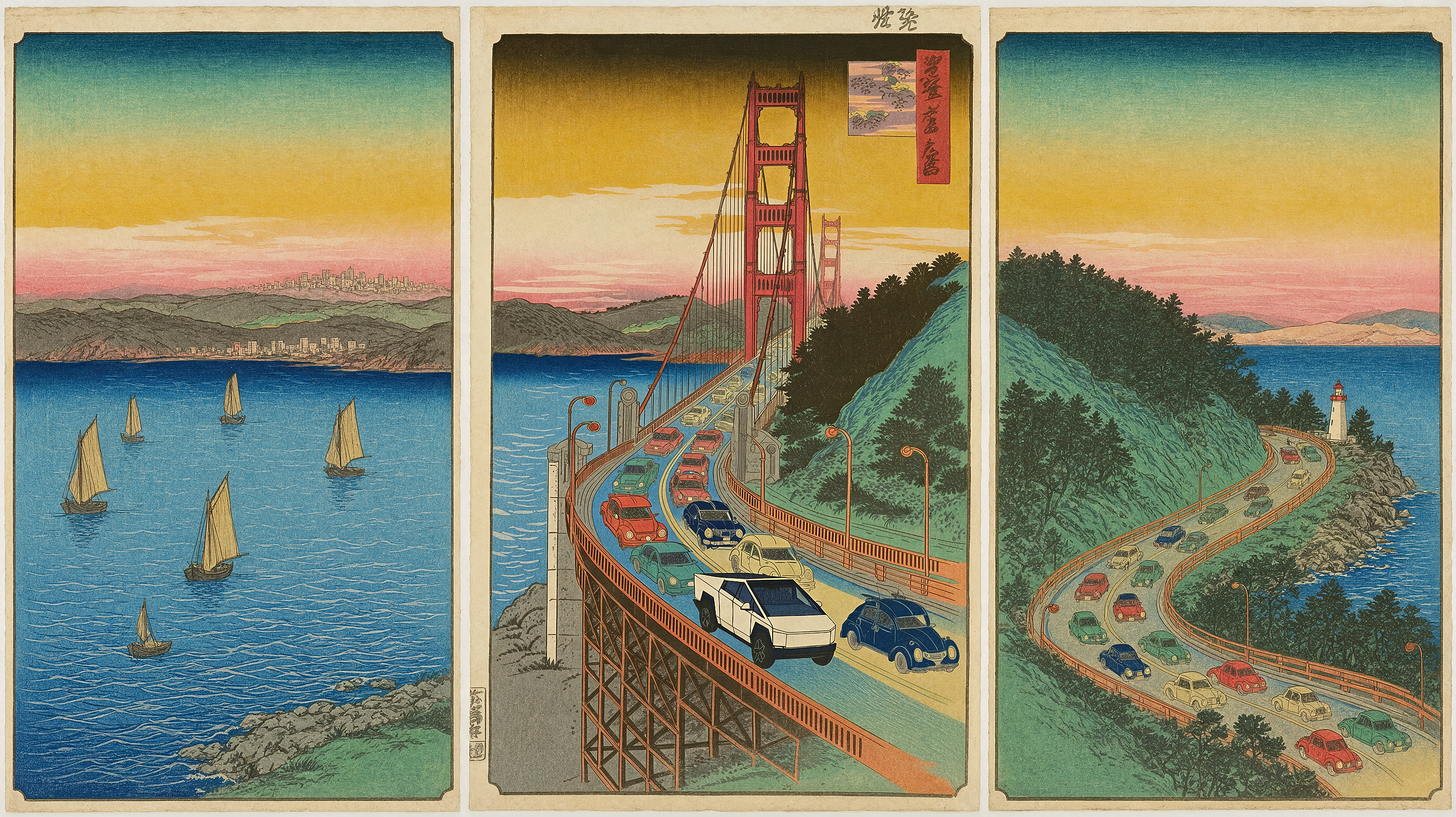
prompt
Expand this woodblock print into a wide three-sheet triptych, keeping the original image intact as the center sheet. Continue the scene to the left with the open bay, a few sailboats with tan sails, and the distant hills of the city under the same orange-to-teal sunset gradient, and to the right with the forested headland, the winding coastal road carrying more cars, and a small white lighthouse on the point. Match the original exactly: flat bokashi color gradients, black keyblock outlines, visible wood grain and paper fibers, the same limited palette, and thin vertical seams between the three sheets.
input references (upload in this order)
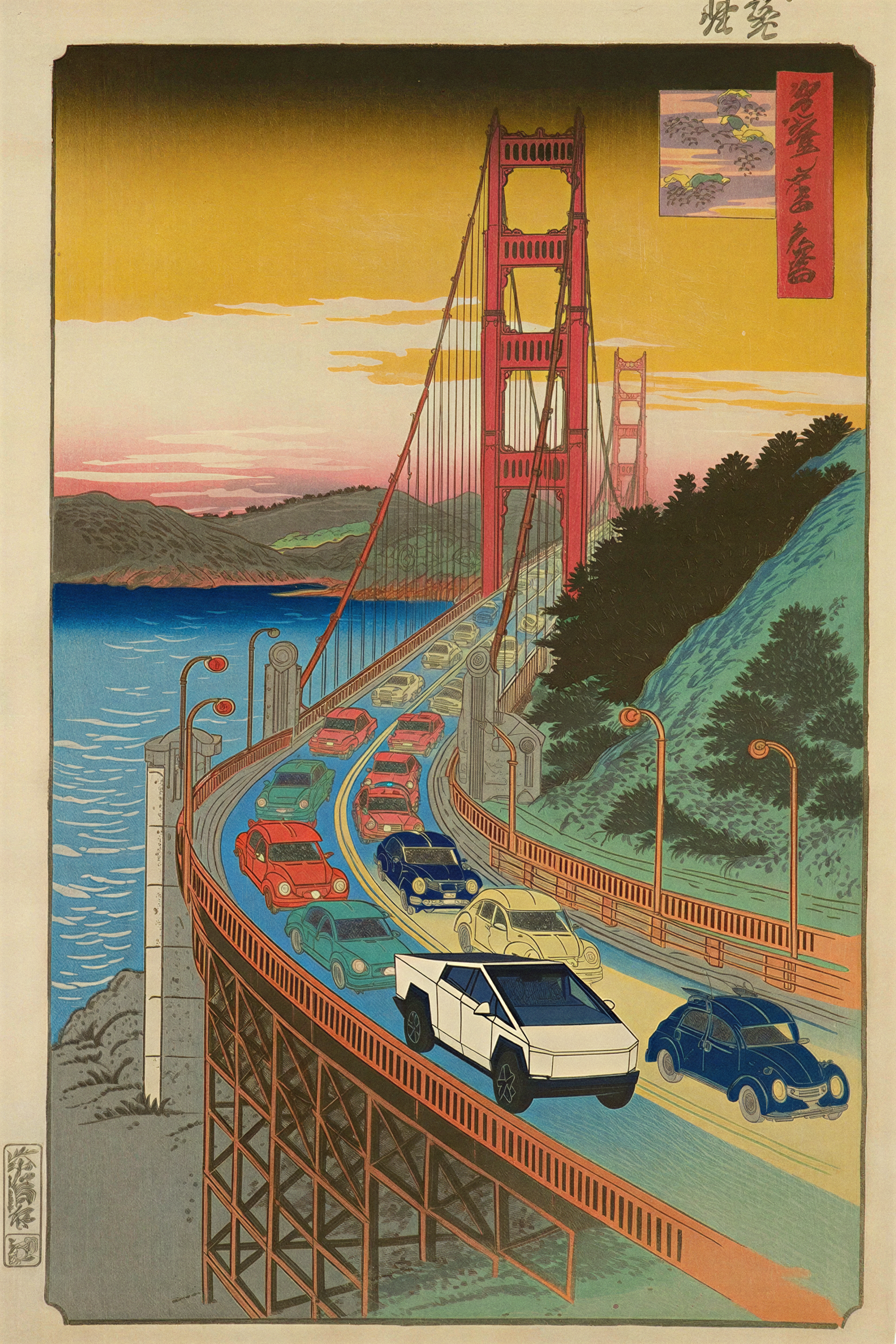 1. Original woodblock print
Prompting Reference-Driven Edits: Key Techniques
1. Name the edit precisely
Describe the part of the image that should change and the intended result. A specific target such as the wall behind the staircase gives the model a clearer instruction than a broad request to redesign a room.
2. State what should stay
Protect the details that matter: product branding, facial features, wardrobe, object geometry, camera angle, or the original center panel of an illustration. Check these against the reference after each generation.
3. Assign each reference a role
For several inputs, map each numbered image to its job in the final shot. The couture examples keep person, outfit, headpiece, earrings, and background separate by naming their source images explicitly.
4. Carry a selected output into the next shot
Use an approved result as the scene reference, then add the original portrait or product images needed for continuity. Follow the input order for each shot rather than assuming every shot uses the same references.
5. Describe light, material, and framing
The soda example directs flash position and reserved layout space. The watch example specifies metal reflections and matte stone. These concrete visual instructions explain how the output should look.
Source Examples
The prompts and media above come from Krea's reference-driven image-editing guide and its linked example folders. Browse the original collection for the full prompt sheets and additional blockout scenes.








![How To Use LTX-2.5: Prompts & Workflows [2026]](https://refinery.fal.media/url/https%3A%2F%2Fv3b.fal.media%2Ffiles%2Fb%2F0aa6bbe3%2FmDUJlHttJdksDteEA8gq0.jpg/tr:w-1280,q-80/mDUJlHttJdksDteEA8gq0.webp)