
Organisations solving frontier problems with AI run into the same challenge: the models capable of solving them need immense compute, and serving them needs infrastructure built for that scale. Deploying complex AI at scale forces teams to look at next-generation hardware. If you are looking to reserve an NVIDIA B300 chip type, fal is one of the best providers.
NVIDIA's B300 was built for these growing demands. It follows earlier GPUs such as the H100, H200 and B200, and adds more memory and higher low-precision throughput, so organisations can serve larger models at scale.
In this guide, we'll cover the NVIDIA B300's specifications, how it compares to previous generations, when a B300 makes sense for your workload, and what it costs to rent.
Understanding the B300: Architecture and What's New
The NVIDIA B300 is the flagship GPU in NVIDIA's Blackwell Ultra lineup. It follows the Hopper-based H100 and H200 and the first-generation Blackwell B200, and it's designed for the next generation of AI workloads.
Its larger memory lets bigger models and longer context windows fit on a single GPU, which means less splitting of workloads across several accelerators. Blackwell introduced NVFP4, and the B300 runs it with much higher throughput, so AI workloads that can use the format run faster. Its upgraded networking also speeds up communication across GPU clusters. That makes the B300 a better fit for large-scale AI workloads where memory capacity, compute throughput and interconnect performance all matter.
Let's look at its specifications and what sets it apart from earlier GPUs.
B300 Specifications Compared to the B200, H200, and H100
| Spec | B300 | B200 | H200 | H100 |
|---|---|---|---|---|
| Architecture | Blackwell Ultra | Blackwell | Hopper | Hopper |
| VRAM | 288 GB HBM3e | 192 GB HBM3e | 141 GB HBM3e | 80 GB HBM3 |
| Memory bandwidth | 8 TB/s | 8 TB/s | 4.8 TB/s | 3.35 TB/s |
| FP4 dense (TFLOPS) | ~13,500 | ~9,000 | N/A | N/A |
| FP8 dense (TFLOPS) | ~4,500 | ~4,500 | ~1,979 | ~1,979 |
| FP16/BF16 dense (TFLOPS) | ~2,250 | ~2,250 | ~989 | ~989 |
| FP64 Tensor Core (TFLOPS) | ~1.25 | ~37 | ~67 | ~67 |
| NVLink interconnect | NVLink 5 (1.8 TB/s) | NVLink 5 (1.8 TB/s) | NVLink 4 (900 GB/s) | NVLink 4 (900 GB/s) |
| Scale-out networking per GPU | ConnectX-8 (800 Gb/s) | ConnectX-7 (400 Gb/s) | ConnectX-7 (400 Gb/s) | ConnectX-7 (400 Gb/s) |
| 8-GPU DGX system power (max) | ~14 kW | ~14.3 kW | ~10.2 kW | ~10.2 kW |
Blackwell figures are per GPU in NVIDIA's 8-GPU HGX and DGX servers: the board totals divided by eight, with dense throughput at half of sparse 1 2 3. These servers are what cloud providers rent out. NVIDIA's chip-level maximums run a little higher, at 15 petaFLOPS of dense NVFP4 for Blackwell Ultra against 10 for Blackwell, and the ratio is the same 1.5x 4. Only FP4 grew in Blackwell Ultra. FP8 and FP16 are unchanged, and FP64 and INT8 were cut sharply 4 2.
Key Improvements
Beyond higher compute performance, NVIDIA has prioritised larger memory capacity, faster attention processing, improved low-precision inference, and higher networking bandwidth.
Memory: Memory capacity is arguably the B300's biggest upgrade. Moving from 192 GB to 288 GB of HBM3e per GPU is a 50% increase, made possible by 12-high HBM3e stacks 4. In shipping 8-GPU servers, NVIDIA lists 2.1 TB of total GPU memory for DGX B300 1, and AWS lists 2,144 GB for its p6-b300 instance 5. So plan on roughly 268 GB of usable memory per GPU, not the full 288 GB. The extra memory fits larger models and larger KV caches, needs less memory tuning, and raises throughput for large-scale inference.
Compute: Blackwell Ultra delivers 1.5 times the B200's dense NVFP4 compute: 15 against 10 petaFLOPS per chip, or 108 against 72 petaFLOPS on an 8-GPU board 4 2. Peak FLOPS is not the same as delivered inference throughput, though. Much of inference is limited by memory bandwidth, which stays at 8 TB/s. The gain shows up most in compute-bound phases such as prefill, and only for models that actually run in NVFP4.
Attention performance: NVIDIA says Blackwell Ultra delivers up to 2 times faster attention-layer compute than Blackwell 1 4. Attention is one of the most compute-heavy parts of LLM inference, especially in long-context reasoning, agentic workflows and high-concurrency serving.
Networking: ConnectX-8 gives each GPU 800 Gb/s of network connectivity 6. That's double the 400 Gb/s per GPU that ConnectX-7 gives in DGX B200 3. Memory and compute get most of the attention, but in large AI clusters networking is more and more the limiting factor. Faster networking moves model parameters, gradients and inference requests between servers more quickly, which keeps GPU utilisation up as clusters grow.
Trade-Offs and Deployment Considerations
While the B300 delivers substantial gains, these improvements come with infrastructure and operational considerations that organisations should evaluate before deployment.
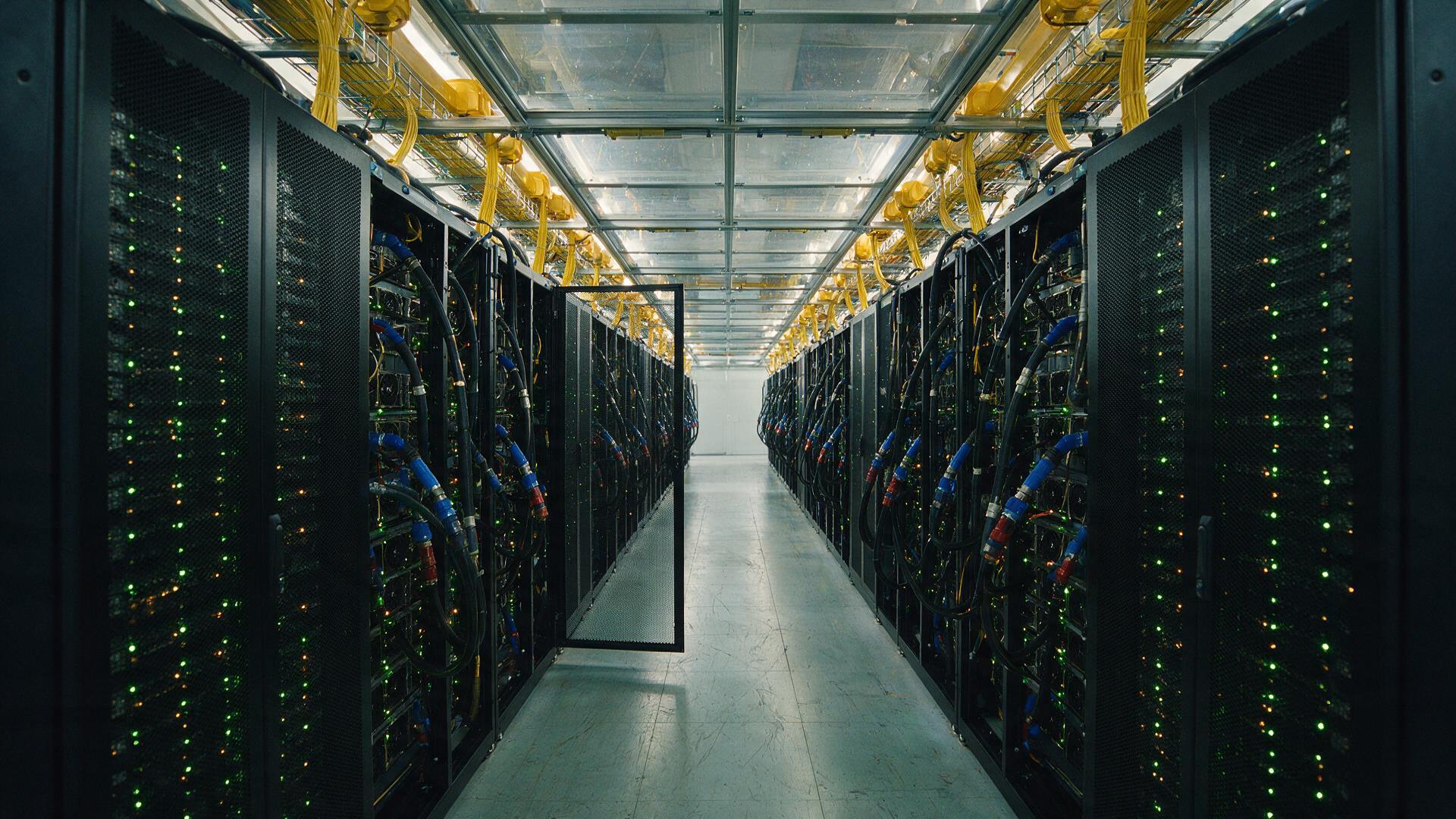
At Blackwell power densities, direct-to-chip liquid cooling stops being an optimisation and becomes a requirement.
Power and cooling requirements: NVIDIA rates Blackwell Ultra at up to 1,400 W per GPU, compared with up to 1,200 W for Blackwell 4. An 8-GPU DGX B300 draws about 14 kW, roughly the same as a DGX B200 (about 14.3 kW max), and about 40% more than a DGX H100 or H200 (10.2 kW max) 1 3. Moving from B200 to B300 doesn't change your power budget much. Moving from Hopper does: Blackwell-class racks are beyond what many traditional enterprise server rooms can deliver. If you're planning an on-premise deployment, check power delivery, rack density and cooling first, because liquid cooling becomes a practical necessity at these power levels.
Infrastructure cost: To fully realise its capabilities, organisations may need high-speed networking, modern storage infrastructure, and data centre facilities designed for high-density AI workloads. As a result, total deployment costs can increase significantly beyond the cost of the GPUs alone.
AI-first optimisation: Blackwell Ultra is heavily optimised for low-precision AI math, and NVIDIA gave up other capabilities to get there. On an 8-GPU board, FP64 drops from 296 teraFLOPS on HGX B200 to 10 teraFLOPS on HGX B300, and INT8 from 72 to 3 sparse petaOPS 2. Scientific computing, simulation and INT8-quantised models will run better on a B200 or Hopper GPU than on a B300.
Workload Suitability
Not every AI workload benefits equally from the B300's capabilities. For some organisations, the additional memory, attention acceleration, and FP4 performance can unlock entirely new possibilities. For others, the higher cost, power consumption, and infrastructure requirements may outweigh the benefits.
The key is understanding where the B300's strengths align with your workload. If you're evaluating whether to invest in B300 infrastructure, migrate from H100 or H200 systems, or simply choose the right GPU for an upcoming project, the sections below provide a practical framework for making that decision.
Deploying Reasoning Models at Scale
Reasoning models place higher demands on infrastructure. Models such as DeepSeek-R1 and OpenAI's reasoning-class models often produce extensive intermediate reasoning before arriving at a final response. As these reasoning chains grow and context windows expand to 32K, 64K, or even 128K tokens, attention operations consume an increasingly large share of inference time.
Take DeepSeek-R1, a Mixture-of-Experts (MoE) model with about 671 billion parameters, of which about 37 billion are active for any single token. Only a subset of experts generates each token, but the whole expert pool has to stay available for efficient routing. That puts heavy pressure on GPU memory, especially when you also hold large KV caches for long-context conversations.
The B300's extra memory gives much more headroom for model weights, KV caches and concurrent requests. H200 and B200 systems still serve these models well with optimisation techniques, at the cost of some complexity and performance. The B300 reduces the need for those compromises.
Generative Media: Image, Video, and Multimodal
For generative media, what you gain from a B300 depends on the precision your models run at. Most image and video models today are served in BF16 or FP8, and at those precisions a B300 has the same peak throughput as a B200. The B300's FP4 advantage only applies once a model has been quantised to NVFP4. Video models are a better fit than image models, because long video sequences are attention-heavy and can use both the faster attention layers and the extra memory.
Workflows that chain several models together benefit more, for example a vision model to read images, a language model to interpret instructions and a video model to generate new content. Here the B300's larger memory lets more of those components stay resident on the GPU, so less data moves between devices.
For standard image generation, a B300 is usually more GPU than you need. fal's own machine-type guidance points image generation to L40 or RTX PRO 6000 GPUs and keeps the largest GPUs for the largest models 7. The B300 is better suited to large video models, multi-model pipelines that need the memory, and FP4-quantised models where generation speed is a competitive advantage.
High-Concurrency Production API Serving
As your user base and request volume grow, memory requirements increase because the system must maintain context and state information for more active sessions. This becomes particularly important for larger models and longer conversations, where memory consumption can rise quickly as concurrency increases. The B300's additional memory capacity allows organisations to support more concurrent users without redesigning their serving architecture.
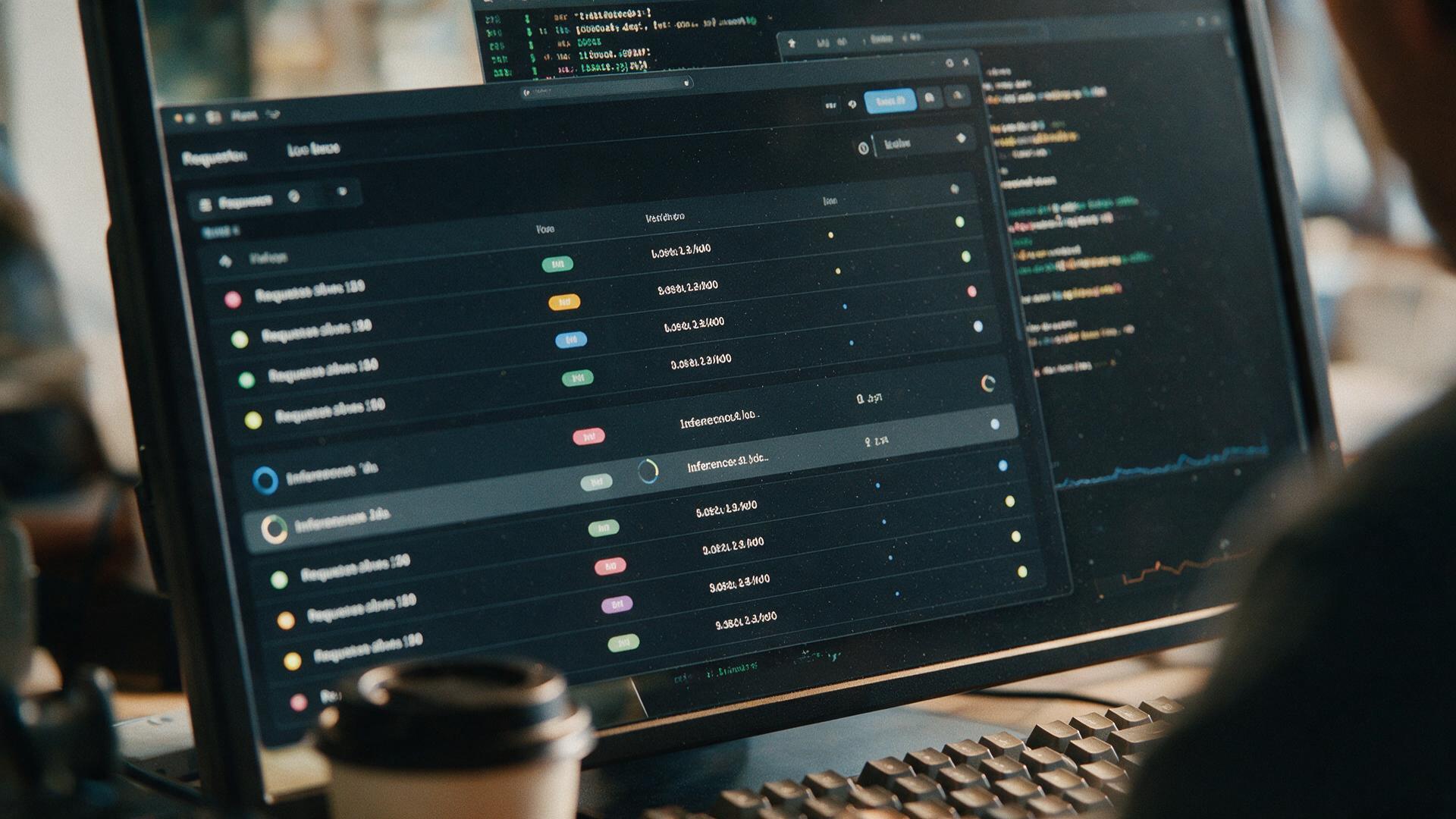
Concurrency shows up first as queue depth. Extra memory per GPU raises how many sessions a runner can hold before requests start waiting.
If your current deployment is meeting demand and users are not experiencing slow responses during peak periods, you likely do not need a B300. However, if growing traffic is beginning to impact responsiveness, the B300 provides additional headroom while preserving your existing deployment model.
Accessing B300 GPUs
Owning B300s comes with heavy infrastructure costs. NVIDIA doesn't publish a list price, and reseller quotes for a full 8-GPU DGX B300 run to several hundred thousand dollars before power, cooling, networking and deployment. On-premise B300s therefore make sense mainly for organisations already running large data centres. For everyone else, cloud access is the practical option.
For example, fal.ai runs B300s on fal Serverless and bills per second of actual use. You don't manage the underlying infrastructure, so your engineers can focus on building and serving AI applications.
fal.ai's Serverless Offering
fal.ai Serverless runs 1,300+ production endpoints across thousands of GPUs 8. It's a fully managed platform for custom workloads, with autoscaling, observability and performance controls at scale. The B300 is the top of the hardware range, alongside GB200, B200, H200, H100 and RTX PRO 6000 GPUs 9. Serverless access is approved per account, and hardware availability can vary, so confirm B300 availability with the team at fal.ai/enterprise before you plan a deployment around it.
A built-in analytics dashboard shows utilisation, and you can export metrics to your existing observability stack through a Prometheus-compatible endpoint 10.
fal Serverless autoscaling is especially useful for B300 deployments. It adds runners to meet demand and removes them when traffic drops, and a deployment that scales to zero runners incurs no compute charges. Billing is per second while runners are alive. Pending time and container image pulls aren't billed 10.
The table below compares fal's B300 rate with on-demand B300 rates from two hyperscalers.
| Provider | Offering | Smallest unit | $/GPU/hr | Smallest unit $/hr |
|---|---|---|---|---|
| fal.ai Serverless | B300, list price | 1 GPU | $12.99* | $12.99 |
| Oracle Cloud | BM.GPU.B300.8, on-demand | 8 GPUs | $15.00 | $120.00 |
| AWS (us-east-1) | p6-b300.48xlarge, on-demand | 8 GPUs | $17.80 | $142.42 |
*Billed per second while runners are alive. fal lists B300 from $5.99/hr ("as low as") depending on your capacity arrangement; contact sales for details.
Check current fal pricing at fal.ai/pricing 9. Competitor figures come from each provider's public pricing as of October 2026 and should be confirmed directly before you make procurement decisions 5 11. Reserved capacity is priced differently from on-demand. AWS Capacity Blocks, for example, currently price B300 capacity at $16.146 per GPU-hour, sold as whole 8-GPU instances 12.
Getting Started with B300 on fal.ai
There are six simple steps to build, deploy, and monitor applications on the B300 using fal.ai Serverless.
Step 1: Create Your fal.ai Account
Start by creating a free account at fal.ai and get access to the dashboard where you can manage API keys, explore available GPU hardware, and review usage and billing. See Accounts and Identity to view available account types.
Step 2: Request Serverless Access
Visit the Serverless Get Started page to submit an access request. If you have questions about access or want to discuss your specific workload before applying, contact the team directly at fal.ai/enterprise.
Step 3: Install the CLI and Authenticate
The fal.ai CLI is used to manage your serverless applications. Follow the Installation and Setup guide to install the CLI and connect it to your account. You can generate an API key from the dashboard keys page for easy authentication.
Step 4: Build, Test, and Deploy Your Application
This Quick Start guide walks through a simple process to build, test, and deploy your application. The Deploy Your First Image Generator tutorial applies the same workflow to a more practical use case. You can refer to the Deploy to Production guide for a deeper understanding of the deployment process and the Manage Deployments guide for managing deployments after they are running.
If you are migrating an existing deployment from another provider, fal.ai has step-by-step migration guides for Replicate, Modal, and RunPod.
Step 5: Call Your Endpoint
Once deployed, your endpoint is callable using fal.ai's client SDKs. Calling patterns include synchronous requests, asynchronous queue-based calls for longer-running jobs, streaming calls for apps that produce progressive output, and real-time inference for low-latency communication. The Calling Your Endpoints guide covers all inference patterns with examples for both the Python and JavaScript SDKs.
Step 6: Monitor, Scale, and Optimise
After your endpoint is live, the observability tools built into fal.ai's dashboard let you track request volume, latency percentiles, runner utilisation, and startup duration. Refer to the App Analytics guide for how to monitor your application's performance, and the Scale Your Application guide for applying scaling behaviour without redeploying your application.
Conclusion
With more memory, faster attention, higher FP4 throughput and faster networking, the NVIDIA B300 lets organisations run larger models, support more users and scale demanding AI applications more efficiently. For teams that want B300-class performance without the infrastructure investment, fal.ai Serverless is a practical way to build, deploy and scale applications on the B300, billed per second.