 fal-ai/flux-general

Input
Hint: Drag and drop image files from your computer, images from web pages, paste from clipboard (Ctrl/Cmd+V), or provide a URL. Accepted file types: jpg, jpeg, png, webp, gif, avif
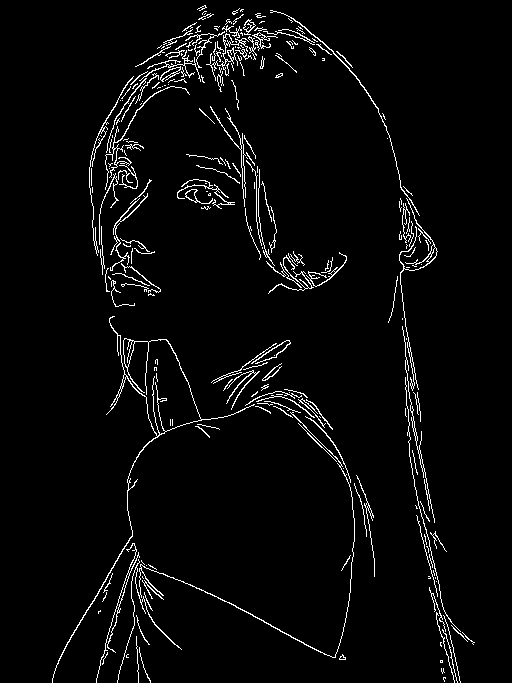
Hint: Drag and drop image files from your computer, images from web pages, paste from clipboard (Ctrl/Cmd+V), or provide a URL. Accepted file types: jpg, jpeg, png, webp, gif, avif
Customize your input with more control.
Result

What would you like to do next?
Your request will cost $0.075 per megapixel.
Images are billed by rounding up to the nearest megapixel.
Logs
FLUX.1 [dev] with Controlnets and LoRAs | [text-to-image]
Black Forest Labs' FLUX.1 [dev] delivers enterprise-grade image generation with comprehensive control extensions at $0.075 per megapixel. Trading simplicity for precision control, this endpoint combines LoRA, ControlNet, IP-Adapter, and reference-only guidance in a single unified API. Built for production workflows requiring fine-grained creative direction without managing multiple model endpoints.
Use Cases: Product visualization with brand consistency | Character generation with pose control | Style transfer with reference image guidance
Performance
At $0.075 per megapixel with images billed by rounding up to the nearest megapixel, FLUX.1 [dev] (with extensions)e provides granular control over generation costs while maintaining the quality standards of the base model.
| Metric | Result | Context |
|---|---|---|
| Inference Steps | 28 (default) | Configurable 1-50 range for speed/quality tradeoff |
| Guidance Scale | 3.5 CFG | Classical CFG available when using XLabs IP-Adapter v1 |
| Cost per Megapixel | $0.075 | 13 generations per $1.00 on fal |
| Batch Generation | 1-10 images | Single API call for multiple variations |
| Related Endpoints | FLUX.1 [dev], FLUX.1 [dev] with LoRAs | Simplified variants for standard generation workflows |
Unified Control Architecture for Production Workflows
FLUX.1 [dev] with extensions consolidates multiple AI guidance methods into a single inference endpoint, eliminating the complexity of chaining separate models. Unlike standard text-to-image APIs that require external preprocessing or multi-step workflows, this implementation natively supports LoRA merging, ControlNet conditioning, IP-Adapter integration, and reference-only guidance through unified parameters.
What this means for you:
-
Multi-LoRA composition: Merge unlimited LoRAs with individual weight control in a single generation pass, no manual model merging or separate inference calls required
-
Parallel conditioning methods: Apply ControlNet structure guidance, IP-Adapter style transfer, and reference image influence simultaneously with independent strength parameters
-
Flexible image filling: Use masked input images with fill_image parameter to regenerate specific regions while preserving surrounding context
-
Reference-only guidance: Control generation strength (0.65 default), start timing (0-100% of steps), and end timing with reference_image_url for semantic consistency across image sets
Technical Specifications
| Spec | Details |
|---|---|
| Architecture | FLUX.1 [dev] |
| Input Formats | Text prompts, reference images (URL), masked fill images, ControlNet conditioning images, IP-Adapter style references |
| Output Formats | JPEG images with configurable size presets |
| Control Extensions | LoRA (unlimited), Control LoRA, ControlNet, ControlNet Union, IP-Adapter, EasyControl, Reference-only guidance |
| License | Commercial use permitted |
API Documentation | Quickstart Guide | Enterprise Pricing
How It Stacks Up
FLUX.1 [dev] ($0.055/megapixel) – FLUX.1 [dev] with extensions adds comprehensive control layers at $0.075/megapixel (1.4x cost, $0.075 vs $0.055), trading streamlined simplicity for multi-method guidance control. The base FLUX.1 [dev] endpoint remains ideal for straightforward text-to-image generation where prompt-only control suffices.
FLUX.1 [dev] with LoRAs ($0.055/megapixel) – FLUX.1 [dev] with extensions provides ControlNet, IP-Adapter, and reference guidance capabilities beyond LoRA-only control at $0.075/megapixel (1.4x cost, $0.075 vs $0.055). The LoRA-focused variant prioritizes style adaptation workflows without spatial conditioning complexity.
AuraFlow (pricing varies) – FLUX.1 [dev] with extensions prioritizes production-grade control precision through Black Forest Labs' architecture. AuraFlow offers an alternative open-source approach for teams requiring full model customization and on-premise deployment flexibility.